
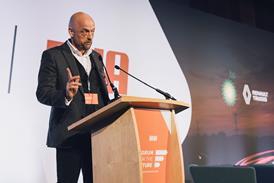

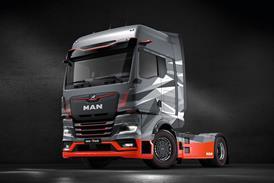
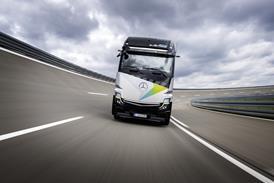
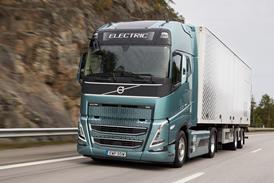
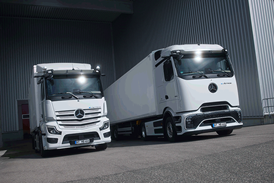
Inner city Glasgow is an unlikely headquarters for the UK’s newest truck builder, but when HVS (stands for Hydrogen Vehicle Systems) took the wraps off its new hydrogen fuel cell-powered truck at the CV Show this morning, the company announced its arrival on the truck building scene - from small acorns and all that…this is one to watch.

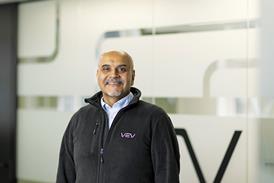
So why are we interested in “yet another truck-building start-up”? Firstly, our natural curiosity when we see another truck builder enter the fray – Who are these people? How are they funded? What are their ambitions? When will they come to market? On our visit to the Glasgow HQ last week, all of these questions were answered. The business is led by CEO Jawad Khursheed, he rescued the business in 2020 and has set about turning start-up vision into truck building reality. He has some smart people on the team drawn from a variety of industry backgrounds – automotive, energy, business, logistics – and they are building a very credible business proposition.

While we haven’t got inside the truck yet – stay tuned for further updates – the truck appears well put together and the company has many of the key Tier 1 component suppliers lined up to provide the fuel cells, battery packs, e-drive axles and other componentry required to get the wheels turning. The first trial trucks will enter service in 2025 and the trucks will be built in the UK, with an announcement on the location expected in the next six months – our money is on Scotland.

However, for us, the trump card in the pack for HVS is its funders. The company is backed, so far to the tune of £30 million, by Beehive Equities, a wholly-owned subsidiary of EG Group. You’ll know EG Group as Euro Garages, owners of over 6250 petrol stations, and the owners of Asda. These guys are huge and clearly have a vested interest in developing an energy refuelling infrastructure in the post-fossil fuel world. Similarly, the Asda truck fleet is going to need to shift to carbon zero in the coming years… 

Secondly, we’re interested in HVS and the wider hydrogen fuel cell truck builders, because we’re hearing a lot of concerns from operators running across many weight sizes and operating duty cycles that battery electric vehicles aren’t working, or going to work, in their operations. There are many end users waving amber flags and we should be taking notice. We’ve always been aware there would be some part of the industry battery-electric couldn’t serve, the general assumption being this would be for long-haul heavy-duty operations, but we’ve had conversations right across the weight range from fleets recognising the limitations of battery operations.

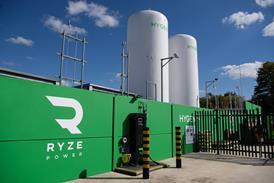
That’s not to say hydrogen fuel cell solves all the issues either – if only it were so simple! The current hydrogen re-fuelling infrastructure is virtually non-existent (indeed many of the hydrogen sites set up for cars have been closed down due to lack of use) and we understand there remains a chassis packaging problem, even with hydrogen, which makes the UK’s popular 6x2 mid-axle tractor unit a non-starter without changes to the UK weights and dimensions regulations.

As we’ve said in previous commentaries, there is plenty fleet operators can do today to start their journey to decarbonisation, but it is fast becoming clear that for the commercial vehicle and road freight industry to fully move to a carbon zero future it is going to need a wholesale transformation of not only the energy source for the trucks, but also the complete operating system of the industry.

This is a monumental task, requiring serious thought and shouldn’t be underestimated by government, operators or any of the suppliers to the sector. To that end, our quest for answers takes us to Amsterdam today where we’re attending Smart Freight Week, a gathering of the international freight and logistics sector. We all have a vested interest in getting this decarbonisation journey right and it is important we ask the difficult questions and insist on the answers, no matter how uncomfortable it might feel. 

Get involved in the decarbonisation conversation and comment below. We are keen to hear your thoughts and feedback