








We’ve had plenty of input from the battery electric advocates of late, so for this week’s commentary we have turned to Tim Harper, CEO of Element 2, for his input.
I recently attended th FT’s Hydrogen Summit, a global gathering from 47 countries, with more than 700 registered delegates in-person and online. The Summit covered everything from the geopolitics of hydrogen to aviation, but I was more interested in the panel “Hydrogen in Motion- Can Fuel Cells Compete with Electric Vehicles?” The question is misleading as vehicles doing anything other than burning hydrogen in an internal combustion engine are electric, but the hydrogen vs battery argument rages on and makes for good headlines.
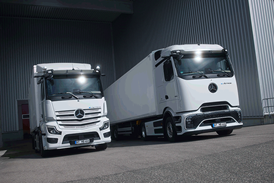
Most of the debate concerned commercial vehicles which as FCZ readers know, but many investors don’t, are very different to passenger cars. One person who knows all about this is Martin Daum, the Chairman of Daimler Truck AG, who predicted 70% of the company’s vehicles will be hydrogen-powered by 2030, the rest using batteries and that “hydrogen will play an absolutely vital and pivotal role to get to zero emission as fast as possible”.
FCZ has spoken previously about the recent softening attitude towards hydrogen, from the commercial vehicle sector. It’s clear R&D budgets are being committed by the big manufacturers to hydrogen projects and even Scania, which has been 100% committed to battery electric vehicles, conceded it is maintaining a watching brief on hydrogen fuel cell technology at the recent Zemo conference.
When challenged about the 70/30 mix of hydrogen to battery vehicles, Daimler’s Chairman simply said that it doesn’t matter, because they will supply both. I have heard the same from other manufacturers with the balance of battery to fuel cell ranging from a simple range extender for batteries, to long-distance 100% hydrogen-powered transport.
This then raises the question of infrastructure and Daimler’s view is that for small numbers of battery trucks the infrastructure can support them, but for the 1,000s that will be required as we decarbonise the sector, it becomes exponentially more expensive to scale. For hydrogen, it is the opposite. A hydrogen pump can refuel many more vehicles per day than a charger, and as Daum stated: “You need at least 20 x 1MW chargers at a truck stop and it puts a severe strain on the grid. It is possible for this near large cities but not across whole countries and definitely not in Africa”.
The question of the efficiency of battery versus hydrogen came up yet again, but in the world outside think tanks and universities, the idea of taking up a third of your cargo space with a fifteen-tonne battery doesn’t make any sense, especially given the margins that most people work to in the industry. That’s before you address the question of tough terrain, and Daum’s view was “…the amount of energy needed to propel a 40t truck up a hill at 80 km/h is very difficult to achieve with a battery.”
I have heard this anecdotally from bus and electric vehicle operators who have had to choose their battery-powered routes very carefully and know of an increasing number of operational use cases where operators are recognising battery electric vehicles will be difficult to implement.
Finally, on the issue of cost, various speakers were claiming that net zero will be expensive and that someone will have to pay. A rough rule of thumb is that battery HGVs are twice the price of diesel and that fuel cell vehicles are double that. That’s not the whole picture though as fuel cell costs are predicted to halve in the next few years and battery costs aren’t.
With hydrogen and battery vehicles costing the same by 2027, then the major consideration is whether operators can replace diesel with zero emission. With hydrogen, there is a one-to-one replacement because the refuelling times are similar. The jury is still out whether the same one-for-one replacement can be achieved with battery electric without a significant transformation of the operating duty cycle to take account of battery recharging times.
And here is the rub…fleet operators will use whatever causes the least disruption to their business at the lowest cost and it’s clear a picture is emerging where there will need to be a mix of fuels in operation, depending on the vehicle’s duty cycle and where we are in the transition. While this is unhelpful operationally, we can’t ignore the key objective and fact we are in a climate emergency and need to replace fossil fuels with zero-emission technologies as quickly as possible.
Trying to predict whether hydrogen will be 30% or 70% of the market is like arguing over the colour of a chameleon, it’s going to be part of the mix, we should stop the pointless debates and crack on with delivering practical solutions.