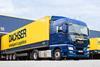
In a sector shaped by tight margins, hesitant customers and uneven infrastructure, can zero-emission freight logistics truly scale? Dachser is one of the large operators actively trying to find out. The company has deployed over 130 electric trucks across Europe, established zero-emission delivery zones in 18 cities, and is investing heavily in its own depot charging infrastructure to support operations. Freight Carbon Zero spoke with Magdalena Droppelmann, the firm’s head of corporate sustainability, to examine whether this strategy is working — and at what cost.

Dachser 1

Dachser has steadily expanded its electric fleet since piloting electric vehicles back in 2018. More recently, it has deployed models from Volvo, MAN and Mercedes-Benz Trucks with ranges of up to 500 km.

“Electric trucks can now be used very reliably in everyday logistics operations,” Droppelmann says. “Their use has expanded well beyond local city deliveries. We even have some operating cross-border, such as between Karlsruhe and Switzerland, and between Hof in Bavaria and the Czech Republic.”

However, long-haul and flexible charter operations remain limited, not because of the vehicles themselves, but due to a lack of recharging options on the road. “The possibilities for use in long-distance transport are still limited by the lack of a public charging network,” she explains.

Grid is the bottleneck

To ensure availability, Dachser has installed more than 800 charging points at its own sites, including high-output DC chargers for trucks. But even this controlled environment presents challenges.

“Our logistics processes have high peaks in demand that must be covered by the existing power grid infrastructure. However, we currently only have limited capacity in the low single-digit megawatt range,” says Droppelmann.

At pilot e-mobility sites in Freiburg, Hamburg and Karlsruhe, the company has increased grid and transformer capacity fivefold and introduced load management systems, battery storage, and charging strategies tailored to specific use cases.

While Dachser hasn’t specified whether electric trucks require more vehicles to maintain service levels, charging times and infrastructure limitations still affect how trucks are routed and scheduled.

In practice, this means adjusting route planning, depot workflows, and delivery timing to account for battery range and onsite recharging, particularly where public infrastructure cannot fill the gap.

The lack of public truck charging across Europe is a recurring theme. Motorways often only offer chargers suited for cars, and even these can have limited capacity or access.

“Fast intermediate charging on the motorway is rarely an option for e-trucks,” Droppelmann says. “We therefore primarily charge our electric trucks at our branches.”

This strategy gives Dachser control over reliability and energy supply, but it also highlights the broader issue: public infrastructure is not yet fit for commercial heavy-duty use.

Who pays for green freight?

Decarbonising road freight doesn’t come cheap — and Dachser is currently bearing most of the cost.

“Implementing climate action measures requires a range of investments,” Droppelmann explains, pointing to the development of charging infrastructure, photovoltaic (PV) systems, improvements to building energy efficiency, and the purchase of zero-emission vehicles.

The company operates some electric trucks in its own fleet, while others are run by service partners — but in both cases, the high upfront cost presents a major challenge.

“The financing of e-trucks is currently a challenge for all parties,” she notes.

Some support has come via national and regional incentives, including toll exemptions for zero-emission vehicles. Dachser also made use of Germany’s KsNI funding programme before it was discontinued. However, as Droppelmann notes, further progress will require collective effort, and the broader infrastructure and funding landscape remains a limiting factor.

“There is almost no public charging infrastructure for trucks. These issues need to be addressed collectively by all parties involved.”

While there have been isolated partnerships with customers to co-fund electric trucks, they are rare.

“Due to the current economic situation, there is a high price sensitivity. Customers are currently rarely willing to bear additional costs for environmentally friendly transport,” Droppelmann says.

Site rollout

Rolling out charging infrastructure across all Dachser sites is not as simple as replicating one successful model. Power availability and regulation vary across Europe, and even within Germany.

Dachser 2

“There are many different network operators and different connection capacities at our branches,” Droppelmann explains. “Agreements and expansion can take several years.”

This means electrification plans must be customised per location, with local utilities playing a central role in determining feasibility and timelines.

The UK presents the same challenge: the key barrier isn’t regulation or fleet readiness: it’s infrastructure.

“Primarily, the infrastructure needs to be expanded to meet the requirements of electric vehicle fleets,” says Droppelmann.

To overcome this, Dachser believes stronger cooperation is needed between OEMs, logistics providers, charging network operators and government bodies.

EV economics: still uncertain after seven years

As fleets look to justify major capital investment, residual value is a growing concern, and with electric trucks, there’s no track record to rely on.

“The residual value of battery-powered vehicles depends heavily on the condition of the battery,” says Droppelmann. “Factors such as the number of charging cycles and the battery management system used by the manufacturer will play a big role.”

With most of Dachser’s vehicles acquired through leasing, the issue is largely deferred, but manufacturers and leasing companies alike remain cautious. A second-hand truck market may emerge, but it doesn’t yet offer firm financial certainty.

Hydrogen on the fringe — but not forgotten

Battery-electric is the priority for now, but Dachser is trialling a single hydrogen truck at its Magdeburg branch. The vehicle operates reliably on both local daytime routes and overnight transfers to Berlin.

However, widespread adoption remains unlikely in the short term.

“Hydrogen trucks are only available as prototypes or small-series vehicles,” Droppelmann notes. “It’s also unclear which hydrogen drive and refuelling method will prevail. There’s currently too much uncertainty to justify infrastructure investment.”

Still, the company sees potential for hydrogen in long-haul operations, particularly if recharging time and 24/7 operation demands outpace battery capabilities.

Strategy shaped by practical constraints

Dachser’s approach to decarbonisation is grounded in operational testing and pragmatic risk management. The company has made tangible progress — from pilot sites and vehicle trials to grid upgrades and customer pilots — but it’s clear that transformation at scale depends on more than internal will.

“We’re committed to helping achieve the global community’s long-term goal of net-zero emissions,” Droppelmann says.

“But we always keep an eye on the cost-benefit ratio to avoid overwhelming anyone on this path.”