



Last week, after commenting on one of Wen Han’s posts in LinkedIn, we unexpectedly found ourselves in a direct exchange with him and he suggested we jump on a call that very afternoon. With only a couple of hours to prep, we seized the chance for an interview, eager to dig deeper into how Windrose plans to meet its ambitious goal of having 10,000 electric trucks on the road by 2027. Laura Hailstone gets the low down.

We’ve been closely following the exciting journey of Windrose Technology and its Founder and CEO, Wen Han, over the past few months on LinkedIn. Wen has been sharing real-time updates on its futuristic electric truck—from long-distance road tests and multi-charging trials to appearances at truck shows and updates on real-world performance with global customers. It’s refreshing in an industry where most companies wait until the dust settles to send out a press release. Windrose’s openness and transparency, much like 34-year-old Wen himself, stand out.

Breaking new ground in electric trucks

As Wen began to list his flagship truck’s impressive stats: 670 kilometres of range with a total weight of 49 tonnes—well beyond European and American legal limits, (and they’ve tested it under even harsher conditions), it was clear why Windrose stole the limelight from its lookalike Tesla rival at last month’s IAA Transportation Hannover exhibition.

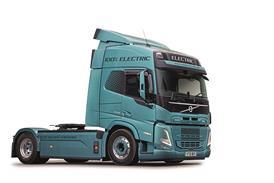
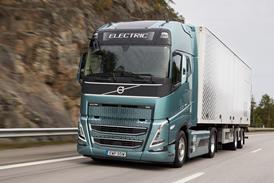
During our conversation, Wen described a recent double trailer test in Denmark, where the truck managed over 500 kilometres on a single charge while pulling a 64-tonne load (of vitamin drinks). That’s groundbreaking for electric trucks, he says, although Volvo now claim similar with its FH Aero. Windrose isn’t just pushing the boundaries with weight and range, however. Its trucks are designed to be compatible with virtually any Charging infrastructure. It’s tested its trucks with over 140 public chargers, making them a “non-picky eater,” as Wen humorously put it. Whether you’re using a Shell, BP, or Siemens Charger, Windrose trucks are built to adapt.

For operators concerned about real-world performance, this is critical, he says. No one wants a truck that struggles to recharge out on the road. The ability to charge “anywhere” without a hitch is key to the adoption of electric trucks by fleet operators, and Windrose has focused on making that a priority.

Bigger, smarter, and faster

When we asked about the truck’s other features, Wen proudly highlighted the 8.2 cubic metres of space inside the cab, which he helpfully put into perspective by showing me a photo of an entire professional basketball team (the Windrose Giants Antwerp) standing inside the spacious cab with Wen at the wheel. Great publicity stunt! Other numbers Wen likes to share is the ‘1,400 horsepower’ and the ability to go from ‘0 to 60 mph’ in under eight seconds, highlighting that Windrose’s truck is no slouch when it comes to performance. That said, as all fleet operators know performance in the truck sector is about getting the job done every time, not just the fastest. The focus for all the newbie truck brands will be on in-service durability and uptime.

Learning from Tesla, but going further

One of the most interesting aspects of our interview was his deep respect for Elon Musk and Tesla. Windrose’s trucks bare a striking resemblance to Tesla’s Semi, and Wen doesn’t shy away from acknowledging the influence. In fact, he calls Musk “a role model” and praises Tesla for defining the leading edge of ev innovation over the past 20 years.

But Wen is quick to point out that Windrose isn’t just following in Tesla’s footsteps. While Musk has many irons in the fire, Wen is “all in” on trucks, spending a significant amount of time with customers and truckers to truly understand their needs. This hands-on approach is what sets Windrose apart, he claims. Tesla may have opened the door for electric trucks, but Windrose is walking through it, armed with lessons learned from Tesla’s successes—and perhaps a few of its challenges.

A truck built for UK roads?

One of the hot topics we discussed was how Windrose plans to bring its trucks to the UK. With a slightly different set of regulations compared to Europe and the US, some people have raised concerns about whether Windrose’s trucks would meet UK standards, particularly around vehicle width. Wen confidently dispelled these worries, explaining Windrose’s trucks are fully compliant, measuring in at 2.54 metres wide—just within the UK’s 2.6-metre limit.

He also addressed another common misconception: that Windrose trucks are designed exclusively for American roads. Many in the industry assume that because the trucks look so sleek and futuristic, they must be tailored to US conditions. However, Wen made it clear Windrose trucks are built to handle a variety of markets, including Europe and Australia. And he’s keen to break into the UK market, emphasising the company is ready to adapt the trucks for local operators’ needs, even down to offering different axle configurations like the popular 6x2 mid-lift for UK hauliers.

A new era for truck maintenance

One aspect of our conversation that caught our attention was Wen’s vision for truck maintenance. Traditionally, the image of a mechanic is someone buried under an oily engine, wrench in hand. But the shift to electric trucks will bring about a new era. E-trucks, including Windrose’s, are far easier to maintain than their diesel counterparts, requiring fewer moving parts and much less greasy work.

Wen sees this as an opportunity to attract younger talent, including more women, into the industry. He envisions a future where truck “engineers” diagnose issues with a computer and press buttons rather than get their hands dirty. This evolution could solve the skills shortage many in the UK logistics industry are facing, making the job more appealing to the next generation.

Ambitious targets, but a clear path

Of course, Windrose’s goal of selling 10,000 trucks by 2027 is ambitious, but Wen sees it as a natural progression. The company already has production partnerships in place, including with Suzhou Higer, a Chinese manufacturer known for building buses for Scania. While they’re starting small, with 50 trucks expected by the end of this year, Wen is confident they can scale rapidly. His CTO, who has overseen the production of over 200,000 trucks in his career, ensures that the company has the expertise to ramp up.

It’s also worth noting that Windrose isn’t just relying on Chinese production. They’re setting up local manufacturing in Belgium, France, and the United States, showing a commitment to creating jobs and supporting local economies. This mix of global and local production gives them flexibility and positions them to meet the growing demand for electric trucks across the globe.

What’s next?

At the end of our conversation, Wen posed a question: Where should they deploy their first truck in the UK? It’s an exciting prospect. Windrose is eager to work with UK operators, as it ramps up its production and begins deliveries. People buy from people and Wen himself is likeable, intelligent, and clearly up for pushing boundaries. So, to the UK’s hauliers, logistics managers, and fleet operators, he asks: Are you ready for the Windrose revolution? If Wen Han’s vision is anything to go by, you’ll want to find out more.