





All FreightCarbonZero(editorial) articles – Page 3
-
 FCZ Article
Six-figure green investment for Yorkshire transport specialist
West Yorkshire’s Joda Freight has spent more than £250,000 in a race to reduce as much diesel as possible from its business.
-
 FCZ Article
EV technicians not being trained quickly enough to meet demand
Successful attempts to plug the HGV technician skills gap are not yet translating through to those qualified to work on electric lorries, with the shortfall predicted to hit 43,000 by 2035 according to industry figures.
-
 FCZ Article
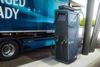
Electric trucks beat diesel on cost. But can they do the job?
Battery-electric trucks could be cheaper than diesel across up to 90% of the European road-freight kilometres modelled for 2030, according to a new study. But being cheaper does not necessarily mean that they can actually do the work.
-
 FCZ Article
eHGV market stalls as hybrid powertrain case grows stronger
With eHGV uptake flatlining, subsidy support fading and infrastructure barriers unresolved, Turntide Technologies CEO Steve Hornyak makes the case for range-extending hybrid powertrains as a commercially viable route to decarbonisation — while the government’s HGV CO2 consultation response looms large.
-
 FCZ Article
Electric van market share hits record high but remains well short of ZEV mandate
Electric vans delivered a record share of the UK light commercial vehicle market in July, but remained well below the levels needed to meet the government’s Zero Emission Vehicle (ZEV) Mandate, according to the latest figures from the Society of Motor Manufacturers and Traders (SMMT).
-
 FCZ Article
Wales’ first dedicated eHGV charging hub goes live
Freight forwarder FSEW has officially launched the first dedicated HGV electric charging hub in Wales.
-
 FCZ Article
Rethinking the energy transition: why HVO deserves a bigger role
Exhibiting at The Commercial Vehicle Show in Birmingham confirmed what we already knew: the industry is facing increasing pressure to reduce carbon emissions.
-
 FCZ Article
Royal Mail adds 9,000th electric van to delivery fleet in dash for net zero
Royal Mail, which boasts the UK’s largest electric delivery fleet, has reached a major milestone after introducing its 9,000th electric van.
-
 FCZ Article
RTFO at crossroads: can low carbon fuels bridge the decarbonisation gap?
The Renewable Transport Fuel Obligation has cut 7.9 million tonnes of CO2e in 2024 alone, but with its post-2032 future unresolved and the ZEV mandate looming, fleet operators and policymakers are divided on whether low carbon fuels are a vital bridge or a costly distraction.
-
 FCZ Article
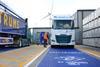
The real bottleneck isn’t the grid. It’s space and time
Weeks of waiting, a significantly smaller parking area and a project that would almost certainly have to be broken into phases: this is what a large operator should prepare for if it wants to electrify its truck fleet. Even where grid capacity is available, converting an existing depot will take ...
-
 FCZ Article
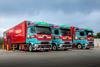
Pollock runs four eHGVs on Amazon trunking lane to Inverness
Gregory Group’s Scottish 3PL Pollock is operating three Mercedes-Benz e600 Actros and one MAN eTGX on its Amazon trunking contract between Bathgate and Inverness, with 57% of lane miles now run on battery electric and the remainder on HVO.
-
 FCZ Article
Why 1.2MW chargers won’t save heavy fleets from grid limits
Dr Nigel Jakeman of Turbo Power Systems argues that peak output ratings are becoming secondary to system intelligence — and that operators who treat charging as part of a broader energy ecosystem will be best placed to succeed.
-
 FCZ Article
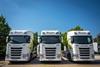
First permanent electric lorries join Menzies Distribution’s fleet
Menzies Distribution Solutions (MDS) has taken on three 42-tonne electric Scania tractor units – the first eHGVs to become a permanent part of its fleet.
-
 FCZ Article
Chiltern harnesses power of sun for trailer work
Chiltern Distribution has taken on two temperature-controlled trailers from TIP Group, fitted with Sunswap’s Endurance units powered by a combination of onboard batteries and roof-mounted solar panels.
-
 FCZ Article
Toyota joins Daimler Truck and Volvo fuel cell venture
Toyota is to become an equal shareholder in hydrogen fuel cell joint venture Cellcentric, alongside Daimler Truck and Volvo group in a move aimed at accelerating the development of hydrogen-powered trucks.
-
 FCZ Article
Service, not price, may decide Chinese electric truck sales in the UK
A Chinese electric tractor can now be ordered in the UK for £139,000 after grant support, but industry specialists say servicing, parts supply and residual values may matter more than the badge or headline price.
-
 FCZ Article
Back multi-fuel path to net zero, RHA urges government
The RHA has renewed its call for a technology-neutral approach to decarbonisation, warning that the majority of HGV operators have no plans to switch to zero-emission vehicles because of cost and operational constraints.
-
 FCZ Article
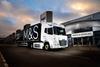
M&S to roll-out ten new DAF XD electric trucks across core operations
M&S and its transport subsidiary Gist have commenced the roll-out of ten new DAF XD Electric tractor units, marking a significant next step in the retailer’s transition from electric truck trials to scaled zero tailpipe emission operations.
-
 FCZ Article
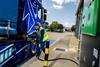
Truck depots face nine-year wait for EV grid connections while data centres’ capacity goes unused
Freight depots are facing waits of up to 2035 for more power, while data centres that use less than a fifth of their capacity remain at the front of the queue, the latest report from freight infrastructure body TwentyForty has revealed.
-
 FCZ Article
Solid-state truck batteries: promising technology but not yet fleet-ready
As solid-state battery development accelerates, fleet decision-makers face a clear message from engineers and charging specialists: the technology holds genuine long-term promise for eHGVs, but LFP remains the only bankable option today — with LMFP and sodium-ion the next steps on the road.