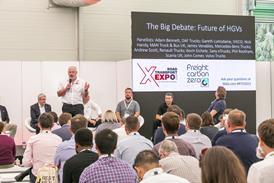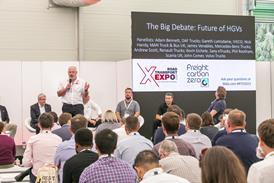







Last week was a hectic week for the Freight Carbon Zero editorial team. We started the week with the first of our Freight Carbon Zero Think Tanks, hosted in partnership with our friends at the BVRLA, before heading to Amsterdam for the Smart Freight Centre’s Smart Freight Week and concluding with an exclusive interview with Alexander Vlaskamp, CEO of MAN Truck & Bus.
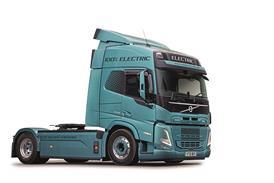
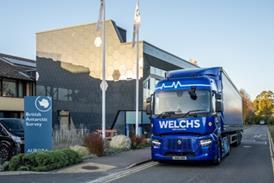
From these discussions, it’s clear the building blocks are starting to be put in place for the shift to a low- and zero-carbon road freight sector: the vehicle manufacturers are now, or will very shortly be, in a position to offer zero-emission vehicles at scale; the Charging infrastructure is slowly starting to gain traction and there is an appetite from the finance and leasing community to open up lines of funding for new zero-emission vehicles.
Of course, you might argue we should be going faster, but from where we’re sitting it looks like the industry is going as fast as it can on this journey. Picking our way through the next 10 years of industry transition is going to be a slow and arduous process bedevilled with uncertainty and risk. Which brings us to the latest issue we see bubbling to the surface, we’re calling it the “TCO trap” and for us this presents the big impediment to progress to Net Zero as we transition away from diesel-powered trucks.
We’ll be releasing some very interesting research at Road Transport Expo in June which indicates the biggest impediments to decarbonisation of the sector is lack of customer demand and total cost of operation (TCO), which you could argue are two sides of the same coin. If the TCO of zero-emission vehicles was less than diesel-powered trucks, then you can be pretty sure the customer demand would increase!
Basically, despite the wishful thinking of some industry analysts in the sector, TCO parity with diesel is a good while off yet and without any movement on that key indicator, the accelerated decarbonisation of the road freight sector is going to be challenged.
Much of the proposed regulation from the EU and UK policy makers is focused on the supply side of the equation, forcing the manufacturer of the vehicles and the immediate user of those vehicles to take the decarbonisation steps. This is all well and good, and is probably appropriate for the passenger car sector where the end user of the vehicle is the consumer of the mobility solution, but for road freight there’s a different dynamic at play. The vehicle only moves when there is a business demand for it. For logistics companies that’s when a shipper, customer or freight trip generator (call it what you will) needs their goods delivering or collecting.
Focusing all the policy efforts on the supply side of the market, without any push on the demand side, continues to amplify the cost disparity between fossil-fuelled and zero-emission vehicles.
For the TCO of zero-emission vehicles to reduce it needs scale, yet while zero-emission logistics services keep getting outbid by diesel for logistics contracts, the demand won’t be there, the required scale won’t flow, and we’ll be trapped. Unless, of course, the legislators are prepared to start ratcheting up VED on diesel, or there is an effort to toughen up the regulations on the demand side of the sector. At Smart Freight Week in Amsterdam last week, we heard the first recognition the latter point may be on the cards.
Despite the virtuous demand signalling from the logistics company’s clients that they want green logistics solutions, all too often the final procurement decision of who wins the contract is based on price.
While this market dynamic prevails, the zero-emission truck will, unfortunately, remain as a sideshow of pilot projects and trials. It will be a brave logistics service provider who tells its clients you can have green logistics or nothing, oh and by the way it will also be more expensive…
This might require incentives (or penalties) to nudge the freight buyers in the right direction, but something must give or we’re going to keep returning to the “TCO trap” as the big decarbonisation blockage.


![Mercedes-Benz_eActros_600_(1)[1]](https://d2cohhpa0jt4tw.cloudfront.net/Pictures/274x183/8/1/8/17818_mercedesbenz_eactros_600_11_556244.jpg)