





We joined another call last week with some worried fleet buyers, grappling with the demands from their boards, and their customers, for progress on the road to carbon zero. They’d all done their initial homework, had started their investigations and were in the early stages of business modelling and they’d all hit a problem with the operational implementation of battery electric vehicles.

In this case, these were heavy van operators (though the concerns are even more prevalent as you go up the weight ranges) on a range of activities from rural home deliveries, through long-distance express deliveries to utility applications. These were all sensible operators, fully bought in to the journey to decarbonisation, but with major concerns as they plan their next fleet replacement cycle.

For these fleet managers, a return to the board room to tell them their depot or factory is in the wrong place or that their supply chain has to be completely transformed, is not, yet (!), a feasible option. These are the industry’s problem solvers, paid to find a way through the challenges. If they are worried, then we need to take notice.

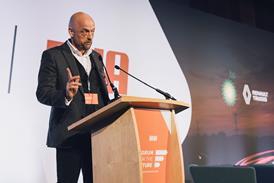
This attitude seems at odds with the prevailing mood from the truck and van manufacturers where product development is coalescing around battery electric vehicles. As you’ll know if you’ve had chance to listen to our latest podcast, what was billed as “The Big Debate” at the recent Road Transport Expo Knowledge Zone between the truck manufacturers ended up as the “Big Agreement” as the industry experts representing the OEMs shared the same view: HVO now, biomethane in the short to medium term, before a move to battery electric for the zero emission solution. Which would be case closed, were it not for those pesky end users who continue to raise the warning flags about the operational use cases.

We shouldn’t be surprised, battery electric is likely to be where the market volume is, initially at least, and it enables a shift to zero tailpipe emissions quickly. But there must be an acknowledgement from the manufacturers, the energy suppliers and the legislators that we have some use case gaps emerging, often in critical sectors. If these are left unattended, they will continue to fester and give the “whatabout” community ammunition to derail the plans.

We’ll end this week’s commentary on a familiar plea – but it’s one worth repeating. We are embarking on a mission which is not going to be easy. We’re only in the foothills and the squabbles have started about which way up we’re holding the map. Our plea is for all stakeholders in this journey to maintain an awareness ratio of “two ears: one mouth” (ie do twice as much listening as talking), keep learning and be prepared to be wrong. Discovering a flaw in the ‘cunning plan’, will be part of the process, don’t leave it as a gotcha moment for the naysayers to put the brakes on, the stakes are too high…

Get involved in the decarbonisation conversation and comment below (scroll to the bottom of the page). We are keen to hear your thoughts and feedback