


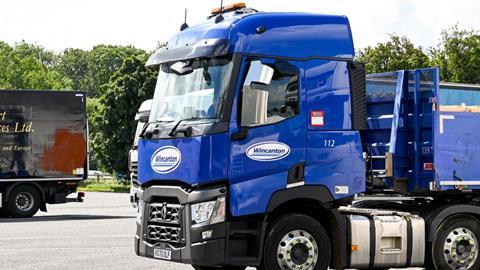

Wincanton returned to the black in 2025 aided by new business wins and growth in its core markets, following its acquisition by GXO Logistics, the group has revealed.
According to Wincanton’s latest annual results for the year to 31 December 2025, the group delivered a pre-tax profit of £78.6m, compared to a pre-tax loss of £84.4m in the nine months to 31 December 2024. Total revenue rose to £1.58bn (2024: £1.17bn).
In its strategic report to the results the group said profit was boosted by a £33.8m release of “onerous contract provisions” recognised in previous years and £11.9m received in settlements from a class action, which was not identified.
During the year the group landed several new contracts, including deals with Kayali, Wickes and Futon “as it successfully filled multi-user sites after customer led strategic exits in previous years,” the report revealed.
“Our existing long-term customer relationships continue to deepen with extensions and expansions of multiple contracts,” the report added.
During the year Wincanton’s grocery and consumer and general merchandise operations saw strong peak-season volumes, while e-fulfilment also performed well with multiple new business wins.
Revenue from e-fulfilment increased to £253.7m (2024: £207.3m), while grocery and consumer revenue rose to £599.6m (2024: £426.4m).
General merchandise generated £423.2m, up from £304.3m, and public and industrial revenue increased to £289.8m from £221.6m.
Wincanton said it continued to develop its EyeQ digital transport planning and optimisation product during the year, including work to establish a marketplace for transport subcontracting.
The integration of technology specialist Inteq Group, formerly Invar Group, also continued, with the report adding that the technology will help speed up the delivery of robotics and automation projects for customers.
GXO’s acquisition of Wincanton in April 2024 finally received clearance from the Competition and Markets Authority (CMA) in June 2025, subject to the divestment of Wincanton’s dedicated warehousing services to grocery customers.
Until the CMA gave the acquisition the green light the two companies had to operate independently. Once the sale got the go-ahead the integration of Wincanton into GXO began in September.
The company said it was now operating as part of the GXO group with a focus on outsourced warehousing and transport services in the UK and Ireland, supported by its expertise in robotics, automation and supply chain integration.
Meanwhile the dedicated grocery warehousing business is now classified as held for sale, with its disposal expected to be completed during 2026.
Wincanton said the acquisition had added strategic verticals to GXO’s UK and Ireland operations and that the ongoing integration was expected to strengthen the combined group’s position in key sectors.
Looking ahead, the report said Wincanton expects revenue and operating profit in 2026 to benefit from opportunities generated by its integration into GXO, further growth with existing customers and conversion of opportunities in its new-business pipeline.
It added: “These opportunities will be converted through a focus on retail specialisms and provision of cost-effective, value-added solutions.”
The company warned, however, that the economic outlook would remain challenging and that the planned disposal of the dedicated grocery warehousing operation would affect revenue and operating profit during the year.
In addition, some new business wins are also not expected to reach full-year run-rate until the end of 2026 or beyond.
Nonetheless, the board said it remained confident that Wincanton was in a strong position to grow as part of the wider GXO group.