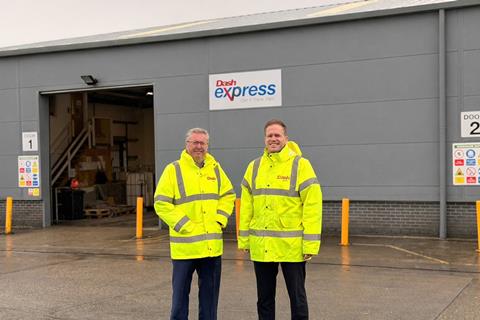



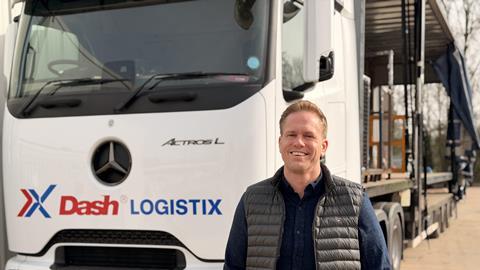

Paul Dash has helped grow Dash Express from a small South West van firm into a multi-depot logistics operation with a turnover topping £25m. Partnerships with APC Overnight and, more recently, Palletways have expanded the business into parcels, pallets and heavy trucks, while keeping the company’s hands-on, family-led approach.
“My dad always wanted a truck with Dash on the side,” Paul tells MT. “He passed away in 2010, and now I’ve fulfilled that wish.”
The comment reflects both the company’s progress and the personal drive behind it. While Dash Express has expanded steadily, its approach has remained deliberately agile.
“We’ve been fairly adventurous,” he says. “If you discuss things too long, opportunities disappear.”
That mindset has shaped the company’s trajectory. Logistics has been part of Paul’s life from an early age, although his route into the industry was not entirely straightforward. “I started working in the shop when I was eight,” he says. “It’s always interested me. I’ve grown up in it.”
But before committing fully to the business, he briefly pursued a different path. “I went to university to try and be an actor,” he laughs. “It didn’t really work. I auditioned for drama schools but then thought I might spend three years training just to end up unemployed. Alternatively, I could actually grow a business…”
That background perhaps explains Paul’s calm, measured attitude to the pressures of an industry defined by tight deadlines, constant change and the occasional crisis.
Operations director Paul and brother Stephen, the MD, take contrasting approaches. But Paul’s instinct for opportunity and Stephen’s methodical mindset have proved complementary.
“I can be a little sceptical sometimes,” Paul says. “That’s why Stephen’s great; he’s very methodical. Sometimes you need someone to pull you back into lane and say, ‘This is what we’re doing.’ We’re a good team because we just pull together.”
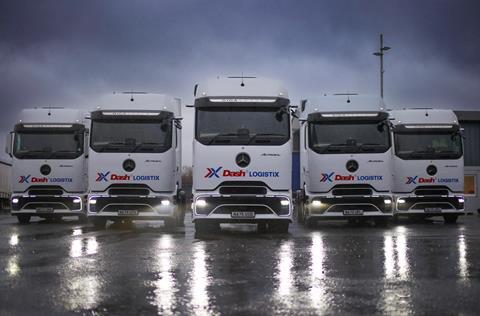
That balance has underpinned the company’s expansion, particularly as it has invested in new depots. Early sites in Plymouth and Cullompton enabled the business to combine vehicle rental with express distribution, while Exeter followed as a hub for both parcel and pallet operations in Devon.
Each new location has brought its own challenges, from recruiting local staff to building customer relationships.
“We try to make sure every new depot has the same ethos,” Paul explains. “Local people, strong relationships with customers, and a focus on profitability from day one. That’s how we scale sustainably.”
A key turning point came in 2019, when Dash Express joined the William Stobart-owned APC Overnight network, giving the business a platform to build its distribution operation.
“The distribution side of the business is where things scale really well,” Paul says. “Alongside that we have the vehicle side, whether that’s sales, rental or servicing. There are real synergies between the two.”
The partnership helped move the company beyond its van-based roots, but the company has retained its autonomy and continued to diversify. More recently, the business has expanded into heavier truck operations and joined the Palletways network, opening up new opportunities in palletised freight.
The move is already delivering results: “We started talking to our APC customers and saying, ‘You know you can send pallets as well,’” Paul says. “The response has been really positive. A lot of them were keen to have someone local they could deal with.”
For Paul, the strategy is straightforward: grow the business while maintaining a clear focus on service and profitability.
“Sometimes customers tell us it’s not about price, it’s about service,” he says. “That’s refreshing, because sometimes you simply can’t compete on price alone. If customers value service, that’s where we can really compete.”
At the heart of the approach is a simple philosophy: “Profit is sanity over vanity.”
“Everything we do, we want to be profitable from day one,” he says. “Sometimes people treat profit like a dirty word, but that’s why we’re in business, to make money, create sustainability and create employment. Be profitable, but be a good business and a good employer.”
People remain central to that vision. The next generation of the family is already playing a growing role, bringing expertise in areas such as technology, marketing and HR. They’re helping modernise the business while maintaining its personal, relationship-led culture.
“Tech is really important to us,” Paul says. “It’s about how we use it to improve operations and link different parts of the business together.
“The next generation is coming through, but we want to keep that family business feel. Customers should feel they have a relationship with the owner and aren’t just a number, and the same goes for employees.”
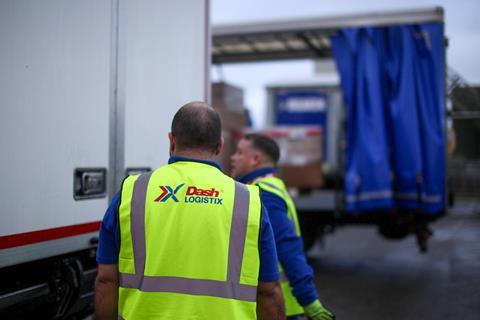
Technology is also helping to drive efficiency. Dash has experimented with AI for marketing and proposal writing, while telematics and operational data are improving driver performance, routing and fuel use.
“At the end of the day, we move a box from A to B,” Paul says. “But technology helps us understand how we can do that more efficiently. The most important data is the data that affects cost: fuel, driver behaviour and route planning.”
Like many operators, Dash Express is navigating rising costs, policy uncertainty and the transition to lower-emission vehicles.
“It’s definitely tough out there,” Dash says. “Costs have escalated and the industry is under pressure.”
He remains cautious about the pace and direction of electrification.
“I got on board with EVs a couple of years ago and I was really pro-EV,” he says. “The product itself is great; it’s the best van I’ve driven. We’ve mainly used Ford Transits. But there are issues with range.”
Infrastructure is a particular challenge, especially for a business operating from leased depots.
“Investing in charging infrastructure when the depots are on short leases doesn’t make sense,” he explains. “For local collection and delivery, EV vans are a great product. But for longer trunking work, they’re not fit for purpose.”
Paul believes the issue lies in how the transition is being managed.
“Forcing people to adopt electric vans isn’t going to work,” he says. “It has to fit the operation. Some of the targets are quite scary. EVs have a place, but there needs to be more thought about how we get there.”
At present, electric vehicles make up only a small proportion of the fleet.
“It’s probably one or two per cent,” he says. “I can’t see subcontractors getting on board with them yet. They can be cost-effective in the right circumstances, but not across the board.”
The same applies to heavier vehicles: “For trunking, it’s still too far off,” he says. “For collection and delivery, maybe, but it comes back to infrastructure, and we’re not always sure how long we’ll be in a particular site.”
The business is continuing to look for a long-term headquarters, although Dash sees flexibility as an advantage.
“We’d like an HQ, but the right property is hard to find,” he says. “We’re not 100% sure what we need, so being flexible and dynamic is a good thing.”
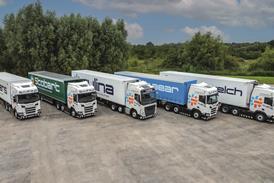
Despite the challenges, the expansion into palletised freight is a source of particular pride. The fleet now includes around 15 trucks, marking a significant step beyond the company’s van-based origins.
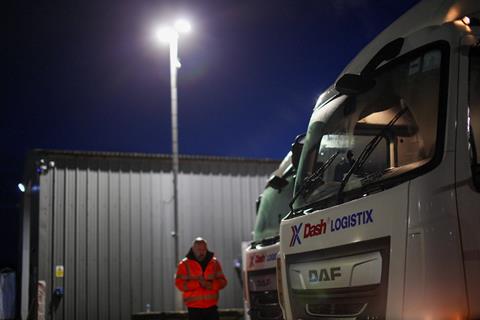
Looking ahead, Paul is keen to consolidate after a period of such rapid growth.
“I’d quite like to be in a more settled phase for a while,” he says with a smile. “I love it, but it’s tiring. Maybe I’ll take a few longer holidays, although I do all right, don’t get me wrong.”
Even so, the entrepreneurial instinct remains. “We’re always looking at opportunities, whether that’s same-day services or using data better,” he says. “I like seeing opportunities and being able to give those opportunities to good people. That’s what excites me.”
From a single van to a diversified regional operation covering parcels, pallets and trucks, Dash Express reflects a blend of ambition, pragmatism and strong family values. They’re qualities that continue to shape both the business and the men behind it.