



Fleet operators are still struggling to improve utilisation and cut empty running due to regulatory constraints and infrastructure limitations, Microlise chief executive Nadeem Raza has warned.
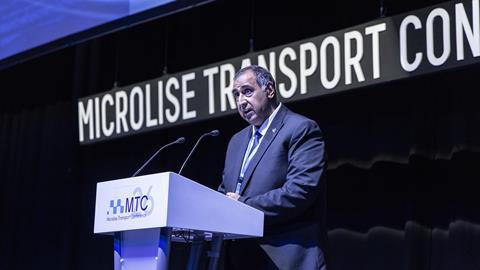
Speaking to Motor Transport at the Microlise Transport Conference in Manchester, Raza (pictured) said that despite improvements in technology and operational systems, core inefficiencies across the industry have barely shifted in the past ten years.
“Even if you look at empty running, it’s not really got that much better in the last decade. The stats are pretty much the same,” he said.
He argued that much of the constraint sits outside operators’ control, pointing to delivery time windows, contractual service level agreements and driving hours regulations as key barriers to better vehicle utilisation.
“Those are the things that actually mean they can’t maximise the fill on the back of a trailer,” he said.
Raza suggested that regulatory change, particularly around driving hours, could play a role in improving efficiency, particularly as vehicle technology advances.
“There’s going to have to be some level of shift in driving hours legislation,” he said.
He argued that developments in driver assistance systems could enable greater flexibility in how working time rules are applied in future, while maintaining safety standards.
“Is there an opportunity for changing working time to allow some flexibility in the current regulations, which may mean slightly longer routes or fewer breaks, which would increase utilisation and reduce emissions?”
However, he stressed that any such changes would need to be aligned with wider safety considerations and technological capability.
Raza also highlighted the growing pressure on fleet operators from rising fuel costs, describing it as one of the most significant operational challenges currently facing the sector.
“Fuel costs are really impacting a lot of people, particularly those running their own fleets,” he said.
He warned that operators outside of contract structures with fuel escalation clauses are being forced to absorb significant cost increases.
“That fuel price has gone up enormously as an underlying cost for your business, and some customers are in a real bind because they can’t pass it on.”
Raza said prolonged cost pressure risks placing some operators under serious financial strain if market conditions do not stabilise.
“Some of those customers are facing jeopardy, really, because it’s going to really impact their businesses.”
Despite this, he said the sector remains world-leading in operational capability, but warned that continued improvement will depend on better infrastructure investment and greater collaboration.
“We are world leaders in logistics and transport. We’ve got some of the best operations anywhere in the world,” he said.
“But we have to keep improving, and that means embracing technology, improving collaboration and investing in infrastructure.”
Raza also pointed to the potential for greater collaboration between operators to improve vehicle utilisation, where commercially and legally viable.
“There are definitely opportunities for collaboration that will increase utilisation and drive value for customers,” he said.
However, he acknowledged that data sharing and commercial sensitivity remain barriers, alongside regulatory frameworks such as GDPR and competition law.
“It is a bit of a tightrope, but it is doable,” he said.