







Following last week’s commentary focused on the levers open to the legislators to assist in the transition to low and Zero carbon vehicles, it’s time to turn the attention to taxation. While in the UK talk of tax has been taboo for the past eight weeks of the election campaign (and is always an unpopular subject at any time) if we’re serious about tackling the climate challenge and decarbonising the sector, we’ll have to have this conversation eventually.

As we’ve said before, the path to Decarbonisation of the road freight industry will only become clearer when there’s an economic rationale for operating low or zero emission vehicles. Sure, you need the vehicles available and somewhere for them to refuel or recharge, but all that won’t count for a hill of beans unless there is a market demand for goods being moved on low emission vehicles. Bludgeoning the industry with end of sale dates for diesel trucks can’t be the only tool deployed to shift the behaviour of an industry which is (more or less), single handedly responsible for getting the goods and services of the economy to the point of production or consumption in the UK.
Whether we’re looking at incentives or disincentives, the end result will be the same taxpayer intervention, either at the point of consumption (the pump or the road, in the case of road Charging) or, through redistribution of the tax take by way of grants and incentives for those taking the clean option. Except for the plug-in truck grant, we currently have neither when it comes to trucks (at least cars had the benefit-in-kind incentives for company car users!) and without wishing to sound like a broken record (remember them?) we’re concerned the decarbonisation journey is primed to stall.
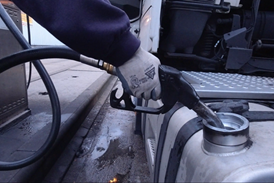
We know this one will be unpopular, but let’s try it for size anyway: How about we re-introduce the fuel duty escalator for standard B7 diesel and E10 petrol? This has been frozen since 2011 and has to be on the radar of the cash-strapped Chancellor as she looks for ways to fund the plans for change. Even better, though probably even less likely to happen, use some of the funds raised from such a hike to support the industry in its transition be it through improved public charging and parking infrastructure or the grid connections necessary for local solutions.
We’ve deliberately referred to low-blend biofuels in our tax target above (B7 refers to a 7% blend), as there is much that can be done in the short term to incentivise the uptake of low carbon renewable fuels as an important step to support the transition. For many operators, a switch to zero emission vehicles isn’t practical today, due either to the operating constraints of battery electric, the zero availability of Hydrogen vehicles or the absence of available fuelling for either.
Any revision to the fuel duty regime shouldn’t miss the opportunity that low carbon renewable fuels present and should consider incorporating an essential user rebate for commercial vehicle users adopting high blends of low carbon renewable diesel, such as B40. This would give government a controlled and targeted means to reduce carbon emissions, similar to the Bus Service Operators Grant, via a pathway most fleet operators would recognise and welcome.
At Road Transport Expo last month, there was a session looking at how the adoption of these high blend biofuels were being looked at by consultants WSP on behalf of the Department for Transport. While the findings from that activity (along with, dare we say, plenty of others) may get lost in the long grass of regime change, the opportunities this presents to give operators an immediate opportunity to decarbonise without a major re-fleet should not be missed. Indeed, a presentation from a well-known operator running its vehicles on high blend biodiesel without any change to the fleet demonstrates this is a relatively easy to implement solution, available now.
You’ll notice we’ve swerved road charging as a lever for change and there are plenty of discussions surfacing about this currently. But unlike, say, Germany where there is already the infrastructure in place for distance-based charging, implementing this in the UK will be a big job. It will need to be on the government’s technical roadmap (we shouldn’t kid ourselves that zero emission vehicles will be run tax-free in the future), but we’d venture this is 10-15 years away and a topic for a future commentary.


![Mercedes-Benz_eActros_600_(1)[1]](https://d2cohhpa0jt4tw.cloudfront.net/Pictures/274x183/8/1/8/17818_mercedesbenz_eactros_600_11_556244.jpg)