









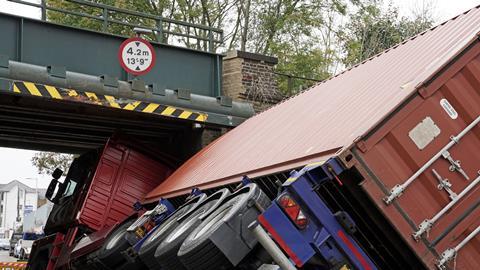

The logistics sector is being urged to treat driver mental health with the same rigour as vehicle safety, after industry leaders warned that hidden “human risk” is costing billions and driving collisions, absenteeism and spiralling insurance claims.
Speaking at the latest Destination Zero Bridge Strikes national forum, industry leaders delivered a stark message: fleets closely track fuel, telematics and compliance, but often overlook the condition of the person behind the wheel.
Launched last June by training consultancy Road Skills Online, the campaign is designed to directly involve operators in efforts to reduce risk and build a stronger culture of prevention. The forum brought together major operators including Bidfood and GXO, alongside manufacturers such as Daimler Truck UK, insurers including ERB Commercial Insurance, and driver welfare advocates working on the frontline of mental health support.
Leading the discussion, EISOP founder Ian Kirkpatrick, a logistics and HR specialist with more than 30 years’ experience across supply chain and operations, outlined the scale of the issue. His consultancy focuses on improving performance by tackling workforce wellbeing, culture and operational risk together.
He cited research showing UK businesses lose £51bn each year to poor mental health, rising to £300bn when indirect costs are included. In logistics, the impact is especially sharp, with an average of 21 days’ absence per mental health-related case. At roughly £350 per driver per day, the cost quickly mounts across fleets.
“Hauliers track vehicles, fuel and compliance,” Kirkpatrick said. “But do you actually track the mental condition of the person driving that vehicle?”
His analysis linked driver wellbeing directly to operational and financial risk. Minor collisions can cost between £10,000 and £30,000, while serious incidents can reach £250,000 to £750,000 - figures that climb sharply when fatalities, long-term care or reputational damage are involved. Insurance premiums can rise by up to 35% for several years for a single major claim, while replacing a driver can cost as much as £15,000.
Crucially, Kirkpatrick argued that many of these risks sit below the surface. While fleets capture data on incidents and vehicle performance, they rarely account for psychological trauma, fatigue or the lingering effects of previous accidents. These are factors that can significantly impair driver performance.
Drawing on industry experience, he highlighted how drivers involved in serious incidents are often quickly returned to work with little structured support, despite the potential for delayed psychological impact. In one case, he noted, a driver involved in a dramatic crash was deemed “fine” and back on duty within hours, raising questions about how wellbeing is assessed and managed.
“Mental health is a leading causal factor in absence, and stress is the biggest component,” he said. “But there’s still a gap in how we equip managers to recognise and deal with that, especially after serious incidents.”
Kirkpatrick called for a strategic shift, suggesting that mental health should be treated as a formal risk category, embedded into policies, leadership oversight and even driver appraisals, much like any other workplace hazard.
However, industry ambassador Jacqueline O’Donovan cautioned that formalising mental health too rigidly within risk assessment frameworks could backfire, discouraging open conversations between managers and drivers.
“For me, a risk assessment would actually hinder us being able to have open conversations,” she said. “If it becomes something that’s written down and recorded, you risk people just ticking a box: ‘How are you?’ ‘Yeah, fine’, when we all know that’s not the reality.”
Instead, O’Donovan advocated for practical, human-centred interventions. Drawing on her experience in the waste sector, she described how simple breathing techniques helped drivers manage stress in high-pressure environments such as urban traffic.
“We taught drivers how to breathe; literally how to control their breathing to keep stress levels down,” she said. “The change was phenomenal. Absenteeism dropped, productivity improved, and they felt invested in. It became a cultural shift. They felt part of a family.”
The discussion also highlighted a lack of clear ownership within organisations, with responsibility for driver wellbeing often split across HR, safety, operations and insurance functions, leaving no single team accountable for the full picture of “human risk”.
Participants included training veteran Brian Kenny; Hannah Russell and Dawn Hastie of Bidfood; Lisa McGrevy, EHS SQ director at GXO; Amy Carter, product head at Daimler Truck UK; and Lee Banks of ERB Commercial Insurance, representing a cross-section of training, fleet operations, safety, manufacturing and insurance expertise.
Despite differing views on implementation, there was broad agreement that the industry must move beyond compliance-led approaches and confront the operational reality of driver wellbeing, particularly as pressure mounts from rising costs, driver shortages and increased scrutiny of safety performance.
The issue is set to return to the spotlight at a dedicated bridge strike conference scheduled for Road Transport Expo (RTX) on 1 July, where industry stakeholders are expected to explore data-sharing, prevention strategies and the wider role of driver welfare in reducing incidents.
With efforts also underway to build a national database of bridge strikes, the conversation is shifting from isolated incidents to systemic risk.
As Kirkpatrick’s central question suggests, the next step for operators may be less about what they can track, and more about what they currently overlook.