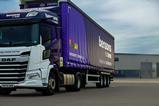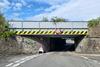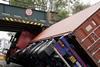







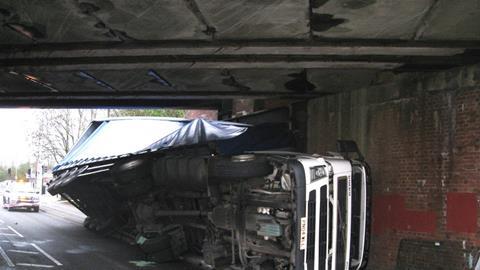

Bridge strikes are at their highest level in four years and the risk has not reduced since the beginning of the century, according to a driver behaviour expert.
Figures from Network Rail showed that there were 1,666 reported crashes into bridges last year, which equated to approximately one strike every five hours.
The number has increased by almost 9% on the previous year, where there were 1,532, and it was more than in 2022/23 where there were 1,588 strikes by HGVs and other vehicles.
This is despite high-profile campaigns highlighting the problem, as well as the cost to the rail industry in delays and cancellations – and warnings from the traffic commissioners about the impact on operator licences.
David Somers, MD at Road Skills Online and founder of the campaign Destination Zero Bridge Strikes, said the issue would only be resolved when companies stopped seeing bridge strikes as someone else’s problem.
Somers pointed to data that showed there were 1,700 bridge strikes in 2000/01 and the average per year over the last quarter of a century was 1,692.
He said: “Over 25 years there is no trend in any direction, suggesting the risk has not reduced.
“Bridge strikes happen like any other collision because of a complex mix of human values, beliefs and behaviours.
“These will be changed only if the majority of fleet directors and managers involve drivers to raise awareness of the need to change behaviours.
“At the moment a bridge strike, like other collisions, is [perceived as] something that will happen to someone else, not me.”
The Network Rail figures also revealed that Watling Street bridge on the A5 in Hinckley, Leicestershire, was the most struck structure last year, after vehicles collided with it 22 times.
Martin Frobisher, Network Rail’s group safety and engineering director, said: “Every bridge strike endangers lives, disrupts rail services, and delays tens of thousands of passengers while we inspect and repair the damage to the bridges.
“Each incident also costs millions of pounds that could instead be spent improving the network.”
National Highways said two-thirds of strikes on bridges involve vehicles carrying loads on open trailers.
It urged drivers to know their vehicle height, plan their route and ensure loads were secured.