






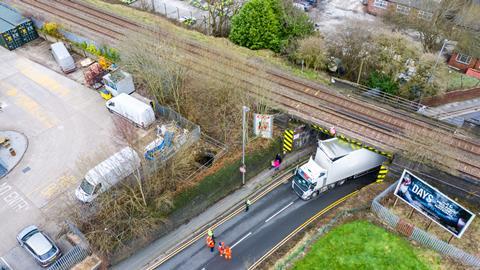
The first Scottish Forum of the Destination Zero Bridge Strike campaign convened at Road Transport Expo Scotland on 19 November, with support from Transport News, bringing operators, managers and industry stakeholders together to ask a simple question: why are bridge strikes still happening?
The answer, according to the forum, is anything but simple.
Discussions quickly moved beyond driver error to a wider system failure that spans vehicle technology, training, route planning and company culture. While drivers remain the last line of defence, the forum was clear that responsibility is shared across transport management, planners and employers.
One recurring theme was vehicle height awareness. Despite the availability of height indicators, they are rarely treated as a “live” piece of safety equipment. Drivers often do not actively check vehicle height at the start of the day, a weakness that becomes more acute when trailers are swapped during operations.
Warning signage also came under scrutiny. In many cases, signs are positioned too close to bridges to allow drivers sufficient time to react, while diversion routes frequently fail to consider the needs of HGVs, offering little or no advance warning of height restrictions.
The modern driving environment only compounds the risk. Forum members pointed to increasing traffic congestion, delivery pressures and the growing number of in-cab technologies competing for drivers’ attention. Against this backdrop, route planning is often treated as a paper exercise rather than a critical safety control.
“Route planning doesn’t always get the attention it deserves,” the forum concluded, noting that managers, traffic office staff and drivers alike can underestimate its importance in preventing strikes.
Training was another area identified as needing reform. The group highlighted a gap between what the HGV test assesses and the real-world demands of avoiding bridge strikes. Current training and testing, the forum argued, focus heavily on knowledge and vehicle handling skills, with far less emphasis on behaviour, risk management and journey preparation.
There was also a candid acknowledgement of human nature. Drivers, like most professionals, tend to see themselves as competent and experienced. This can mask gaps in understanding, particularly when operators rely too heavily on a new recruit’s “previous experience” rather than providing consistent, company-specific training on risk and collision prevention.
The consequences of failure are severe. Beyond the immediate danger to other road users and rail passengers, bridge strikes can trigger widespread traffic disruption and carry significant financial and reputational costs for operators.
To address this, the forum urged management teams to treat collisions as serious safety events that demand investigation and corrective action, rather than isolated incidents. Encouraging drivers to report hazards and emerging risks on their routes was seen as a practical step that could benefit the entire operation.
A series of practical measures was proposed for operators looking to reduce risk. These included simplifying the information drivers must process in the cab, investing more time in pre-journey planning, and building internal databases of low bridges on regular and adjacent routes. Consistent communication on standards and risks, supported by clear reporting systems, was also highlighted as essential.
The forum pointed to existing frameworks such as CLOCS’ logistics route planning approach as a potential model, while stressing the importance of company-wide engagement. Training, open discussion, and even simple tools such as posters were all seen as ways to keep bridge strike prevention front of mind.
The overarching message was clear: incremental change by individual drivers will not be enough. The forum agreed that an industry-led campaign, with operators collectively doing things differently, offers the best chance of making a meaningful and lasting reduction in bridge strikes.
As Scotland aligns behind the Destination Zero ambition, the challenge now shifts from identifying the problem to delivering the cultural and operational change needed to finally bring bridge strikes under control.