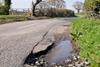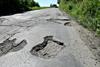









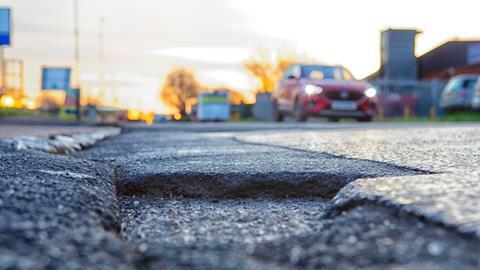

Greater urgency is needed to solve the country’s pothole problem and funding needs to be ring-fenced, according to the RHA.
It was responding to data released this week that showed a spike in pothole breakdowns last month amid soaring temperatures.
The increase was attributed to this summer’s heatwaves, which resulted in an increase in road trips on poor quality rural roads, and heat stress worsening already worn tyres.
A report from Zurich insurance also pointed out that climate change was contributing towards the deterioating state of the roads.
James Barwise, RHA policy lead, said: “Poorly maintained roads create delays, cause misery for road users and add to already high costs for businesses.
“To get the reliable roads we need, we’re calling for urgent action and more permanent solutions.
“We want to see local authorities equipped with the latest technology for longer lasting and more cost-effective road maintenance. We urge the department for transport to work with local decision-makers to fast-track these processes.
“We’ve previously called on local authorities to ring fence pothole funding for longer term fixes,” Barwise added.
“We repeat this call.”
The Asphalt Industry Alliance (AIA) said network resilience was declining due to long term underfunding.
AIA chair David Giles said: “Patching and mending is not the answer. If we want to see improved local road conditions, we need to give local authority highway engineers increased, sustained and targeted funding.
“This would allow them to bring local roads up to scratch so that, going forward, they can carry out the right maintenance and repair interventions at the right time – helping to proactively make potholes and the damage they can cause, a thing of the past.
“It would also provide better value for taxpayers too.”
The AIA’s own survey of local authority road maintenance found that only 48% of roads in England and Wales are now classified as being in a ‘good’ structural condition, which is defined as having 15 or more years of life remaining.
It estimated that it would cost almost £17bn to tackle the carriageway repair backlog.