









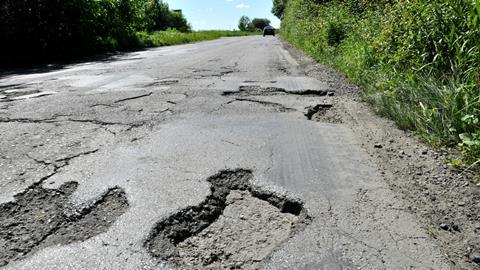

New data from The AA and The Pothole Partnership has revealed a spike in pothole breakdowns during July, thanks to soaring temperatures.
After falling numbers in the first half of the year, call-outs rose again in July compared to the same month last year, according to July’s AA Pothole Index.
The increase has been attributed to this summer’s heatwaves, which have resulted in an increase in road trips on bad quality rural roads, and heat stress worsening already worn tyres.
The Pothole Partnership, an alliance comprising The AA, JCB, British Cycling, and the National Motorcyclists Council, has now reiterated its call for continued investment in the road infrastructure, warning that poor road surfaces pose a significant risk to motorists, cyclists, motorcyclists and pedestrians.
According to a recent report from Zurich insurance climate change is contributing to worsening pothole problems.
The report said more frequent and intense weather events, such as heatwaves, freeze-thaw cycles and heavy rainfall, are accelerating road damage and increasing the number of potholes, requiring a shift towards more resilient road materials and proactive maintenance strategies.
Edmund King, AA president, said: “This summer’s heatwave has starkly exposed the fragility of Britain’s roads.
“While investment and repair campaigns have made a difference, the recent setback illustrates that much more must be done to create a safe and reliable road network for everyone.
“We urge the government and local authorities to redouble their efforts in tackling the pothole crisis, prioritising rural routes and frequently used cycling and motorcycling corridors.”
A Local Government Association spokesperson said: “Councils take their responsibilities to maintain and upkeep roads seriously. As changing weather patterns impact roads, local government seeks to innovate and find new ways to respond to the issue.
“Local authorities work hard to fix potholes swiftly to prevent people’s journeys from being impeded. However, many factors affect repair rates, from the type of road and traffic levels, to inflation and ongoing pressures from other council services.
“Greater long-term funding certainty, with local roads receiving a fairer share of the £24bn roads fund over the next five years, will enable councils to invest in more preventative treatments.
“This is needed if we are to begin making headway with the £16.8 billion local roads repair backlog.”