








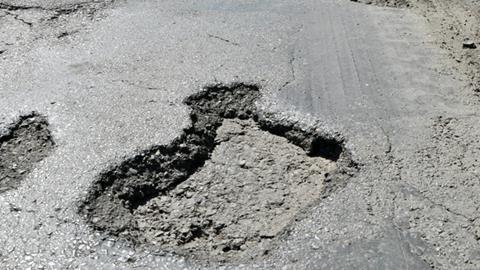

RAC patrols attended 9,439 pothole-related breakdowns in the first three months of 2025 – more than double the number they were called out to between October and December last year, new data from the RAC’s Pothole Index shows.
Call-outs for damaged shock absorbers, broken suspension springs or distorted wheels – the breakdowns most likely to be caused by wear and tear from poor road surfaces – increased by 19% (1,535 RAC rescues) compared to the same period (January to March) in 2024.
The number of pothole breakdowns in the first quarter of 2025 (9,439) equates to 1.5% of all RAC breakdowns – a significant jump on the fourth quarter of 2024 (0.8%) and the first three months of 2024 (1.1%), the research revealed.
Government data analysed by the RAC reveals many of England’s roads are in a dire state with a fifth (19%) of councils having more than 10% of their minor roads in ‘red’ or ‘poor’ condition, meaning further investigation is required to ascertain if immediate work is needed.
The analysis shows that the authority with most of its B and C roads in red condition is Derbyshire with 38%. The London boroughs of Merton and Havering have 34% and 26% respectively, with Nottingham in fourth spot with 21%.
Derbyshire was also top for having the most major roads in ‘red’ condition with 28%. Nottingham has the second most (19%), closely followed by Brighton and Hove (18%).
In terms of minor roads classed as being ‘green’, which means no further investigation or work is needed to bring them up to standard, eight-in-10 (80%) councils have more than half of their B and C networks in this condition.
Conversely, a fifth (20%) have more than half their minor roads in need of further inspection or maintenance. For major roads, 88% of authorities have more than half in green condition.
Five authorities have 85% or more of their minor roads in green condition. These are the London borough of Bexley (96%), Sunderland (87%), Middlesbrough (86%), Newcastle upon Tyne (86%) and Walsall (85%).
For major roads classed as ‘green’, Sunderland is joint top with Bedford on 89%, followed by Gateshead, Middlesbrough and Sheffield, all on 88%.
RAC head of policy Simon Williams said: “Our pothole-related breakdown data is a very clear reflection of the true state of the UK’s roads, and it sadly shows the pothole plague is as prevalent as ever.
She added: “The latest RAC Pothole Index data confirms this unfortunate reality. Our patrols have been to the aid of almost 10,000 members in the first three months of this year who have broken down due to effects of driving on substandard roads – a huge rise compared to the same period a year ago.
“While we know the government has just given a record amount of funding to English councils to sort out their roads, the latest Department for Transport data shows there’s plenty that this money needs to be spent on, as a fifth of councils have more than 10% of their minor road networks in ‘red’ or ‘poor’ condition.
“After filling dangerous potholes as permanently as possible, we urge councils to prioritise preventative maintenance such as surface dressing to stop future potholes appearing.
“Government data shows there’s been a big decline in the amount of this work taking place compared to five years ago, perhaps explaining why drivers’ number-one concern in the RAC Report on Motoring is the poor state of the nation’s roads.”
Responding to the findings, RHA called for urgent action this week.
RHA Policy Lead, James Barwise said: “With poorly maintained roads causing misery daily for road users, creating delays, diversions and adding to already high costs for businesses, we need to see urgent action to find solutions.
“That means local authorities equipped with the latest technology and training for longer lasting and more cost-effective road maintenance. We urge DfT to work with local decision-makers to fast-track this process.
“These numbers further highlight the often short-term and temporary nature of repairs happening across the country. Earlier this year, we called on local authorities to allocate and ring-fence pothole funding for long-term and permanent fixes. Today we repeat our call.
“We welcome recent assurances from the Government, but it’s obvious that much more needs to be done, faster to deliver a road network fit for a modern economy, and one which drivers deserve.”