

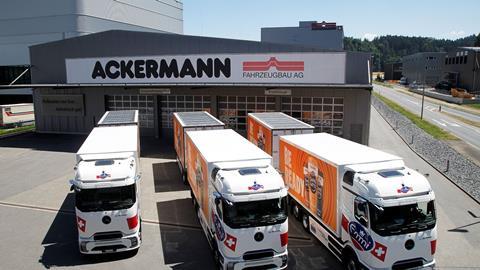

Keeping a refrigerated trailer cold can draw power from an electric truck’s battery; power that would otherwise go towards driving. Swiss dairy group Emmi is trying a fix: giving each trailer its own 45kWh battery, so refrigeration no longer competes with the truck for range.
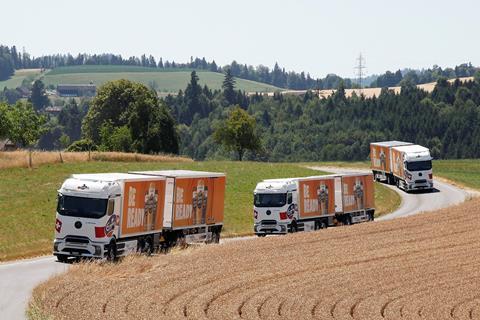
Three battery-powered refrigerated trailers have been running on live delivery routes since July, paired with Emmi’s Mercedes-Benz eActros electric trucks. Early data from technology supplier Nivalis Energy Europe suggests the system has already faced demanding conditions. During days when outside temperatures reached between 35°C and 40°C, the trailers maintained a set temperature of around 0°C while the refrigeration system consumed approximately 4-5kWh per operating hour.
The independent battery does more than protect the truck’s driving range. It also allows the refrigeration unit to keep running when the trailer is uncoupled.
“Trailer autonomy is particularly important in distribution operations,” Nivalis said. Trucks can leave a refrigerated trailer at a warehouse, logistics hub or depot with the cooling system still operating, then drive away to collect another trailer rather than waiting for unloading to finish.
Built by Ackermann Fahrzeugbau, the trailers cover around 200-400km a day, with refrigeration typically operating for six to ten hours.
Charging takes place at Emmi’s depot through a standard CEE industrial connection with a maximum charging power of 20kW. The connection can power the refrigeration unit and recharge the battery at the same time, with power not required for cooling directed into the battery.
Each trailer also carries seven rooftop solar panels. Nivalis says these have produced up to 1.8kW in favourable summer conditions, although the trailers have not been operating long enough to establish a representative split between energy supplied by the grid and the solar system.
Nivalis offers its system with 30kWh, 45kWh or 60kWh batteries, while rooftop solar and regenerative e-axles can be added depending on the duty cycle. The company says the aim is to match the specification to the operation rather than add battery capacity and equipment unnecessarily. Route length, refrigeration hours, charging opportunities and energy demand all affect the optimum configuration, so there is no single purchase-cost or payback figure that can be applied across fleets.
For Emmi, the alternative under consideration was to power refrigeration through an electric PTO connected to the truck. The drawback is that cooling would then consume energy from the truck’s traction battery and the trailer would depend on the tractor remaining attached. Giving the trailer its own battery removes both constraints: the truck retains its energy for driving, while the load can remain refrigerated after the tractor has moved on.