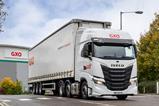
Freight forwarder FSEW has partnered with battery storage specialist Zenobē to help establish a new low carbon freight hub in Cardiff.
The hub will be the first in Wales powered entirely by renewable energy sources and one of the UK’s first low carbon freight hubs.
Zenobē will bring its bus fleet electrification expertise to its first truck charging infrastructure project in the UK.
It will install four 400kW DC chargers, with the option to expand into the 2.5 acre open access hub that was recently granted planning permission.
The infrastructure will utilise smart charging software to dynamically manage and balance power across the site and keep charging costs down for the operator.
Zenobē will be financing the infrastructure through a charging services agreement to FSEW so as to avoid the potential upfront cost.
The charging infrastructure will support four new 37 tonne Volvo electric trucks, boosting FSEW’s fleet of fully electric trucks to five.
A further order has been placed with Mercedes-Benz Trucks UK for the delivery of five eActros 600 tractor units due for delivery this month.

Geoff Tomlinson MD at FSEW – recently announced as Motor Transport’s Number 1 Decarbonisation Power Player, said: “This is an exciting and pivotal moment in our plans to create the UK’s first low carbon freight hub by January 2026 and we’re looking forward to working with Zenobē.
“Having the right partner that knows what they are talking about is crucial and they’ve impressed us with their expertise and track record of success as a leading battery storage and fleet electrification specialist.”
“We’re doing all this for better health and air quality and to encourage operators in our sector to change their thinking.”
Steven Meersman, co-founder director at Zenobē, added: “FSEW’s low carbon freight hub will be a flagship site for fleet operators here in Wales and we are looking forward to working with them on this significant project.”
Five years ago, FSEW set a target to operate a diesel-free fleet by 2025. This was achieved ahead of schedule at the end of 2024.
FSEW has now replaced all diesel vehicles with a combination of fully electric and 100% biomethane trucks.
This has resulted in 2.4m carbon intensive diesel km being avoided by deploying a fleet of ultra low emission vehicles, reducing CO2 emissions by 2,400 tonnes.