



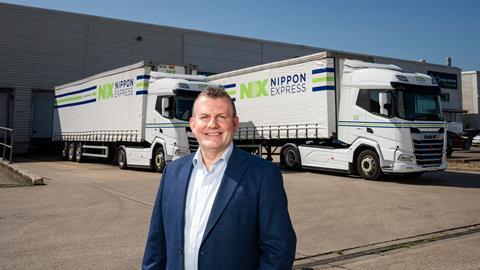

NX Group UK and Ireland MD Steve Williams reveals plans to double the operation to £200m revenue and 600 staff within five years
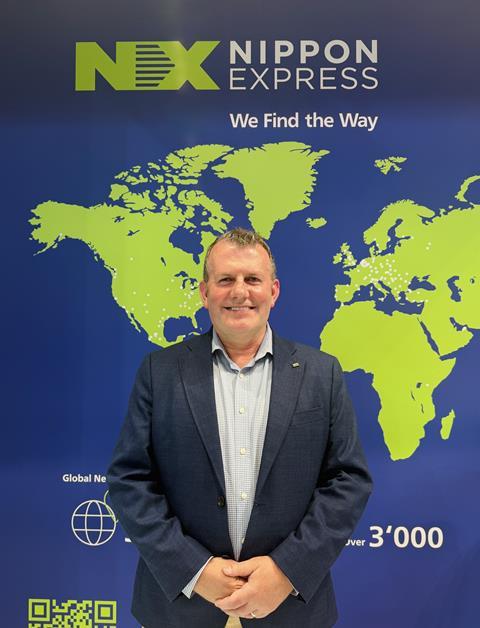
From the moment Steve Williams appears on the Teams call, with Heathrow’s northern runway filling the background, it’s clear this is going to be a different conversation to the ones Motor Transport normally has with transport companies.
There are no rows of trucks and trailers behind the MD of NX UK and Ireland. Instead, we’re looking out across one of the world’s busiest airports, while a couple of his Japanese colleagues sit quietly in the background, listening in.
And after a few minutes, something else becomes clear: NX has ambitions to become a much bigger player in the UK than its current profile might suggest. Williams wants to double the size of the UK operation within five years, taking it to around £200m in revenue and 600 staff.
That would represent a significant shift for a business whose UK operation currently generates around £80m in revenue and has more than 270 employees, with a network of warehouses stretching across the UK and Ireland and around 600,000sq ft of capacity.
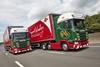
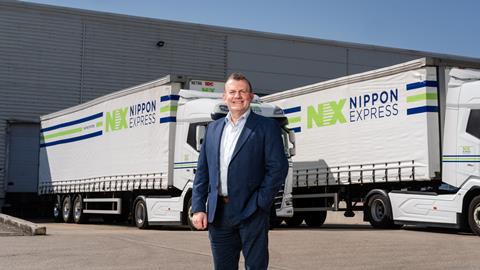
It has also just put 12 new DAF XG 530s into the fleet. But the trucks are not really the story.
“We’re a full end-to-end logistics company,” Williams says. “I wouldn’t pigeonhole us by saying we’re a trucking or transportation company only. And we’re not only a warehouse company either. We’re a fully end-to-end supply chain solutions company.”
The question is what NX intends to do with that proposition in the UK.
Going for growth
Williams joined Nippon Express, the core operating company of Japan’s NX Group, in January 2025, having previously held senior positions at Panalpina, DB Schenker and EV Cargo. Six months later, his remit was expanded to include cargo-partner UK and Ireland and Aztek International.
The Japanese group is one of the world’s major freight forwarders, with a global network spanning air, ocean, road and rail, alongside warehousing and specialist logistics. But Williams believes the UK operation has not yet achieved the scale its parent group should expect.
“We’re a top five global forwarder, but in the UK we’re not in the top five,” he says. “So for me, there’s a lot of growth to be done.”
That is the central argument behind the strategy. The company has historically been heavily geared towards UK-Japan trade, a relationship it remains proud of and intends to grow. But he also sees an opportunity to use that base as a springboard into other markets, particularly the Far East and North America, while expanding contract logistics in the UK.
The company already has the infrastructure. Its UK and Ireland network includes facilities in Uxbridge, Swindon, Lutterworth, the East Midlands, Newcastle, Glasgow and Dublin, alongside the specialist operations added through recent acquisitions.
cargo-partner has strengthened road freight, forwarding and e-commerce; Tramo has brought high-end furniture and white-glove delivery; and Simon Hegele has added specialist healthcare logistics and technical installation.
The challenge is turning those individual pieces into a proposition that customers actively buy.
“We’ve maybe been a little bit slower to develop, predominantly because [we waited] to be asked by an existing customer, as opposed to going after that business, targeting that business and growing,” Williams says. “That’s the world we’re going into now.”
That represents a significant change in mindset. Rather than waiting for an existing Japanese customer to ask for another service, NX wants its UK sales operation to go out looking for customers that need several parts of the supply chain joined together.
The £200m ambition
Williams is cautious about describing the growth strategy as a race for scale. He does, however, have a clear idea of where he wants the UK business to be. Asked where he sees the operation in five years, he confirms it should be “heading towards twice the size we are today”.
“I think organically to get to that is unlikely,” Williams says. “There’ll be an element of [acquisitions] in that as well.”
That suggests further deals will remain part of NX’s UK strategy, although Williams stresses that they will have to be the right acquisitions rather than simply a way of adding revenue.
“We’re not going for a growth strategy where we want to have 20 warehouses in the UK by 2030,” he says. “It’s going to be steady growth and opportunistic as well, as we see what’s coming.”
The same principle applies to customers. Williams is wary of chasing volume simply to fill warehouses or keep trucks moving.
“You’ve got to choose very carefully the customers that you’re attracting and the partners that you’re going to work with.”
That selectivity could prove important in a UK logistics market where margins remain tight and competition for contracts is intense.
NX does not intend to try to replicate the domestic networks of the country’s biggest general haulage operators. Instead, Williams wants to use established transport specialists where they make more sense, while keeping control of the parts of the supply chain where NX can add specialist value.
“We want to be an alternative,” he says. “We’re not going to roll up tomorrow and pretend that we’re going to take on the big guys who’ve got everything hooked up.”
Warehouse first
That philosophy is particularly apparent in the way Williams thinks about warehousing. His view is unequivocal: “Warehousing should always drive the transport.”
For customers, that increasingly means flexibility rather than a large dedicated facility. NX is seeing more demand for multi-user warehousing, including from customers with requirements running into hundreds of thousands of square feet. The attraction is straightforward. Customers can share the cost of infrastructure, technology and automation rather than carrying the entire investment themselves.
For NX, meanwhile, multi-user facilities provide a more flexible route into growth without committing the business to a network of large buildings regardless of demand. Customers are increasingly asking whether they really need a dedicated warehouse, Williams says, with some looking to downsize or reduce costs in response to the current economic environment.
The result is a more cautious approach to property. NX is not looking to build a huge network simply for the sake of having one. Instead, it wants to take advantage of opportunities as they arise and use its existing footprint more effectively.
Fleet strategy
For all the talk of end-to-end logistics, road transport remains an important part of the proposition. NX’s UK fleet ranges from 18-tonne box-sided trucks through to 44-tonne tractor and trailer combinations. The latest 12 DAF XG 530s are primarily based at Crick, near Daventry and the Daventry International Rail Freight Terminal, where NX’s warehousing and transport operations are based.
The company has a long-standing relationship with Asset Alliance and generally favours shorter lease arrangements, allowing it to keep the fleet relatively modern. There is a commercial reason for that beyond simply having new trucks.
“The one group of people that see your customers every day are your trucking provider or your own vehicles,” Williams says. “If they don’t look the part, if they don’t operate well, then that’s what the customer sees.”
But there is little appetite to turn NX into a major general haulier.
“There are enough very, very good and professional trucking companies out there that we can work with,” he says.
Where NX does want to retain greater control is in specialist transport. Its London white-glove operation handles executive removals, predominantly for Japanese companies and executives, while its Lifestyle operation deals with high-end Italian kitchens, including getting them into properties and installing them.
“For anything that’s specialist, then we may look at it slightly differently,” Williams says. “But for your generic transport, then definitely we want to work with partners.”
NX’s relatively light fleet means its decarbonisation strategy is focused less on electrifying large numbers of trucks and more on the specialist vehicles and properties it operates.
Williams says the company is looking at electric replacements for its London white-glove vehicles, while newer warehouse facilities are increasingly expected to come with sustainability measures already in place. Customers are also asking about solar panels, although the relatively short leases NX favours can make the investment harder to justify.
“Ideally, we take a building that’s already got all of that,” Williams says.
Beyond the Japanese trade lane
The Japanese customer base remains important, but Williams wants to broaden the UK operation beyond its traditional strength. The group has built its international reputation supporting Japanese automotive and manufacturing businesses with tightly controlled, time-sensitive supply chains. Williams sees an opportunity to take that expertise into a much wider customer base.
That could mean a manufacturer importing components from Asia, a technology company requiring secure storage and distribution, or a customer looking for one provider to manage an increasingly complicated international supply chain. The strategy is particularly focused on the Far East and North America, where Williams sees opportunities to connect NX’s international forwarding network with its UK warehousing and distribution capability.
The same logic sits behind the recent acquisitions. NX Lifestyle Logistics brings specialist furniture and kitchen operations into the group, while Simon Hegele adds healthcare logistics and technical installation capabilities. Rather than treating those businesses as standalone operations, Williams wants to use them to broaden what NX can offer customers.
NX Lifestyle is also due to integrate into Nippon Express UK this year, creating further opportunities to share warehouse capacity and explore synergies between its specialist and last-mile operations. The more services NX can provide around a customer’s international movement, the harder it becomes to view the business simply as another freight forwarder or transport provider.
Picking the winners
That does not mean Williams intends to chase every opportunity. The logistics market has plenty of businesses competing for a limited amount of work, and Williams is conscious of the temptation to use new contracts simply to increase volumes. NX does not want to be the operator that helps an incumbent drive down prices by introducing another bidder into the market. Nor does it want to buy business that does not make commercial sense.
The focus instead is on customers where NX can combine several capabilities: international forwarding, customs, warehousing, inventory management, domestic distribution or specialist delivery. That is where Williams believes the company can differentiate itself.
The recent acquisitions broaden that range further. A high-value furniture customer has different requirements from an automotive manufacturer. A medical equipment business may need technical installation as well as transport, while a technology customer may prioritise security and precision over the cheapest possible movement. Those are the kinds of customers NX wants to target.
The proposition has become more relevant as supply chains have become harder to predict. Disruption in the Middle East, for example, has forced customers to reconsider routes, gateways and inventory positions.
For a business focused purely on one transport leg, that creates a problem. For a logistics provider with access to air, ocean, rail, road and warehousing, it creates an opportunity.
NX has been looking at alternative combinations of transport and temporary storage when trade lanes are disrupted, allowing customers to move cargo through another gateway or hold inventory elsewhere until the original route becomes viable again. That is another reason Williams is reluctant to define the company by its trucks.
“The transportation is a means to an end,” he says.
The warehouse, in his view, is where the supply chain ultimately has to come together. Transport exists to feed it and take goods away from it. For NX, the commercial opportunity is to control more of that process without necessarily owning every asset involved.
What happens next?
The scale of the ambition is now clear. Within five years, Williams wants NX’s UK operation to be roughly twice the size of the business he inherited. That growth will come from a mixture of organic expansion and further acquisitions, with the focus on contract logistics, new international trade lanes and specialist services.
But there is another objective behind the numbers: to make the UK operation matter more within NX’s global network.
Williams says one of the challenges is effectively selling the UK internally. If another part of the NX network is competing for a piece of international business, the UK needs to be able to demonstrate that it can provide a compelling end-to-end solution.
That means making better use of the assets and expertise it already has, while giving the sales operation greater freedom to go after new business.
The UK operation, in Williams’s view, is not yet performing at the level of its global peers.
“If we compare ourselves to our peers, if you look at the top 10 global forwarders, it doesn’t mirror itself in the UK… we’ve got a lot of catching up to do,” he says.
That is perhaps the most revealing comment of the interview. NX is not arriving in the UK for the first time. It has been here for decades and already has the warehouses, forwarding network, specialist operations and transport capability to make a sizeable logistics business. What’s changing is the ambition. Williams wants NX to stop waiting for customers to tell it which piece of the supply chain they need and start selling the UK operation as the answer to a much bigger problem.
The Heathrow runway in the background suddenly feels even more appropriate. For NX, the ambition is no longer simply to move goods into and around Britain. It is to become a much more significant part of the journey.