
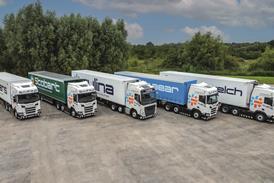









HGVs are unlikely to be the missing link in building a hydrogen industry as fuel transporters. That was the message from an evaluation of two government programmes aimed at stimulating the hydrogen market, which found securing hydrogen at volume and at an economic price and transporting it to the point of use are barriers to switching from fossil use.
One conclusion from the evaluation was that stepping up hydrogen supply without a fixed delivery network in place would not be feasible and trucks cannot cover the gap. The report said, “While hydrogen delivery by truck had been feasible for some of the demonstration projects, project experience suggested that truck-based transport would challenging for full-scale operation because of the low density of hydrogen and hence the large number of truck-loads required.”
The £21m Industrial Fuel Switching (IFS) competition aimed to stimulate early investment in and development of fuel switching processes and technologies for specific industries. The £33 million Low Carbon Hydrogen Supply (HS) programme sought to develop, demonstrate and reduce the cost of low carbon bulk hydrogen solutions for production, storage and supply. Neither of the two programmes had included initiatives for use of hydrogen for heavy goods transport, such as siting a fuelling station near the hydrogen source.
Specific barriers to increasing the uptake of hydrogen were:
• limited access to finance for cost-effective low carbon investments.
• uncertainty over the future use of hydrogen as fuel
• unstable and uncertain carbon and energy prices.
The evaluation said that the HS programme had fostered hydrogen supply awareness, influenced media, and supported various production technologies. Economic viability was a more important challenge than technical feasibility - the cost of hydrogen tripled 300% during the programme and this hampered the ability to do more trials. In addition, some stakeholders were sceptical about future progress due to a lack of clarity on investments in hydrogen plants.
All of the IFS demonstration projects reported that fuel switching to hydrogen was dependent on future government funding and delays in new funding streams were constraining progress on follow-on activity.