
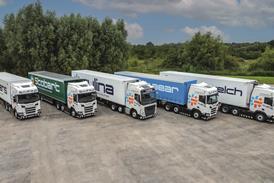









Hydrogen technologies are a viable solution to decarbonising the haulage sector, but investment is required to help the UK reach its net zero ambitions, according to a government-funded research group.
The Advanced Propulsion Centre UK (APC) said the role hydrogen could play in decarbonisation is still not fully established, despite acknowledgement that it has long been seen as a feasible solution in sectors typically accepted as hard to decarbonise.
It is urging the automotive sector, as well as its supply chains, to discuss the future pathway and innovation for hydrogen internal combustion engines (ICE) and hydrogen fuel cell technologies and said it welcomed “exploratory conversations about future funding opportunities”.
Philippa Oldham, APC stakeholder engagement director, said: “The UK has a rich history in the design and manufacture of ICE, and the wealth of knowledge and experience in this area can be applied to hydrogen ICE.
“Heavy duty vehicles (HDV), fleet operations, and non-road mobile machinery are all applications where adoption of battery electric vehicles is proving challenging.
“Hydrogen ICE offers a fast refuel, range advantages, performance and retrofit solutions which can serve to manage transitional costs as this solution uses the same cooling and drivetrain as the incumbent diesel engines.
“Hydrogen ICE also has considerable potential when looking to the export opportunities on offer for the UK, as it is increasingly being favoured in Europe as an emerging clean technology for HDVs in particular.”
Dr Hadi Moztarzadeh, head of technology trends at the APC, added: “I see real opportunity for hydrogen ICE and there now needs to be a focus on the development of supporting policy and regulation.
“The low level of NOx is currently inhibiting wider adoption in passenger vehicle applications, but battery technologies currently do not have the capability to decarbonise the HDV and off-highway sectors so we need to seriously address and consider solutions that can reduce emissions.”