







For nearly 20 years, web visibility depended on SEO spend. Now AI search selects sources on clarity and relevance, not budget—creating a competitive opening for specialists while threatening established players who assume brand recognition alone will protect them.
For nearly two decades, visibility in web search was decided by budget. Bulk operators competing on “aggregate haulage”, waste hauliers on “muckaway London”, a pharma carrier on “GDP-compliant distribution”, a Scania dealer “new tractor unit” — all potentially having to compete on SEO spend, domain authority and sustained agency investment. For smaller operators and regional dealers, a top three position against national 3PLs was rarely achievable.
AI-assisted search operates on a different principle. When a construction procurement manager asks ChatGPT or another large language model AI which muckaway operator suits a London site, a pharma logistics director asks about GDP-compliant distribution partners or a transport manager asks about 6x2 tractor specification for long-haul, the system does not return the 10 top websites with the strongest SEO performance. It synthesises an answer from three to five sources selected on clarity, specificity and direct responsiveness to the question.
Research by AirOps in early 2026 indicates that approximately 60% of sources cited in Google’s AI Overviews do not rank within the top 20 traditional Google results. The businesses surfaced in AI answers are often not those that have dominated search for a decade.
A competitive opening that did not exist before
Consider two businesses. The first is a national pallet network or major 3 or 4PL with a substantial SEO footprint and a name known across UK logistics. The second is a specialist operator with genuine depth and experience in a particular niche — muckaway, concrete mixers, chilled distribution, GDP-compliant pharma or ADR hazardous freight — and a website that has never broken into Google’s page one search results for its core terms.
Under the old model, the specialist was invisible at initial research. No amount of operational expertise compensated for the spending gap. Under AI-assisted search, if that specialist publishes clear answers to what customers actually ask those answers can often be cited. The larger competitor’s brand presence does not automatically carry forward. For the first time in 20 years, budget is not the deciding factor in visibility.
Losses that do not announce themselves
For businesses on the wrong side of this shift, the effect is harder to detect than a lost tender. When an AI overview returns three operators and the buyer contacts two, the buyer has not shortlisted…AI has. Operators that do not appear are never considered. Enquiries decline gradually with no identifiable cause, because the decision was taken earlier in the buyer’s journey, without the website being seen.
Who wins, and why
The businesses positioned to win are not always obvious. They are those with genuine operational expertise who publish it clearly: sector-specific capability notes, compliance guidance in plain language, question-led content mirroring how buyers phrase the problem. A muckaway operator publishing on Direct Vision Standard compliance for tipper fleets, a pharma carrier explaining GDP temperature mapping, an OEM or franchised dealer setting out a Euro-6 specification for long-haul, or a 3 or 4PL explaining the cost-to-serve of dedicated versus shared-user contracts — each can be cited alongside businesses with 10 times the marketing budget.
Those positioned to lose are assuming existing market and SEO will with either carry them through or protect them. Name recognition built over decades does not automatically transfer to AI citation.
What this is, and is not
This is not a massive shift, and it is not a call for substantial marketing investment. The formula is straightforward: pillar pages covering the topics buyers actually search for, linked by a site roadmap AI can follow. A base level of AEO-ready content is a fraction of annual SEO spend, and the work is largely one-off. No agency retainers, no paid placements, no ranking system to game. The cost is effort and judgement, not budget.
What it does require is a deliberate decision, at director level rather than marketing level, about whether to compete for AI citation or leave that ground to others. For operators moving anything from concrete to pharmaceuticals, and for the manufacturers and dealers whose technical knowledge has outweighed their marketing reach, the answer is close to obvious. The opportunity to be found on equal terms with larger competitors has not existed before and will not remain open indefinitely.
Some businesses will recognise that and move. Others will not and will wonder in eighteen months why the enquiries no longer arrive.
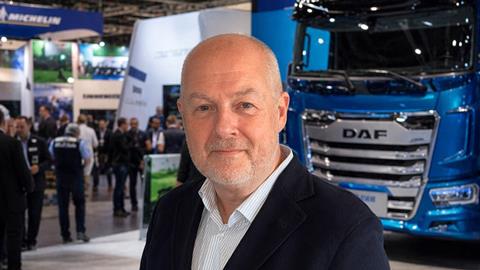
Chris Owen, chartered marketeer, Brittenden