







When KleanDrive entered administration, it had working technology and real customers. What it didn’t have was investment backing that valued operator judgement over financial hunches. One fleet operator explains why firms with proven kit keep failing, and why the industry keeps losing suppliers it claims to want.
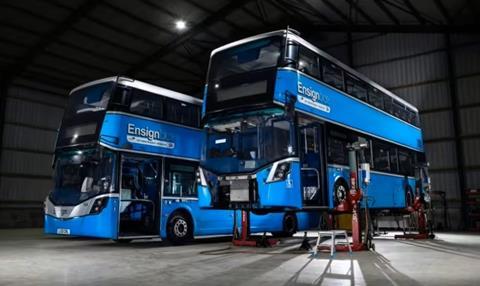
A company we partnered with went into administration this week. KleanDrive repowered diesel vehicles to electric. They’d made it work on buses, and they had real customers for it. Ours was the first truck they’d taken on, an innovation project rather than a commercial deal, with the buying still to come. The engineering worked. It nearly always does. That was never the problem.
The easy version of this story is that the money ran out in the valley of death, the long unglamorous stretch between a working product and a business that can build at volume and carry its own costs before the revenue catches up. That’s true as far as it goes. But after watching it happen to firm after firm, and having backed this one ourselves, I don’t think the real problem is money. It’s that the people who can tell what works, the operators running this kit, keep getting ignored, and keep getting burned for trying.
Here’s what it looks like from the operator’s chair. You decide to do the right thing. You back a British supplier with a genuinely good idea. You give them a real vehicle and real duty cycles to prove it on, you put your reputation behind it, and you take on the risk of being early. Then they hit trouble, and you’re left with the half-finished kit, the support that’s no longer there, and the quiet lesson that the safe move was to wait and buy the finished article from abroad. Do that often enough and operators stop backing the hard stuff at all. Which kills the supply base we keep saying we want.
Watch how the money moves and you can see why. Early on, a demo is enough. A prototype, a deck, a photo next to a clean vehicle, and the cheque appears, because everyone’s buying a story and the story is easy to follow. Then the firm needs the dull money to cross to volume, and the question gets harder. Will it work at scale? Will it certify? Will it survive a subsidised rival turning up? Answering that needs someone who understands the kit. The people writing the cheques mostly don’t, so they wait for someone else to go first. And while they wait, the firm runs out of road.
That’s the part that should sting. The judgement those investors are missing isn’t missing at all. It’s sitting in depots and workshops, with operators who’ve put the thing into service and can tell you inside a week whether it holds up on a wet Tuesday in February when the driver doesn’t trust the range. We’ve run it. We know what an investor can only guess at. And none of that counts in the room where the money says yes or no, because we’re not in it.
So this isn’t really a finance problem to be fixed with another fund, or a policy problem to be fixed with another framework. Demand-side support helps, and of everything being suggested it’s the most useful, because operators are the ones who buy this kit. But the deeper fix is simpler and more uncomfortable. The people who can read the kit need to be the ones whose verdict counts, and the firms operators get behind need to survive long enough to deliver. An operator’s verdict should count for more than an investor’s hunch. Right now it counts for less.
And administration isn’t always the end. There could be a buyer, or a phoenix. We don’t know yet, and I hope it’s good news. But a firm with proven kit and real customers shouldn’t be finding out whether it survives the month. KleanDrive ended up here not because the engineering failed or because nobody wanted what they were building, but because of the gap between a working product and a business that can stand on its own, in a country that mandates the destination and starves the journey, and still treats the people doing the buying as the least important voice in the chain.
We’ll keep losing firms like this one at a time until that changes. I’d work with them again tomorrow. I’m just tired of being the only part of this chain willing to put something real on the line.
Jamie Sands, head of solutions, Welch Group