




Seven months into her new role, the former Boughey MD explains why she left a major operator to take on the challenge of transforming Law Distribution
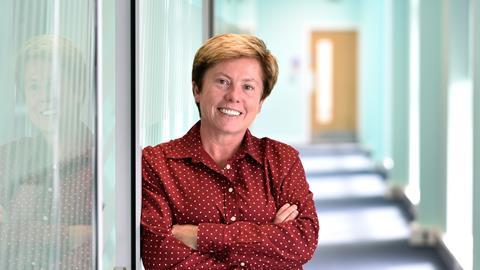
When Angela Carus resigned as MD of Boughey Distribution last November, it wasn’t because of crisis or conflict. It was the result of months of quiet reflection on what she’d built and where she wanted to go next.
She stayed with the business until this February, long enough for parent company NWF to bring in Yearsley Group’s logistics boss Tim Moran as her successor. But just three months later, Boughey announced a major restructure that put jobs at risk and the company’s future in the spotlight.
That made the timing of Carus’s departure intriguing, although she insists the two events were unconnected.
“I have no axe to grind,” she tells Motor Transport. “NWF is a good organisation with a great customer base. I really enjoyed my time there and the three years flew by. Maybe I’m a bit different to some people, but once I’ve done my term and delivered what I want to, I ask myself what value I can add next. I don’t set a timeline on that. I just needed to re-energise and find a new challenge.”
Carus is unsure whether she would have been forced into a similar restructure had she stayed, but respects the decisions taken after her departure. “I don’t know what I’d have done,” she says. “But as a leader you always need to right size a business. I’ve had a chat with Tim and he’s a nice guy. He’s probably gone in and assessed things and decided they need to right size it. I wish him all the best.”
Departure and dilemma
Leaving Boughey quickly led to another pivotal moment when two attractive job offers arrived at once: one, the MD role at Law Distribution, a family-run North West operator with deep roots but a low profile; the other, logistics director at supermarket giant Morrisons.
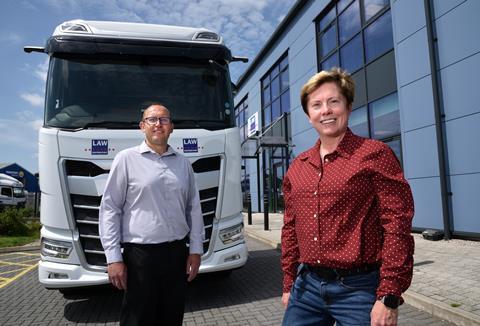
“My dilemma was where I should go,” Carus smiles. “Law is a smaller business, at the opposite end of the scale. But I’d done a lot of travel and had reached a point in my career where I didn’t need to do all that anymore. The Morrisons role was flattering - a big remit, thousands of people in my team - but I’d spent time with John and Catherine [Law] in the past, and John asked me if I’d come and run it for them and I agreed.”
Now 52, Carus brings more than three decades of logistics experience to the role, from warehouse picker at Wincanton to senior posts with Gist, Kuehne+Nagel, XPO, NYK Logistics and Culina.
Founded in 1994, the company has grown into a major regional employer while keeping its family feel. John Law now chairs the company following the death of his father, David, in 2021.
On paper, moving from an £80m+ operator like Boughey to a smaller business might look like a step sideways. Carus sees it differently.
“John and Catherine had approached me a couple of times for advice on how to grow the business,” she says. “I saw real potential. There was a lovely feel to the place. It’s still family-run, and that mattered to me. Life has a funny way of steering you where you should be.”
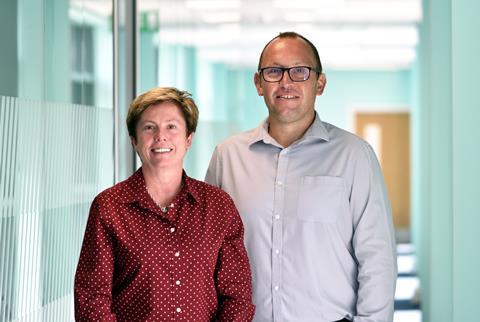
There were practical benefits too. Law’s Haydock site in Merseyside is an hour closer to her home in Burnley than Boughey’s Cheshire HQ - a small shift with a big impact on her quality of life.
The local focus of the role also gives Carus time for one of her more unexpected passions: hedgehog rescue. “Outside of work, I’ve developed a real soft spot for them,” she laughs. “I help a local centre that takes in injured or orphaned hedgehogs and care for them until they’re strong enough to return to the wild. It’s a small thing but incredibly rewarding. Sometimes it’s the small things that bring the most meaning beyond the day job.”
After three years at the helm of a much larger, more complex operation, Carus was ready for something not necessarily smaller, but more focused. At Boughey, she had overseen significant change: driving growth, strengthening the senior team, and delivering a major new site at Newcastle-under-Lyme. But with those milestones achieved, she found herself at a natural crossroads.
“Law offered a very different challenge, she says. “The business has had a tough couple of years financially. Last year it made a small profit of £30,000. The year before it lost a couple of hundred grand. But winding back about five years it was a good profitable organisation.”
Scaling smart
Law provides UK and European transportation, has 350,000sq ft of warehousing space and is a member of the Palletline network. The company also runs an e-fulfilment operation.
Carus’s remit was clear: professionalise the operation, improve EBITDA, and - ideally - double the size of the business from £20m to £40m within three to five years.
But she didn’t arrive intending to make sweeping, potentially unpopular, changes. “You can’t just walk in and start transforming everything,” she says. “First, you’ve got to listen.”
So that’s what she did - taking time to walk the floors, meet every team, and understand how the business really worked.
“You’ve got to understand the rhythm of the place - the culture, the decision-making, what’s really going on beneath the surface,” Carus explains. “There’s always a temptation in new roles to rush in and prove your value. But I’ve learned that the best thing you can do at first is shut up and observe.”
That early period of listening paid off. What she found was a business with strong fundamentals - loyal customers, long-serving staff, and deep operational knowledge - but one that, in her words, “felt a little bit like a collection of parts rather than a unified whole”.
“There was quality everywhere you looked with great people, great service and high standards,” she says. “But it needed pulling together. The branding was inconsistent, some processes were duplicated, systems didn’t always talk to each other. The bones were good; it just needed alignment.”
Her approach echoes that of Culina chief executive Liam McElroy, interviewed by MT in July. Having worked with him before, Carus is quick to praise his leadership and candid about the challenges he faces.
“Culina’s had a lot of disruption and now needs a period of stability,” she says. “They’ve grown fast, but the focus has been more on turnover than profit, and that brings its own issues.”
She describes Culina’s previous structure as strongly decentralised - “lots of great entrepreneurial spirit, but sometimes it means the synergies get missed”.
“It’s like everyone’s been on their own island,” she adds. “Liam’s a steady hand - balanced, decisive, and not afraid to make tough calls. I think he’ll pull that group together and focus it on what really matters.”
The parallels, she says, run across the sector: “It’s not about cutting for the sake of it - it’s about sustainable decisions that strengthen the business. I’m in growth mode here, investing in AI and tech to support people. But if I wasn’t, I’d have to look at things differently. That’s just the reality of our industry.”
One of her initial steps was to look at the customer base with fresh eyes.
“The first thing I did was cut the tail,” she admits. “There were accounts that just weren’t commercially viable. You’ve got to be brave enough to let go of the work that’s not serving your business. It freed up space, headroom, and focus.”
Carus also set about clarifying the company’s commercial offer: “You need to know who you are and what you’re offering,” she says. “If that’s fuzzy, you end up saying yes to everything, and that’s when costs spiral, service suffers, and your people get burned out.”
While the scale of Law Distribution is smaller than Boughey’s, the complexity is growing, and so too is the ambition. Although she’s set a clear growth targets, she knows the importance of making that growth sustainable.
“It’s not growth for growth’s sake,” she stresses. “It’s about improving margins, enhancing service, investing in people and systems. We’re not chasing volume, we’re building a business that can scale intelligently.”
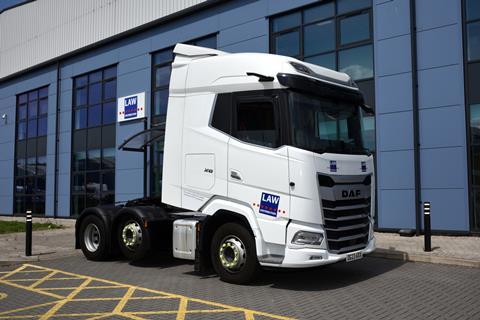
To support that growth, Carus has been working closely with the leadership team to modernise infrastructure, optimise warehouse space, and invest in digital tools that enhance visibility and planning.
“We’re rolling out new systems - fleet telematics, warehouse management, better reporting - but only where it adds value,” she says. “You don’t want to digitise for the sake of it. You do it to make people’s jobs easier, to improve service, and to make smarter decisions.”
That pragmatism defines her leadership style: “John and Catherine trusted me to lead, but they’ve also been incredibly supportive,” she says. “It’s a true partnership.”
That word partnership comes up often in the conversation. Whether she’s talking about employees, customers, or suppliers, Carus sees collaboration as the cornerstone of effective leadership.
“You don’t grow in a vacuum,” she says. “You grow when your people are engaged, when your suppliers are aligned, and when your customers see you as more than just another provider. It’s about being easy to do business with.”
Team ethic and leadership
Carus is clear that leadership isn’t about doing everything yourself. Instead, she’s building a team that takes ownership and grows with the business.
“I want to create an environment where people can make decisions and stretch themselves, but still have a safety net if they get something wrong,” she explains. “That’s how people grow. I’ve made loads of mistakes. You’ve got to own them and move forward.”
Carus leads with a style that blends openness with approachability. She believes in fostering a culture where ideas and concerns can surface freely from every corner of the organisation. Creating that kind of environment, she feels, starts with being visible and accessible.
Whether it’s a warehouse visit or a quick chat over a brew with frontline staff, she makes time to stay connected with the day-to-day. For Carus, leadership isn’t about sitting behind a desk - it’s about showing up, listening, and building trust at every level.
That sense of discipline is balanced by a clear-eyed realism about the market. Carus stepped into the role at a time of significant turbulence across the logistics and transport sectors - from spiralling costs and post-pandemic supply chain disruption to an enduring driver shortage and evolving customer demands.
“It’s no secret the market is tough right now,” she says. “Every operator I talk to is grappling with the same pressures - rising costs, talent retention, regulatory changes. But that just makes it more important to be sharp, adaptable, and focused on what really matters.”
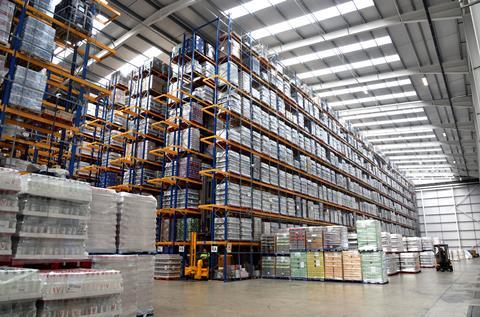
That focus, for Carus, lies in the intersection of people, technology and culture. While she acknowledges that investment in digital tools is vital - from fleet management systems to forecasting software - she’s equally adamant that transformation must start with the team.
“You can’t just throw tech at a business and expect it to fix everything,” she warns. “It starts with understanding how people work, what support they need, and then building systems around that. You’ve got to bring people with you.”
She adds: “Operators who aren’t using data to improve planning, tracking, and forecasting are going to fall behind. The good news is the technology is there. You just need to have the courage to adopt it.”
To Carus, addressing the ongoing driver shortage goes beyond simply offering higher wages. “It’s a tough market for recruitment. Finding skilled drivers who want to stay long term requires more than just competitive pay - it’s about culture, wellbeing, and career development,” she explains. “You have to create an environment where people want to build careers, not just fill seats.”
Customer expectations are evolving too, pushing operators to offer flexibility, transparency, and sustainability.
“End customers want real-time updates, quicker turnaround times, and sustainable solutions,” Carus notes. “That means operators have to rethink how they deliver value, not just on price but on reliability and environmental impact.”
Sustainability is a critical focus: “There’s no escaping the fact that it’s front and centre,” she says. “But it’s also a chance to innovate, differentiate, and future-proof your business. It’s not just a ‘nice to have’ anymore, it’s business critical.”
Carus believes the next few years will be defining for the industry. “The operators who survive and thrive will be the ones who keep their feet on the ground but their eyes on the horizon,” she says. There’s no magic wand in this business. It’s hard work, commitment, and staying true to your values. With resilience, adaptability, and care for people, we can not only survive but thrive.”
Finally, she shares what keeps her grounded: “It’s about more than just trucks and logistics,” she concludes. “It’s about people’s livelihoods, their families, and the communities we serve. That’s what drives me every day.”