









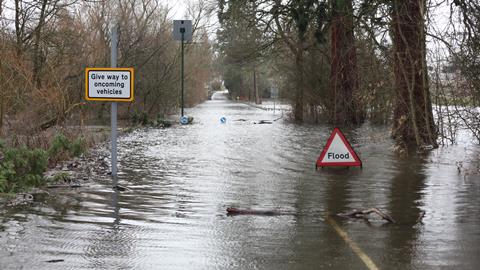

Guidance to help local highways authorities prepare for and tackle climate-related disruption such as extreme heat and flooding, has been produced by the Chartered Institution of Highways & Transportation (CIHT).
The document, which also covers volcanic eruptions and “severe space weather”, is designed to support qualified professionals apply their judgment consistently while under the pressure of a live event that threatens to cripple transport networks.
It encourages authorities to identify and address the impacts of climate-related events, such as deformation of road surfaces in soaring temperatures, increased vehicle breakdowns, loss of global navigation satellite systems and disruption from volcanic ash on freight routes.
The guidance divides the operational response to climate hazards into four stages: anticipation, response, stabilisation and recovery: “Climate hazard events are however dynamic,” the document said.
“Different parts of the network may be in different stages at the same time, and there may be movement back and forth between stages as conditions evolve.
“Authorities should therefore revisit priorities, resource requirements, and operational decisions throughout an incident.”
The CIHT said it provided a practical framework to help highways authorities move from a reactive response towards proactive preparedness and operational resilience.
Sue Percy, CIHT chief executive, said: “Climate-related disruption is no longer a future challenge; it is an operational reality for local highway authorities across the UK and beyond. Local roads are vital community lifelines, connecting people to work, education, healthcare and essential services.
“This new guidance has been developed by practitioners for practitioners. It provides a structured, practical approach that will help authorities anticipate risks, make informed decisions under pressure and respond consistently when incidents occur.”