




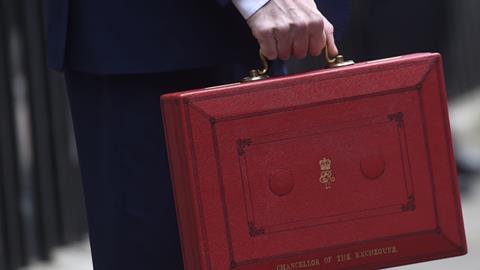

Right Fuel Card is calling on the Chancellor to freeze fuel duty for the remainder of this Parliament and introduce targeted support for sole traders and small businesses, setting out the measures in a five-point plan published ahead of the Budget on 28 October.
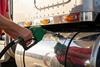
The plan follows new Right Fuel Card research among UK fleet decision-makers which found that 60% rank fuel as their single biggest cost pressure - more than twice the proportion citing vehicle maintenance.
The survey of 250 fleet decision-makers, published in the Fuel Price Impact on Fleets whitepaper, found that more than a quarter (26%) of respondents had already increased customer prices to cover rising fuel costs, while 13% had lost customers as a direct consequence.
Almost half (45%) expect fuel costs to erode profits over the coming year, with 10% anticipating a reduction of more than 10% in their bottom line. Just 14% said they were confident their business could withstand further fuel price increases.
The findings have prompted calls for the government to extend fuel-related support beyond large haulage operators and household motorists, with sole traders and small businesses in vehicle-dependent trades identified as particularly vulnerable.
If fuel prices rise by a further 10p per litre, 29% of respondents said they would have to increase prices again, while one in five would delay recruitment or halt planned business expansion.
The research found that fuel pressures are particularly acute in sectors that depend heavily on commercial vehicles. In construction, 67% of respondents identified fuel as their biggest cost pressure, compared with the national average of 60%.
Comparisons between businesses of different sizes also highlighted the challenges facing smaller operators. Among businesses employing 100–249 people, 31% had already increased customer prices because of fuel costs, compared with 23% of enterprises employing more than 3,000 people.
Meanwhile, 24% of mid-sized businesses had delayed hiring, against 19% of large enterprises. Some 18% of mid-sized respondents said they might have to reduce their fleet, a measure not identified by any of the large enterprises surveyed.
Right Fuel Card is asking the Government to:
1. Freeze fuel duty for the remainder of this Parliament — turn May’s delay into a firm, long-term commitment rather than a pause renewed at each Budget.
2. Create an essential-user fuel rebate for trade vans and sole traders — base eligibility on vehicle class rather than operator-licensing status, unlike European schemes that exclude most UK small businesses.
3. Make the public sector lead on fair fuel-cost pass-through — include fuel-cost adjustment clauses in contracts with SME suppliers, in line with established practice in large haulage contracts.
4. Protect and simplify EV transition funding for the smallest fleets — ensure sole traders and micro-fleets can access support currently designed for larger operators.
5. Make small-business impact assessments standard in every fuel-duty decision — require a formal assessment of the effect on sole traders and micro-fleets before any future change.
The company argues that assessments should consider the pressures on businesses operating a small number of commercial vehicles, rather than concentrating primarily on household motorists and the wider business sector.
David James, Right Fuel Card revenue director, said: “For many of our customers, fuel accounts for 25–30% of operating expenses. That applies not only to large transport companies, but to small businesses too.
“The key difference is the industry; outside transport and logistics, fuel may represent a smaller share of costs, making price shocks easier to absorb. For businesses that rely on vehicles every day, however, soaring prices threaten livelihoods — whatever their size.”
James added: “The strongest long-term protection against fuel-price volatility is for small fleets to transition to electric vehicles.”