
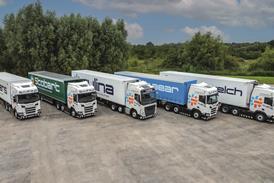









Bridge strikes may bring attention to safety issues, but they are just one aspect of a complex question. With telematics specialist Microlise, Motor Transport brought together an expert panel to share their insights.

Back in January, MT ran a story about a Birmingham railway bridge that had been struck by HGVs three times in the same week. On the third occasion, an ambulance was called after a trailer roof was torn off and a pedestrian was struck by flying debris.
All three incidents caused major disruption to rail passengers on the line between Birmingham New Street and Lichfield. That in turn led to another desperate plea from Network Rail for HGV drivers to check, and remember, the height of any vehicles they drive.
News like this highlights why our recent webinar, discussing how fleet operators can extend health and safety onto the road, was one of MT’s most important – and most popular. According to Network Rail, on an average day, the drivers of at least five HGVs or buses put themselves, road users and train passengers at risk. It found that 32% of drivers admitted to setting off whilst not being aware of the height of their vehicle, with 56% not considering low bridges when planning their journey.
So even when operators have solid strategies to avoid bridge strikes and other incidents, what actually happens when a driver leaves a depot? What’s their thought process? And how can companies, big and small, do more to ensure the safety of drivers and other road users throughout their journey?
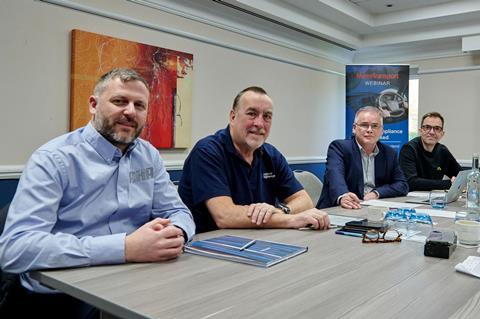
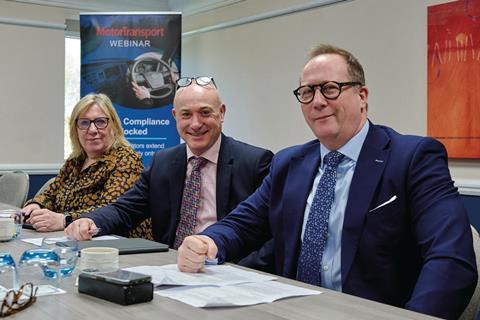
In association with telematics specialist Microlise, MT brought together a range of industry experts to discuss these health and safety concerns, aiming to highlight the collective responsibility of regulatory bodies, industry associations, legal experts, technology providers, and operators in advancing safety and compliance within the road transport sector.
Bridge strikes were a key concern, and the event covered this issue in great depth. But so too were related issues such as speeding, distracted driving and whether ever-increasing cab technology is making driving too much of a multi-tasking nightmare. Later the panel also discussed the importance of regular vehicle maintenance, London’s Direct Vision Standard, and whether work-related RTCs should be RIDDOR-reported.
Bridge strikes
To begin on a positive note, recent data confirms that bridge strikes are decreasing. Since 2010 the UK has had more thn 1,600 of these incidents a year. Since Covid this has risen to 1,800, but over the past two years the figures for HGV-related incidents have begun to fall. Jonathon Backhouse of Backhouse Jones solicitors points out that the number of bridge strikes is “miniscule” when the total amount of hours HGVs spend on the road is considered. The reason they seem more common than they are, he suggests, is that when the big ones happen they cause enormous disruption and trigger blanket media coverage.
“Be careful not to over-concentrate on it,” he warns. That said, Backhouse Jones handles between 150 and 200 bridge strike cases a year, so this is clearly still a serious problem. After all, drivers in these circumstances generally get plenty of warning beforehand. Road signs and technological aids abound, but maybe there’s a risk that too much information is now coming at the driver at once?
So how can we bring the number of incidents down, and is there a way to resolve the problem of bridge strikes once and for all? “That’s the million dollar question,” Backhouse smiles. “Even when you ask a driver, they can’t always say why they’ve hit the bridge, even when the height of the bridge is very obviously lower then the top of the truck. So it’s good to explore what’s going on in their lives – do they have undiagnosed health issues? Are they depressed? Are they suffering from a medical condition? Are they heavily distracted? So explore around the subject a lot more. There’s a psychological element that isn’t being investigated.”
Mark Cartwright at National Highways agrees, saying the organisation is currently doing extensive research into frontal shunt incidents. “It comes back to distracted driving caused by medical conditions,” he says. “And there’s also the autopilot problem, where it just doesn’t click with the driver.”
Steve Watson at Microlise insists “task complexity” is part of the issue. “Drivers aren’t just driving,” he says. “There’s a lot to think about, and a lot to do when they get to their destination. Yes there’s technology out there to help the driver, but it’s only part of the issue. There’s human error; people will make mistakes.”
Traffic Commissioner Richard Turfitt takes up a similar argument: “We need to get operators to think about the risk,” he says. “We’re prone to think about drivers as an engineering solution and they’re not. People do funny things. There is other stuff going on. So how do you reduce the risks? And if a driver gets away with it sometimes, it just reinforces their behaviour.”
Backhouse suggests that distracted driving can be caused by giving too much information to the driver. “There are so many signs now, and we have technology that takes our eyes away from the road,” he says. It’s a point Watson agrees with, explaining that from a tech solutions perspective there’s “a lot of very advanced kit out there but you have to get the balance right”. It’s also worth pointing out, he says, that if it’s not your personal vehicle you won’t have familiarity with the variety of tech in the cab.
Risk management
Hicks at the DVSA returns to the importance of risk management. “Operators need to analyse what the driver was doing just before the incident,” she says. “Are they risk managing? It’s important to ask the driver exactly why they didn’t see what was in front of them.”
Hicks also stresses that route planning is critical. “You have to have the data around you to plan well,” she explains. The point is underlined by the fact that many incidents occur when trucks are diverted by roadworks or police intervention. Changing to an unfamiliar route can often leave a driver, or route planner, with a serious headache. A low bridge may unexpectedly become part of a proposed route. In such circumstances, the potential for accidents can rise exponentially.
Conversely, Aaron Peters of the RHA suggests overfamiliarity with a route, or with driving a particular truck, can be a significant problem. “Drivers can be driving the same cab with a different trailer, so it’s very easy to forget what you’re driving,” he explains. “You used to have a periscope camera and see what was upstairs. Now you just have a monitor. You could have different suspension characteristics that take the height up a couple of inches.”
The panel also agrees that in some cases road resurfacing work can ultimately lead to bridge strikes. There’s anecdotal evidence, Cartwright says, to suggest that spreading spare asphalt onto highways after maintenance can lead to a significant increase in their recorded height.
There’s also a danger of drivers losing their sense of responsibility and, to Backhouse, essentially becoming “deskilled”.
“Vehicles have got better at managing themselves with alarms, radars and sensors,” he says. “But does that mean the responsibility for accidents is being shifted to the operator or the technology manufacturer? If so, drivers need to be reminded that the ultimate responsibility still lies with them to make the right decisions out on the road.”
Backhouse stresses the need to keep the driver at the centre of the issue and not cast blame elsewhere. “There’s an old adage that if you put a spike on the steering wheel you’d drive very differently,” he says. “We’d all drive a lot more carefully if we were in imminent risk of death. So are we putting too much focus on the operator, or even the technology manufacturer when we look at these cases?”
Backhouse also advises drivers to say nothing if the police ask for a short roadside account of the incident.
“Drivers will be in shock and straight after the incident is not a good time to start talking about it,” he says. “They can say all sort of things when they may not know what’s happened. So give your name, address and date of birth. Nothing else.”
“You can never be criticised for using your legal right to remain silent,” he adds.
What’s important, says Peters, is not so much the police investigation but how robust an operator’s own investigation is perceived to be. “If the driver and operator go into a Traffic Commissioner meeting, they’ll be looked at a lot more favourably if they have all the details of the incident,” he says.
Direct Vision Standard
The number of people killed or seriously injured on London’s roads fell last year, from 3,710 to 3,696 – the lowest level on record outside of the pandemic-affected years, according to Transport for London (TfL). Its Direct Vision Standard (DVS), which reduces blind spots on lorries, is already helping to save an average of six lives a year, and prevent many more life-changing injuries.
Last year, TfL enhanced its DVS requirements, with all HGVs over 12 tonnes required to have a three-star rating or fit a progressive safe system to operate in Greater London.
DVS has not been without its detractors, of course. It’s yet another big expense for hauliers, and availability of kits and the people to install them has added to operators’ concerns.
Cartwright reveals that National Highways is currently working with NCAP’s Safer Trucks testing programme, aiming to create a common and harmonised best practice, around which road authorities, hauliers, drivers, insurers and truck manufacturers can all have what he calls a “shared responsibility”.
Microlise, meanwhile, is one of the DVS tech providers helping operators get their permits. “The are lots of questions around DVS,” Watson says, “and a big one is does it go to Manchester and Birmingham too?”
Backhouse insists it should. “You need the same standard of safety in all the major cities,” he says. “London is effectively the test bed.”
Backhouse also stresses the importance of training drivers on the vulnerability of road users, particularly cyclists. “Truck drivers need to understand the hierarchy,” he warns. “You are to blame until you can prove you’re not. I accept that some cyclists are inconsiderate, but some car and HGV drivers are too. If you’re stuck behind a cycle for quite a long way, just stay there.”
If the DVS scheme is extended no doubt many hauliers will be hoping for financial help to comply with the new rules. Peters sympathises: “As an operator would you want to invest in system if that vehicle is due to go out the fleet in two years? Will it add to the value when you sell it on? Will it give you a return on investment? These are the issues hauliers are facing.”
Vehicle maintenance
Despite a continued shortage of trained technicians, HGV maintenance standards are now vastly improved. But crucially, workshops will need to transition over the next few years to alternative fuels, which the panel agrees is a massive undertaking.
“If you’re looking at hydrogen you’ll need to look at gas systems over and above what you have already,” Peters warns. “Then there are issues over weights – are the vehicles you have now suitable?
“There’s also the launch of the maintenance provision rating scheme at the CV Show; that should help us to move workshops on. Have we got enough maintenance staff? The answer is no and we have to move that on. We know it’s coming.”
Hicks highlights daily vehicle checks: “One in 10 of our prohibitions are brake related – that’s scary,” she says. “Are drivers and operators doing a good walk-round maintenance check? Are they picking everything up?
“This shouldn’t just be a week before an annual test. It’s supposed to be preventative. If it’s not safe in a layby to do a walk round, go somewhere where you can.”
Watson agrees, adding: “The beauty is there is a lot of data from the vehicle, which means you can be progressive in monitoring your fleets in diagnostics and prognostics.”
Backhouse adds that official accreditation of workshops “will be a massive step forward when it begins to bite”. “We’d like to see some regulations on workshops, but this hasn’t been introduced so we’re seeing a back door approach,” he says. “We’ll safe police it and it will make a big difference. The very good will be identified as that.”
Should RTAs be RIDDOR reported?
RIDDOR (Reporting of Injuries, Diseases and Dangerous Occurrences Regulations 2013) requires notification to the relevant enforcing authority of all reportable injuries, fatalities and dangerous occurrences. For Cartwright, not enough incidents are reported and that has to change: “About 1,700 people died on our roads last year,” he says. “Health and safety says 135 died at work. The reason is that the 135 are in RIDDOR reportable incidents. I don’t care if it’s a change of legislation. We see very little evidence of incidents being reported to the HSE. For me, there’s a massive potential to concentrate on health and safety. It would be a massive step forward for managing risk.”
Backhouse points out that most people involved in rear end shunts aren’t prosecuted. “Health and safety are more interested in safety in the workplace,” he says. “They do have a role, but only in the management of the employee in their working environment.”
The panel
Richard Turfitt, Traffic Commissioner for the East of England
Caroline Hicks, Head of enforcement regulatory services, DVSA
Jonathon Backhouse, Director, Backhouse Jones solicitors
Mark Cartwright, Head of commercial incident prevention, National Highways
Aaron Peters, Head of technical, engineering and policy, RHA
Stephen Watson, Director of product, Microlise