




Fleet operators say they are walking a tightrope between embracing new technology to prevent bridge strikes and overloading drivers with too many in-cab systems — especially among an ageing workforce struggling to adapt to constant digital change.
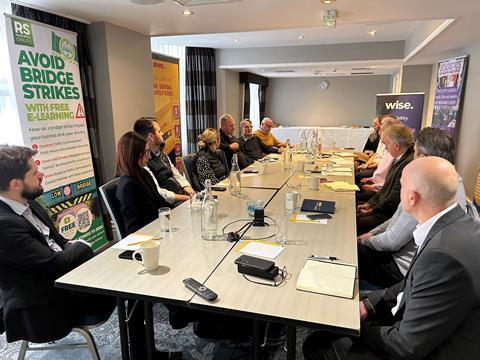
Speaking at the Destination Zero Bridge Strikes national forum in Solihull, Peter Bennett, compliance manager at ATL Haulage, said inward-facing cameras had been “transformational”, cutting bridge strikes by the firm’s drivers by 30% in 18 months.
“Drivers thought inward-facing cameras were Big Brother,” Bennett said. “But within months they saw the footage was being used to protect them, not punish them. It gives us context — fatigue, distraction, stress — so we can coach properly rather than just deal with the aftermath. We only had one driver leave, and he came back.”
Bennett said the system had dramatically improved the Felixstowe-based haulier’s safety culture and incident investigation. “Bridge strikes aren’t about recklessness; they’re momentary lapses,” he explained. “The camera evidence lets us learn from near-misses instead of relying on guesswork. If we want prevention, not blame, we have to use the tools available.”
He admitted the change had “sparked some uncomfortable conversations,” but said it had ultimately boosted driver trust and accountability. “When you can see what’s happening in the cab, you can coach for the right reasons,” he added.
However, senior figures from Malcolm Logistics, Evri and the RHA warned that overreliance on technology risked eroding driver judgement rather than enhancing it. Safety apps and dashboard systems are likely to overwhelm an ageing driver population, several warned.
Mark Cameron, operations director at Malcolm Logistics, said the company was redesigning its refresher training into “smaller, more regular, bite-sized sessions” after finding that lengthy e-learning modules were counterproductive.
“The biggest risk now is overload,” Cameron said. “Drivers are drowning in data — policies, apps, 170-page manuals. It all turns into background noise. Our job is to make it usable.”
Gary Byrne, head of transport development at Evri, and James Barwise of the RHA echoed the concern, with Barwise warning that technology can “lead to an abdication of responsibility”.
“As soon as you rely on the system to think for you, awareness drops,” he said. “Bridge strikes happen in the real world, not on a dashboard.”
With most HGV drivers now over 50, speakers stressed that technology must assist rather than alienate. “We’re asking people who didn’t grow up with smartphones to juggle three apps before they start the engine,” Byrne said. “Technology should help, not hinder.”
Culture of prevention
Launched in June by training consultancy Road Skills Online, the Destination Zero Bridge Strikes campaign aims to involve operators directly in reducing risk and building a culture of prevention.
“We have a big task ahead,” said event chair and campaign co-founder David Somers. “Our mission is to change organisations, cultures and behaviours. By doing that, we can raise driver awareness.”
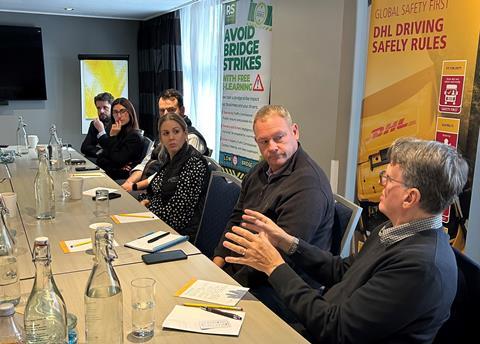
Peter Acton, executive chairman of the Logistics Leaders Network, said the discussion underlined that bridge strikes are not purely an engineering or compliance problem.
“It’s not that older drivers are slower — it’s that the brain has a load limit, just like a truck does,” he told delegates. “Add fatigue, stress and constant alerts, and even the best tech can’t save you.”
Acton urged the industry to focus on cognitive health, not just hardware. “If we’re serious about prevention, we need to think in terms of brain fitness — the mental load we put on drivers and planners. Too much tech, too fast, becomes noise. And that’s when mistakes happen.”
Somers cited research showing a driver makes around 650 decisions just to turn right at a T-junction. “Multiply that by a ten-hour shift and you’re into millions of micro-decisions,” he said. “We can’t train the human element out of the equation.”
Several contributors agreed that while technology helps, culture remains the biggest factor in preventing bridge strikes.
Leann Lewis, operations director at Employ Recruitment, said her agency had built a “compliance-first culture” for its drivers, with every new recruit undergoing bridge-strike awareness training before their first shift.
“We don’t just put bums on seats,” Lewis said. “Drivers do toolbox talks, competency tests, and we keep up a constant dialogue. We also sit in on client inductions so we can brief drivers properly. It’s about embedding ourselves into the client’s operation so standards are consistent.”
Somers dismissed claims that agency drivers cause a disproportionate number of bridge strikes, citing confirmation from the Office of the Traffic Commissioner that every case is judged on its merits.
Andy Rodley, operations director at DHL Supply Chain, agreed, saying that of the 6,500 drivers represented in the group’s data — about 20% of them agency staff — there was “no correlation” between agency status and incidents.
Delegates also discussed the lifestyle pressures faced by professional drivers, particularly older workers dealing with fatigue, poor diet and limited rest facilities.
“As Acton put it: “We’ve got drivers in their late fifties juggling health checks, family pressures and a job that’s getting more complex every year. You can be legal on hours but still unfit to make sharp decisions.”
The forum heard that long-distance “tramping” drivers often struggle to find healthy food or quiet overnight parking, compounding fatigue and stress.
“Truck manufacturers have made brilliant sleeper cabs,” ATL’s Bennett noted. “But when you’re parked next to a fridge unit running all night, it’s not rest — it’s endurance.”
Acton added: “A hundred years ago, the fastest most people moved was walking pace. Now we’re asking them to operate 44-tonne vehicles at motorway speeds, surrounded by distractions. Evolution hasn’t caught up.”
The group agreed that driver welfare — from rest stops to diet and mental health — must be part of any ‘Destination Zero’ strategy.
A growing movement
Somers outlined the progress of the initiative, which is supported by the RHA and gaining traction across logistics networks.
He said bridge strikes remained a persistent problem despite years of awareness work by Network Rail and others, and that solutions must be industry-led.
“Network Rail doesn’t control bridge markings, and it doesn’t have direct contact with hauliers,” Somers said. “That’s why we launched an industry-led campaign — so operators could take the lead in prevention, not just react to enforcement.”
He praised companies such as ATL, Malcolm Group and Employ for sharing data and best practice, calling this “the start of a movement”.
The forum also discussed expanding the campaign’s reach through social media and regional forums. Destination Zero now has a LinkedIn showcase page and Facebook profile, and Somers urged operators to “declare themselves as champions”.
“Being a champion is self-declared,” he said. “It’s not a badge — it’s a commitment to act, whether that’s training, communication or using our materials with subcontractors.”
Looking ahead, Somers said regional forums are planned across the UK, the first of these at the inaugural RTX Scotland on 19-20 November. He also confirmed that the campaign will be visible during next summer’s Logistics Week, which brings together RTX and Multimodal in a landmark move set to reshape the UK logistics exhibition landscape.
“It’s about visibility,” he said. “If the brand becomes recognised as a neutral, industry-wide symbol, drivers will take it seriously. They won’t see it as just another management initiative.”
Looking ahead, forum members agreed that vehicle manufacturers must play a larger role in bridge-strike prevention. Future General Safety Regulations (GSR) could include mandatory height-awareness technology.
“We’re all bolting on apps and alerts,” Somers said. “But newer HGVs don’t let you load your own software. If manufacturers baked bridge-strike prevention into the cab from day one, we wouldn’t need workarounds.”
He confirmed he has approached major OEMs, including Mercedes-Benz Trucks, which has expressed interest in developing solutions. “We’re planning to invite manufacturers to the next forum,” he said. “If one takes the lead, others will follow.”
The next Destination Zero meeting is expected to be hosted at Mercedes-Benz’s Milton Keynes HQ early next year.
Closing the session, Somers said progress depends on shared learning rather than more regulation.
“Bridge strikes are not inevitable,” he concluded. “They’re preventable — when the right culture, communication and awareness come together. Technology has a role, but only if it helps the human behind the wheel.”