





As UK hauliers face rising costs, persistent driver shortages and new CO₂-linked road charges for European operations from 2026, 2025 marked a turning point in Europe’s used truck market — offering British fleets a clearer, more strategic path to renewal
Looking back, 2025 felt like the year Europe’s truck market finally stabilised after half a decade of disruption. For fleet operators, including UK hauliers running cross-border routes into the EU, the shift wasn’t just about sales volumes; it was about confidence returning to fleet planning.
After years of pandemic-era shortages, post-COVID price spikes, and ongoing supply-chain headaches, the frantic urgency that once defined fleet renewal eased. Operators could plan, rather than react. That change matters when margins remain tight and capital discipline is back on the agenda.
A market steadied
New heavy truck sales in the EU fell by 9% in the first nine months of 2025 compared with 2024, totalling 205,713 units. But while the numbers were lower, what struck me was the underlying stability. Buyers and sellers finally seemed able to make decisions with some predictability, rather than chasing short-term opportunities.
The European used truck market, valued at around €6.8bn (£5.98bn) in 2024, benefited from high demand for cost-effective logistics solutions and ongoing fleet-modernisation pressures. For UK operators trading in Europe, a more predictable market provides real strategic value: it makes budgeting, tendering, and cross-border planning far easier.
Behaviour change
To my mind, the most significant development wasn’t in numbers, but in how operators approached purchasing decisions. The opportunistic, price-driven buying that dominated previous years gave way to more strategic, deliberate choices.
Fleet operators are now far more selective. Service history, fuel consumption, and overall condition matter almost as much — if not more — than the headline price. I’ve seen UK hauliers increasingly recognise that the lowest upfront cost does not equal the lowest total cost of ownership, especially with environmental and road taxes rising across Europe.
There’s also a pragmatic approach to vehicle preparation. Full cosmetic restoration is no longer a priority; fleets now focus on reliability and functionality, accepting that wear is inevitable once a truck hits the road.
Three routes to renewal
European fleet operators now tend to follow one of three paths. Buying new remains the premium option. Delivery times have normalised, but prices reflect the cost of meeting CO₂ targets with advanced drivetrains and efficiency technologies.
Manufacturer-backed used vehicles offer certification and warranties, but supply is inconsistent and hard to secure in large, identical batches.
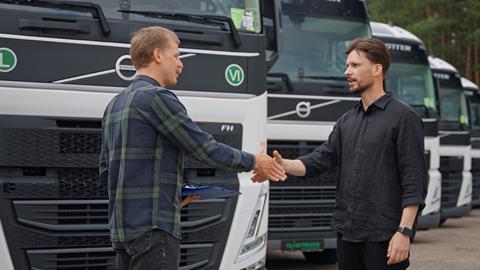
Independent resellers and brokers provide variety and sometimes lower prices, but due diligence falls on the buyer — a particular challenge when operators need volume and standardisation.
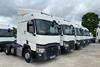
This is where specialised peer-to-peer suppliers make a difference. Access to large volumes of similar vehicles allows operators to plan fleet renewal around their own cycles, rather than what happens to be available on the market. For UK hauliers with international operations, that predictability is increasingly valuable.
Diesel still dominates
Fleet renewal pressure is growing because Europe’s truck fleet is ageing. The average EU truck is 14.1 years old, with international operators typically running younger vehicles to save on maintenance and tolls.
Despite regulatory pushes, electrification remains marginal. Over 96% of medium and heavy trucks on EU roads still run on diesel. Zero-emission heavy trucks accounted for just 1.5% of sales in Q1 2025, rising to 3.8% by Q3. For the foreseeable future, diesel will dominate fleet renewal — including for UK operators crossing into the EU.
Regulation and costs
From 2026, EU member states will introduce CO₂-based road charges for trucks, and manufacturers will face tighter compliance rules without the buffer of pre-2025 credits. While the UK sits outside the EU framework, British hauliers operating within member states will still feel the impact.
This means older trucks will cost more to operate, and operators who fail to modernise risk higher road charges and losing tenders to competitors with cleaner vehicles. Cost-efficient, predictable fleet renewal has become a business imperative.
Overlay all of this with the ongoing driver shortage, and the case for fleet standardisation becomes even clearer. Europe faces a shortfall of more than 426,000 drivers, with the figure expected to rise sharply. The UK faces similar demographic challenges.
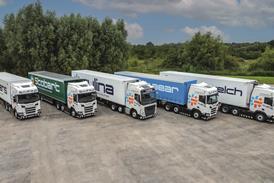
With drivers scarce and expensive, mixed fleets increase complexity, training time, and risk. Standardised fleets — ideally with identical vehicles — make it easier to deploy staff efficiently and safely.
Looking ahead
The divide between operators who plan and those who react will widen in the coming year. The market has matured, volatility has eased, and the rules around cost, regulation, and availability are clearer than they have been for years.
For UK fleet operators, the lesson from Europe’s experience in 2025 is clear: young-used trucks from reliable sources provide a practical middle path — newer technology than ageing fleets, lower capital exposure than buying new, and, with proper planning, the predictability the market has been waiting for.
Vytenis Norušis, chief executive, Class Trucks, Vilnius, Lithuania