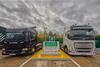
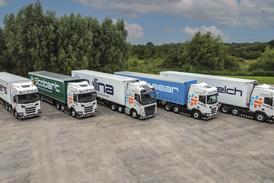



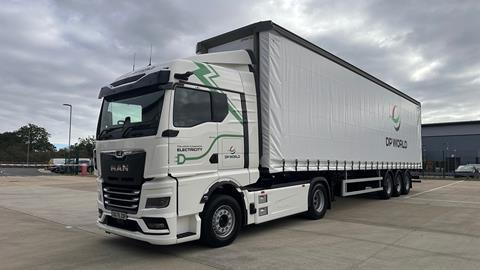

DP World, Howard Tenens and Port Express are investing in electric HGVs after taking part in trials arranged by Project JOLT, which saw 15 fleet operators testing out the technology in real-world operations.
Project JOLT is a collaboration between academia and industry, involving two universities, 15 fleet operators, five truck manufacturers and three organisations providing project management and software support.
It is investigating the economic viability of electric HGVs and the factors affecting their performance in commercial operations.
The project’s research is being led by Professor David Cebon and the Centre for Sustainable Road Freight (SRF).
Project JOLT’s findings suggest that, at current diesel prices, operators could save around 21p per kilometre in fuel costs by switching to electric trucks.
The trials enabled the fleet operators to evaluate vehicle range, payload capacity and operating costs.
The largest of the three orders resulting from the trial came from the logistics division of DP World, which has bought two now and ordered a further eight MAN eTGX tractor units. These will be added to the three existing electric trucks.
The additional vehicles will mean that 13 of the depot’s 37 trucks will be electric. Of the 11 destinations served from the site, seven are within the range of the MAN electric trucks.
Dave Munday, operations manager at DP World’s Bicester depot, said: “I am pleased that I can align our environmental objectives, our customer’s aspirations and the commercials into a meaningful package.”
DP World has also taken advantage of the government’s Zero Emission Truck Grant, which offers eligible businesses savings of up to £81,000 towards the purchase of qualifying vehicles.
The company has arranged servicing and maintenance support through MAN dealer Cordwallis Group, whose Bicester premises are two miles from the depot.
Howard Tenens has also selected MAN electric vehicles, ordering an eTGX tractor unit and an eTGS rigid truck.
The operator plans to use its existing renewable energy generation to support the vehicles’ operation and reduce electricity costs, with the aim of improving the cost difference between electric and diesel-powered transport.
The company has invested in alternative fuels and energy initiatives for several years, including renewable energy installations, hydrotreated vegetable oil (HVO) and biomethane.
Felixstowe-based Port Express is introducing a Volvo FH electric tractor unit for a regular shuttle operation to Milton Keynes.
The SME haulier was introduced to electric trucks through Project JOLT and DP World’s Low Carbon Truck Programme. It has subsequently agreed a two-year lease with a retailer customer seeking to reduce its Scope Three emissions.
James Watts, Port Express managing director, said the decision to select Volvo was influenced by the manufacturer’s established presence in the company’s existing diesel fleet.
The company said familiarity with Volvo’s commercial arrangements and vehicle cab layout were also factors in the decision.
Watts said: “Thanks to Project JOLT, we dispelled any misconceptions about electric trucks. It was then a matter of matching a vehicle to our regular routes.”