


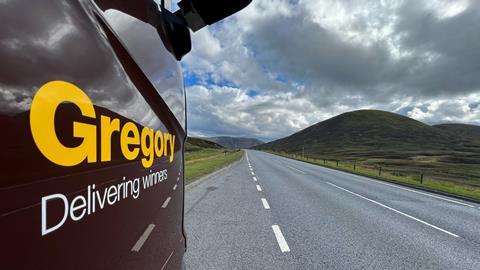

Gregory Trading Holdings has blamed rising fleet replacement costs, higher employment taxes and operational challenges across parts of its business after reporting a sharp fall in annual profits despite growing turnover.
The Devon-based logistics group, which includes Gregory Distribution, ARR Craib and Pollock (Scotrans), saw pre-tax profit fall by a third to £6m in the 53 weeks to 4 October 2025, down from £9m the previous year, while revenue increased by £51m to £404.8m.
In its business review of its latest annual results, the company said the additional trading week, alongside organic growth with existing customers, new contract wins secured in the previous year and the acquisition of Scottish haulier John Mitchell (Grangemouth) had all contributed to higher turnover.
However, it said profitability came under pressure from a combination of rising costs and operational inefficiencies.
The group said it continued to experience “cost challenges across all spend categories”, including higher employer National Insurance contributions, significant increases in business rates and sharply higher vehicle costs.
It added that replacement trucks now cost up to 50% more than the vehicles they were replacing, while a nationwide shortage of skilled vehicle technicians had driven up maintenance costs.
Although the company said most of these increased costs had been, or would be, recovered from customers, delays in passing them on had affected profits during the year.
Gregory also pointed to surplus warehouse capacity across the UK, which left a number of its warehouses “significantly underutilised”, while operational issues affected both its pallet network and shared-user transport operations.
Its South West pallet network business struggled to recruit drivers, and with an imbalance between inbound and outbound freight volumes. The company said it had increased multi-drop driver wages to improve recruitment and introduced new planning technology, with operational performance improving towards the end of the year.
Meanwhile, rapid growth in the shared-user fleet diluted operational expertise across multiple depots, while changes in customer requirements no longer aligned with driver shift patterns, reducing vehicle efficiency and profitability.
The business has since introduced more centralised planning, increased frontline training and altered driver shift patterns to better match customer demand, measures it said had already begun to improve performance.
The largest single factor behind the profit decline was the increased cost of replacing vehicles, the company said, with inflation in truck prices increasing depreciation charges by £5m compared with the previous year, while higher borrowing costs associated with fleet investment further reduced profitability.
Despite the lower pre-tax profit, earnings before interest, tax, depreciation and amortisation (EBITDA) rose 12.7% to £34.7m, which the group said reflected the underlying strength of the business.
The company also generated £33.5m in cash from operating activities, £4.1m higher than the previous year, while continuing to invest in new vehicles to support customer growth and new contract wins.
The group operates a large portion of its network in Scotland and in March last year strengthened its Scottish presence through the acquisition of John Mitchell (Grangemouth), a container haulage and warehousing specialist.
The business contributed £13.4m in turnover and £0.5m in profit after tax following the acquisition and will continue trading under its existing brand.
Within the group Gregory Distribution saw pre-tax profit fall to £4.2m (2025: £6.1m), despite turnover rising to £322m (2025: £291m) in the period.
Pollock (Scottrans) delivered higher revenue during the year, rising to £32.5m, up from £27.9m in the previous year. However pre-tax profit fell to £4.2m (2025: £6.1m).
Meanwhile ARR Craib Transport went into the red, reporting a pre-tax loss of £49,000 (2025: £849,000) in the prior year, despite upping its turnover to £49.9m (2025: £47m)
Looking ahead, the group said it had begun a major business transformation programme designed to improve long-term operational performance through changes to processes, technology and organisational structure.
It has also reorganised the business into four specialist operational divisions covering shared-user transport, dedicated contracts and warehousing, pallet networks and specialist transport, with each division led by a dedicated director responsible for profitable growth.
The company said the restructure would allow management to focus on “less breadth and more depth” as the business adapts following several years of expansion.
Gregory said it expected profitability to improve during the coming year, supported by operational improvements, continued growth with existing customers, new business opportunities and ongoing investment in technology.
It also said it remained well placed to support customers’ decarbonisation strategies through the use of HVO, CNG, LNG and electric vehicles.