







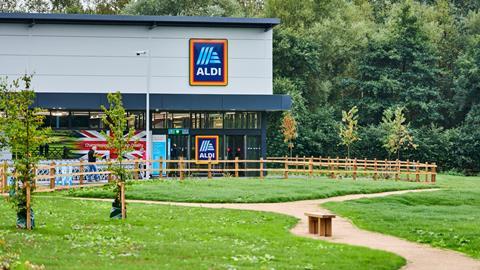

Aldi is to invest a record £900m into opening 40 new stores and boosting its distribution network, as it continues its drive to expand its retail footprint to 1,500 stores in the UK.
The announcement coincides with the supermarket giant’s latest financial results to 31st December 2025, which saw turnover rise 5% to a record £19bn, securing Aldi a 10.6% share of the highly competitive UK grocery market.
The supermarket, which currently has 1,092 stores, said its £900m investment in 2027 will include 40 new stores, plus continued works on its distribution network. The supermarket is set to open 30 stores over the next 10 weeks, including Dumbarton, Newport and Willesden, London.
The upcoming £900m investment adds to Aldi’s £1.6bn two-year capital expenditure programme to 2027 which saw the supermarket retailer open a new £500m mega-distribution centre in Bardon, Leicestershire in June this year - the largest supermarket warehouse in the UK.
The mega-hub has 140 HGV loading bays and automated handling systems designed by technology partners Dematic and Cimcorp, and is built to process up to seven million pallets of stock annually and service nearly 350 stores at peak capacity.
Aldi operates a high-volume, low-complexity distribution strategy using regional hubs to supply stores with palletized, shelf-ready stock, aimed at cutting warehouse dwell times and terminal handling costs.
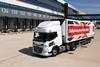
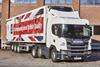
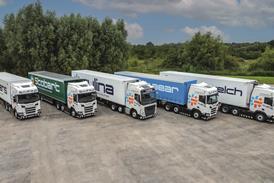
It operates its own fleet of around 500 trucks, which runs on Hydrotreated Vegetable Oil (HVO) fuel, and uses third-party logistics (3PL) partners Dachser UK and Armstrong Logistics.
Dachser UK manages ambient goods, international freight forwarding, and specialized bonded warehousing for its alcoholoc drinks range, whilst Armstrong Logistics operates dedicated inbound ambient consolidation hubs, grouping supplier deliveries globally before delivering them to Aldi’s regional distribution centres.
It also has a framework of secondary hauliers managing its daily cold-chain distribution.
Announcing the investment, Giles Hurley, Aldi chief executive highlighted the rising cost of food and the critical nature of supply chain resilience.
He said: “The cost of food remains one of the biggest pressures on households across the country.
“Recent droughts at home and events overseas have highlighted just how fragile our food system is and why food security must be a long-term national priority.”