
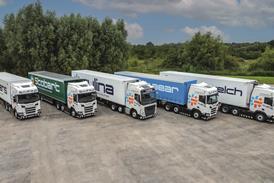





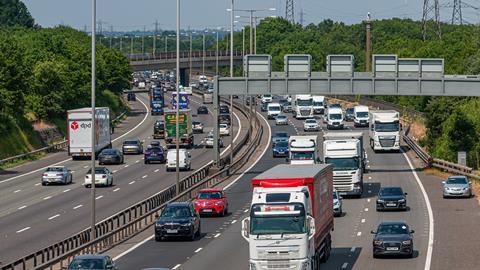
The number of vehicles operated by hauliers has increased by some 3,500 over the past year, offsetting a decline of 1,282 vehicles operated by own-account operators, according to figures from MT Fleet Data.
Our analysis of O-licence figures for fleets of more than 50 trucks shows 3PLs operated a total of almost 351,000 vehicles (up 1%) while own-account operators operated 194,438 (down 0.7%). Outsourcing has clearly played a role in this, however there could also be other factors at play such as weakness in certain market sectors.
The figures show the remarkable resilience of the third-party logistics sector which faced hefty fuel price increases earlier this year in the wake of the US-Iran war.
However, in the 3PL sector, fleet growth has been strongest among small to medium operators. The biggest fleets (over 500 trucks) saw the number of trucks on O-licences fall slightly to 93,970 although the number of trailers increased.
Those 3PLs that operate fleets of 100 to 499 trucks saw a 3% increase in the number of trucks authorised along with a 2.4% increase in the number of trailers. And for fleets under 100 trucks the increase in trucks was 2.6% while there was a tiny fall in the number of trailers.
The figures also reveal that the number of trailers operated by the UK’s major vehicle fleets has risen faster than the number of trucks over the past year. The number of trucks has increased by 406 (0.1%), while the number of trailers has risen by 1,811 (0.7%). This phenomenon is particularly evident among the largest 3PLs and in sectors such as parcels, foodservice and waste.
We looked at the fleet changes for the top operators in a number of sectors over the past year and it is clear that some sectors are expanding while others are consolidating.
For example, the top nine fleets in the domestic parcels sector saw the number of trucks increase by 2.8% and the number of trailers increase by 10.6%. Evri recorded the largest growth, helped by the acquisition of DHL’s domestic parcels business last year. Amazon continued its expansion while DPD and Inpost also saw growth. Operators reducing their fleets include Royal Mail, Whistl and UPS.
The top ten logistics operators actually saw a reduction in the number of vehicles operated over the past year. There was consolidation at a number of major fleets including GXO, Turners (Soham) and Gregory Group. This was offset by significant fleet expansions at Culina and XPO. Gist, BCA Automotive and Ceva also saw growth.
Own-account fleets tend to be more stable than 3PLs which are constantly adjusting their fleets as business is won and lost. Even so, three of the fleets in the OA top ten saw increases including Tesco, Sysco GB, and Warburtons. Asda, which outsourced deliveries for its George brand earlier this year, saw the most notable reduction - a cut of 21.5% in its truck fleet, while its trailer fleet remained at the same level as last year.
Collectively, the top ten players in Foodservice, Energy And Fuels, and Waste all saw growth, while fleets shrank in Retail, Motor industry, and Construction and Builders Merchants.
The top ten players in the buoyant Foodservice sector saw 4% growth in the number of trucks and 9.7% in the number of trailers suggesting that a certain amount of fleet reconfiguration to accommodate larger vehicles. The most notable growth came at Greggs which increased its truck fleet by 10.8% and its trailer fleet by 29.8%. There was growth also at Martin-Brower, which counts McDonalds and Papa John as customers, Sysco GB, and BFS.
Energy and Fuels saw 2% growth in the top ten truck fleets, as well as 1.2% growth in their trailer fleets. Most fleets in the sector were fairly stable, with the most notable growth coming at Schenk UK, the former Suttons Tanker business.
Truck fleet growth among the top ten Waste operators was 0.2% while trailer growth was 1.7%. There were notable increases at DM Topco and Grundon, while FCC Environmental saw the most significant reduction. The UK waste and recycling market has been growing consistently and is forecast to be worth some £9.3bn by 2030, according to Next Move Strategy Consulting.
Asda’s 21.5% reduction in the number of trucks on its O-licence was a significant factor in the performance of the retail sector as a whole. It was partially offset by increases at Tesco and Amazon, but overall the number of trucks operated by the top ten retailers was down 2.5%. On the other hand the number of trailers actually increased by 0.7%. There is no doubt that the retail market is struggling for growth: a recent PWC report suggested that growth would be uneven and hard won over the coming months.
The Construction and Builders Merchant sector was affected by fleet reductions at large building materials suppliers such as Cemex and Heidelberg. Collectively the top ten players saw truck fleets fall by 3.4% and trailer fleets fall by 15.5%. The construction industry had difficult years in 2024 and 2025 but is expected to grow slowly over the next three years, according to the latest PWC forecast.
The top ten fleets in the Motor Industry saw truck numbers fall 5.9% and trailer numbers fall 0.4%, mainly as a result of big cuts at Unipart, which offset increases at BCA Automotive and Stellantis.
According to the Society of Motor Manufacturers and Traders, car registrations were up 9.2% in the first half of 2026 at 1.1 million. However, vehicle manufacturing in the five months to May 2026 was down 8.7% on the previous year. Vehicle manufacturers were hit last year by US tariffs but are recovering following the UK-US trade deal.
Fleet Data is Motor Transport’s listing of the UK’s largest third party and own account HGV fleet operators. Based on the weekly O-licence updates issued by the Office of the Traffic Commissioners, Fleet Data enables subscribers quickly to identify operators in each of the eight traffic areas based on the number of vehicles on the licence and type of operator.