









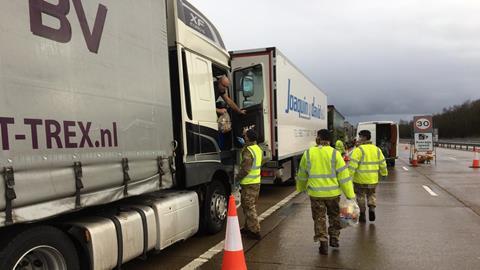

A traffic management scheme on the M20 that holds HGVs destined for cross-Channel ports in restricted areas during peak times must be replaced with a permanent solution, Logistics UK has urged.
The business group said lorry drivers were treated like second class citizens when Operation Brock was deployed in Kent and it suggested that the inland border control facility at Sevington could be used as a replacement instead.
The call from Logistics UK came ahead of the bank holiday weekend, when it said experts were predicting up to 18 million car journeys would be completed.
However, the Kent and Medway Resilience Forum (KMRF) told Motor Transport that the Operation Brock barrier was removed from between junctions eight and nine of the M20 on Sunday night (17 August) after data showed it was now possible.
It had been in operation during the summer as congestion and disruption from freight operators and passengers built up.
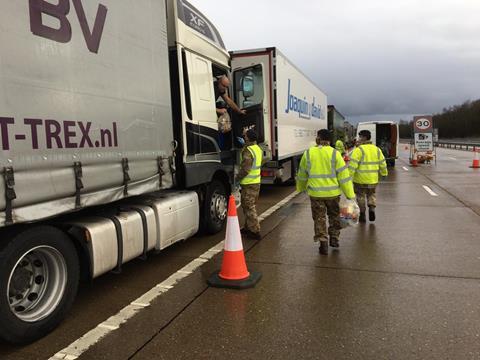
Jonathan Walker, Logistics UK head of planning and infrastructure policy, said: “Traffic chaos can be scheduled as accurately as a cross-channel ferry timetable when Operation Brock is deployed.
“The planning and budgets that have gone into developing and deploying the scheme now need to be applied to implementing a permanent solution.
“It is unacceptable to expect professional drivers, who are supporting the nation’s supply chain by providing consumers and businesses with the goods that they rely on every day, to tolerate being treated like second class citizens, without access to proper sanitation or refreshment facilities – we would not tolerate that sort of treatment in offices, factories or schools so why should we expect our logistics workers to put up with it?”
The KMRF said the decision to use Operation Brock was made collectively by the KMRF, a partnership of agencies including Kent Police, Kent County Council, and National Highways and was based on data provided by partner agencies.
A KMRF spokesperson added: “Our work with central government to identify a better traffic management solution will continue.”