




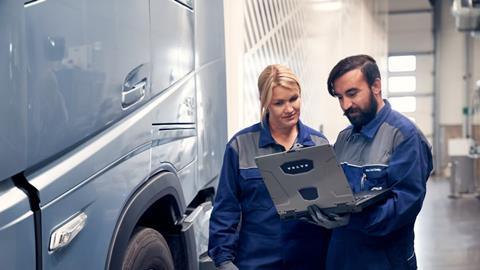

Research into how women and ethnic minorities perceive careers within haulage and zero tailpipe emission trucks found stereotypes still dominate, with many imagining the sector as dirty, physical and male-dominated.
Volvo Trucks said the findings revealed a generally low awareness of the sector, with many people outside the industry struggling to picture jobs and career pathways involved in the transition away from ICE lorries, despite rapid advances in battery electric, fuel cell electric and hydrogen solutions.
The manufacturer published its findings as part of a project to make the sector feel more visible, accessible and inclusive.
Participants took part in focus groups and interviews to shed light on perceptions of haulage among under-represented groups.
The research found that when the sector was framed around ideas of future technologies, the reaction become more favourable, with participants connecting the work to sustainability, innovation and climate goals.
Across all groups that took part, priorities for career choices centred on work-life balance, fair pay and transparency, as well as working for an organisation with a supportive and inclusive culture.
Growth opportunities, and an opportunity to carry out meaningful work with purpose were also rated highly.
Jargon-heavy job descriptions, inflated job titles and long lists of ‘essential’ requirements were identified as undermining applicant confidence and helping to drive self-exclusion and prevent interested parties from applying.
Amy Stokes, decarbonisation director at Volvo Trucks UK & Ireland, said: “For too long recruitment in this sector has been hindered by a less diverse applicant pool, making it harder to build an inclusive workforce.
“This is a crucial topic the industry needs to address, because misconceptions, particularly among women and ethnic minorities, risk narrowing the talent pool at a time when we need to attract and retain a broader range of talent than ever.”
Volvo Trucks’ head of competence development, Karen Bailey said the challenge to attract a more diverse workforce was bigger than any one manufacturer could accomplish alone and that Volvo Group’s global diversity targets included 35% women employees by 2030:
“If the wider industry adopts a similar approach, and combines this with transparency, structured routes for career progression, and a culture that actively values difference, then it should leave the door open to a far wider array of talent,” she added.