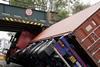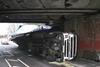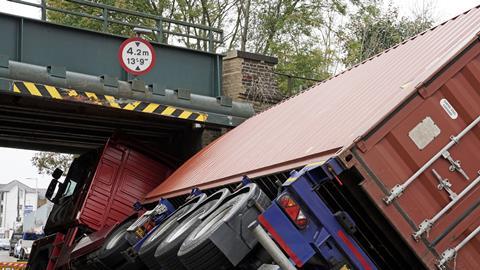

Home delivery vehicles are making up a growing proportion of bridge strike incidents and a lack of training and drivers under pressure to complete drops are blamed for the increasing number.
According to Network Rail, there were 1,532 railway bridge strikes between April 2023 and March 2024, but despite publicity campaigns and threats to driver and operator licences, this number increased to 1,666 between 2024 and 2025.
There are between nine and 12 reported bridge strikes every day in the UK with around 80% involving HGVs. The average cost to a company per incident is £13,000 and it costs the economy £23m each year in disruption and delays.
The traffic commissioners reissued guidance to operators in 2024, underscoring measures to prevent strikes and the issue is often addressed in regulatory proceedings, where licence revocation is possible.
Speaking recently at a training course for operators organised by Beverley Bell Consulting, Rick Wenham, the Metropolitan Police’s former head of the commercial vehicle unit, said the main reasons were drivers not measuring loads, not following a truck-specific sat-nav, or “blatant stupidity”.
But he also said that a reason for the number increasing was that growing awareness about the problem meant incidents were more likely to be reported now as well.
“An emerging rail strike reason are home delivery vehicles,” he added.
Deputy traffic commissioner Nick Denton said: “Maybe the driver has not been trained; they are driving a 3.5-tonne vehicle, which can be quite high; they’re using a satnav and are in a hurry with multi-drops.
“So all of those issues combine and then the numbers are not dropping.”
Asked to respond to this observation, a Network Rail spokesperson said: “We’re seeing vans make up a growing share of bridge strikes on the railway, with the proportion now significantly higher than it was 10 years ago.
“While lorries still account for most incidents and can cause the most serious damage, van strikes are an emerging challenge and can still cause significant disruption.
“We continue to work with the transport and logistics sectors to reduce the risk of bridge strikes across the network.”
Former senior TC Beverley Bell said: “You can have all the tech in the world but at the end of the day it comes down to the driver and the driver’s use of that tech – and also the distractions that come from using that tech.”