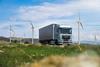



MAN Truck & Bus has cut greenhouse gas emissions at its sites by 67.9%, bringing it close to meeting its goal of reducing site-related emissions by 70% by 2030, compared to 2019 levels.

MAN’s progress in cutting emissions is revealed in its latest Sustainability Report 2025, which attributes the manufacturer’s progress to the transition of its energy supply, infrastructure, and production processes.

Actions include increasing its share of renewable energy through self-generation, long-term Power Purchase Agreements (PPAs), and the procurement of certified green electricity.

Photovoltaic installations are also being expanded across sites. In Munich, MAN is also preparing for the construction of a geothermal energy facility in order to progressively replace fossil-based heat and sustainably improve the greenhouse gas balance at its largest production site.

In addition, the company is systematically modernising energy-intensive equipment and implementing further efficiency programmes in production.

The increasing electrification of the company’s own corporate vehicle fleet also contributes to the reduction of emissions.

The Sustainability Report 2025 also shows that over 95% of MAN’s greenhouse gas emissions arise during the use phase of its vehicles.

To reduce this the fleet GHG output per vehicle kilometre of MAN-sold trucks, buses, and vans is to be cut by 28% compared to 2019 by 2030 by electrifying the vehicle portfolio. In the 2025 reporting year, a reduction of 16% compared to 2019 was achieved in this area, the report notes.

With the start of series production of the battery-electric trucks MAN eTGX and MAN eTGS at the Munich site, the transition from testing to scaling has been completed. In 2025, MAN has already sold more than 620 electric trucks.

MAN is also recording strong growth in the bus segment. In 2025, sales of electric service buses rose by 118% to more than 1,300 vehicles – a new record.

Overall, MAN increased sales of fully electric vehicles in 2025 by 168% to 1,970 units. By 2030, approximately 40% of MAN vehicles sold in Europe are to be fully electric, the report said.

MAN is also driving the gradual electrification of its inbound logistics and, in 2025, issued tenders for the deployment of battery-electric trucks on an initial approximately 40 routes covering up to 165 million kilometres annually. Series operation has been under way since the beginning of this year.

In outbound logistics, MAN is working together with logistics partner VEGA International on an intermodal concept combining rail transport for the main haul and the MAN eTGX for the last mile. By the end of 2026, a further 30 to 40 fully electric trucks are to be deployed in vehicle delivery operations.

Alexander Vlaskamp, MAN Truck & Bus chief executive, said: “The greatest lever for climate action lies in vehicle operation – and that is precisely where we are accelerating electrification.

“At the same time, we are demonstrating within our own sphere of influence that we deliver on our commitments: at our company sites, we have reduced emissions by 67.9% since 2019. And we are also electrifying our own transport processes – from inbound to outbound.

“This is how we make climate action measurable: in business operations, in the use phase, and along the value chain,” he added.

In addition to covering climate and energy topics, the sustainability report also documents further progress in the areas of circular economy, supply chain responsibility, occupational safety, and skills development.

The full report can be found here.