




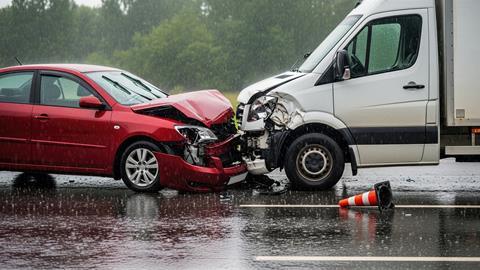

HGV drivers could be attracting an undeserved reputation for causing collisions after new government figures showed cars and vans accounted for more than half of work-related accidents.
The department for transport (DfT) analysis of reported road casualties involving vehicles driving for work found cars were the most common vehicle type in injury collisions last year, accounting for nearly a third of all cases (28.7%).
Vans and buses also featured prominently, together making up over 30% of the total.
By contrast, goods vehicles over 7.5-tonnes accounted for just a tenth of injury collisions.
According to LMP Legal, businesses may be underestimating the scale of driving for work risk, as the DfT acknowledged that the journey purpose of 53% of vehicles involved in reported collisions was not known – meaning the figures could be much higher.
The findings come as the legal environment surrounding commercial driving continues to evolve.
Sentencing guidelines now place greater emphasis on professional drivers, while regulators are focusing on van operators through legislative and compliance reforms.
Charlotte Le Maire, partner at LMP Legal, said: “Businesses tend to associate fleet risk with HGVs because they operate within a well-established compliance framework.
“Cars, vans and grey fleet vehicles often don’t receive the same level of governance, despite representing a significant proportion of occupational driving.”
Road safety charity IAM Roadsmart said the figures revealed “a lost decade” in terms of reducing casualties: “An overall increase in the number of killed and seriously injured in 2025 is troubling and we are deeply concerned by the increase in motorcyclist fatalities,” said director of policy Nicholas Lyes.
“Those using two wheels are among the most vulnerable road users and we need a concerted effort to bring these numbers down by reforming licensing and training.”