








Food retailers are turning to managed customs solutions backed by smart automation to overcome the growing complexities of transporting goods, especially perishable produce, between the UK and Ireland, according to Derry Bros, which offers managed booking, customs and consultancy services.
The company said this week that supply chain delays caused by incorrect customs documentation within high-volume, time-sensitive operations are having a significant impact through product loss, inventory shortages and reduced profitability.
Sarah-Louise Murray, Derry Bros customs manager, said: “Customs delays have a huge knock-on financial and reputational effect on a retailer’s business. A day lost in transit is a day lost at the store, resulting in a reduced shelf life for many fresh products.
“Retailers are looking for peace of mind that the supply chain is moving as efficiently as possible, so they are increasingly seeking 24/7 support using automated processes that eliminate human error and provide immediate issue resolution.”
With multiple checks taking place at the border or prior to arrival for every consignment – such as CERTEX and SPS (Sanitary and phytosanitary) – manual data input is not only time consuming but also increases the opportunity for inaccuracies to occur, the company said.
“Retailers are targeting compliance levels as close to 100% as possible, but this is proving to be a significant challenge. To date, we have been able to achieve a rate of 99% through a combination of smart data management, process automation and regulatory precision,” Murray claimed.
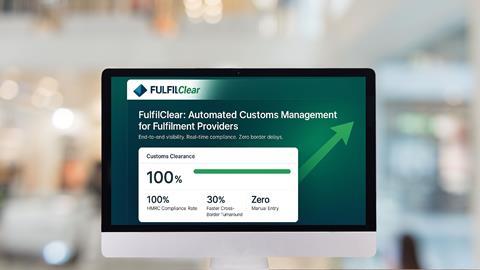
Last year, Derry Bros launched FulfilClear, a fully automated customs management solution for moving goods between the UK and Ireland that streamlines the entire customs process, minimises manual intervention and provides consolidated communication for all stakeholders in a single system.
It automates exports and imports, ENS, PBN, and GMR generation, as well as CHED documentation if required, using a verified product database, so every declaration is created from trusted information with full auditability at every stage.
However, the company warns that automation alone is not enough to avoid all delays and ensure the smooth transit of goods between the UK and Ireland.
According to Murray they are seeing retailers relying on an in-house 9-5 customs function, when their supply chain operates on a 24/7 basis.
“If loads are arriving at a port in the middle of the night, out-of-hours support is crucial to avoid serious disruption. You do not want to be waiting until 9am as you are losing valuable time and risk stores having empty shelves.”