





New diesel van registrations shrank by 12.1% to 156,048 units in the first half of 2025, whilst electric van demand rose by nearly 53% - although that figure still represents less than 9% of the overall van market, according to the latest figures published by the Society of Motor Manufacturers and Traders (SMMT).
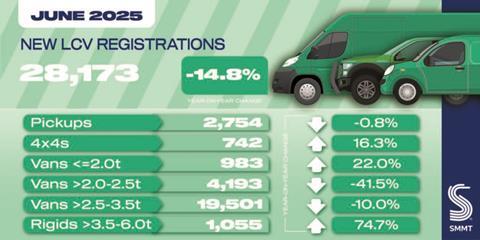
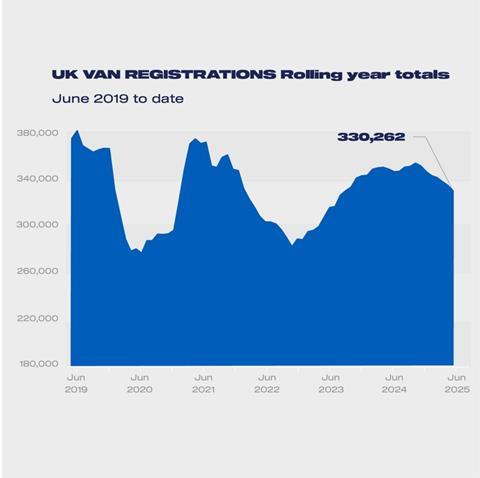
With a 14.8% drop in June, the market for diesel vans declined for the seventh consecutive month, rounding off the worst opening half-year performance since 2022, which SMMT attributed to a tough economic environment and weak business confidence to invest in fleet renewal.
Year-to-date performance was led by declining demand for the largest vans, down by 14.8% with 99,790 registered, as well as deliveries of medium sized vans, spiralling 20.9% to 26,408 units. The uptake of 4x4s also fell by 6.0% to 4,041 units.
On the upside, demand for small vans rose 30.7% to 4,907 units, but SMMT said this was not enough to soften the overall market fall.
SMMT also reported a notable rise in new pickups in the half-year period, up 10.0% to 20,902 units. However it added that this masks two consecutive months of decline following April’s introduction of new fiscal measures to treat double cabs as cars for benefit in kind and capital allowance purposes.
It said: “The change in treatment is putting additional costs on key business sectors, constraining new orders of the zero and lower emission models which are entering the market, and keeping more polluting vehicles on the road for longer.
“The change will also reduce total tax revenues given the lower registration volumes. SMMT continues to urge government to postpone the measure for at least one year so that industry and operators can better plan and prepare for the change.”
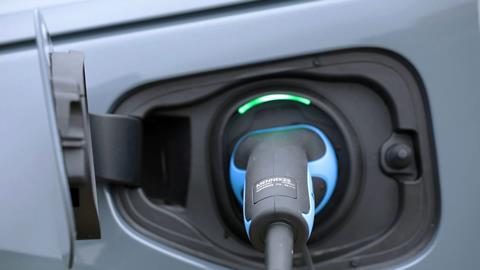
On a brighter note, manufacturers continue to invest significantly in zero emission LCVs with almost 40 different battery electric van (BEV) models to choose from – up from 28 in the first half of last year, SMMT revealed.
BEV demand rose by 52.8% with 13,512 units registered in 2025, boosted by a 97.0% jump in deliveries in June.
However, in the year to date, new BEV purchases remain at just 8.6% of the overall market - little more than half the 16% share mandated by government for 2025 which SMMT said leaves substantial ground to make up in the second half of the year – a gap it calls on government to help plug.
The report added: “The Plug-in Van Grant remains a lifeline for industry, so we await further details of the ongoing support announced in the Comprehensive Spending Review.
“Many businesses are still being held back, however, by a lack of access to suitable commercial vehicle charging at public, depot and shared hub locations.
“Market regulation is only workable if sufficient operators can switch so government must ensure greater access to LCV-suitable infrastructure across the country.
“Preferential treatment for depot grid connections is also a necessary step, given some sites could face waits of up to 15 years, and consistent and efficient implementation of local planning policy would give fleets the confidence they need to transition their operations to zero emissions.”
Mike Hawes, SMMT chief executive, commented: “Half a year of declining demand for new vans reflects a difficult economic climate and weak business confidence and the fact that this downturn comes just as industry invests heavily to expand its zero emission LCV offering is particularly concerning.
“Decarbonisation remains a shared ambition but with the EV market more than a third below this year’s target, bold measures are needed to drive demand.
“Accelerated CV infrastructure rollout, quicker grid connections and streamlined planning are now critical.”