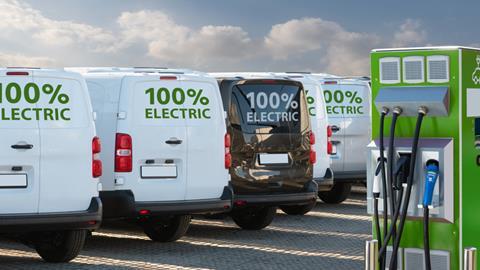

Drivers holding Cat B licences will be able to drive an electric or hydrogen-powered van with a maximum authorised mass (MAM) of up to 4.25 tonne, from 10 June this year, so long as the vehicle is a zero emission vehicle, the Office for Zero Emission Vehicles (OZEV) has confirmed.
This is a major change for which industry leaders have been campaigning for some time, and recognises the additional weight of electric and hydrogen-powered vans created by the battery. The normal MAM limit for petrol and diesel vehicles with a category B licence is 3.5 tonne.
The British Vehicle Rental and Leasing Association (BVRLA) has welcomed the changes, but is calling on the government to go further and faster to help operators replace their diesel van fleets with zero emission vehicles.
Tony Poston, BVRLA chief executive, said: “Restrictive regulations that were written decades ago are hampering the transition to a cleaner, greener van fleet. It is encouraging to see progress in making the regulations reflective of how our vehicle parc is evolving.
“These changes are long overdue and leave a host of other updates waiting in the wings.
“The BVRLA, in alignment with our Zero Emission Van Plan partners, has been in open dialogue with government to inform productive, practical changes.
“Operators are trying to bring electric vans to their fleets, with regulatory barriers a key blocker alongside the lack of fiscal support and concerns over charging.
“We are optimistic that today’s changes mark the start of more progress to come.
“For the van transition to work, we need the government to go further, faster to show that its ambitions match those of the sector.”
Other changes announced by OZEV this week see Cat B licence holders allowed to tow a trailer, as long as the MAM of the electric or hydrogen-powered van and trailer combination does not exceed 7 tonne.
For example, if the vehicle has a MAM of 4.25 tonne, then the MAM of the trailer will be limited to 2.75 tonne and must never exceed 3.5 tonne.
Drivers that have passed their category B driving test before 1 January 1997, can drive vehicle and trailer combinations up to 8.24 tonne.
These new entitlements do not require any change to the Cat B drivers’ photcard driving licence.
The BVLRA is part of a campaign group which has launched the Zero Emission Van Plan. Other members include Logistics UK, the Association of Fleet Professionals, Recharge UK, and the EV Cafe.
The plan had three key demands, including regulatory alignment of 4.25 tonne zero emission vans with diesel vans, which has now been granted.
The other two demands are for increased fiscal support, with grants to make new and used e-vans affordable, and improved charging, with regulatory and fiscal support for accessible, affordable and fit for purpose chargepoints.