


Nearly 3,000 zero-emission trucks are now funded through targeted Dutch programmes, with costs falling and range doubling in just two years. 

Dutch operators are planning multi-year fleet transitions with a level of confidence that might be turning heads across the Channel. New figures from the Netherlands Enterprise Agency (RVO) reveal how two well-structured national programmes are quietly transforming road freight, and there’s plenty for UK hauliers to learn from their approach.

The Dutch have split their zero-emission support into two complementary programmes: AanZET (Aanschafsubsidie Zero-Emissie Trucks) for battery-electric vehicles, and SWIM (Subsidieregeling Waterstof in Mobiliteit) for hydrogen trucks and refuelling infrastructure.

Since launching in 2022, AanZET alone has backed nearly 2,800 electric trucks across six funding rounds, with a combined budget of €214.9m. RVO confirms that 1,000 zero-emission trucks are already registered and operating on Dutch roads; a milestone that puts the Netherlands well ahead of comparable European markets.

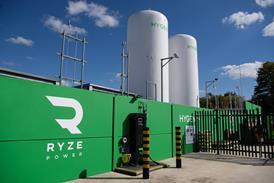
The hydrogen programme is smaller but strategically focused. This year, SWIM awarded €40m to eight partnerships, funding 355 hydrogen vehicles and eight refuelling stations. Crucially, every vehicle listed in the latest SWIM 2025 factsheet has been formally awarded subsidy, not merely applied for, giving operators genuine certainty.

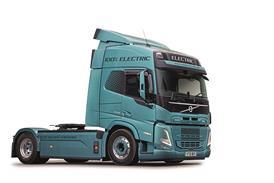
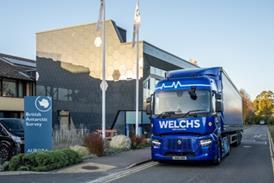
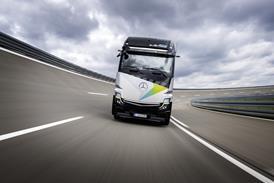
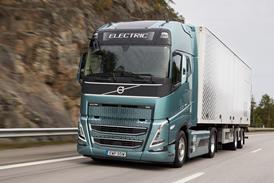
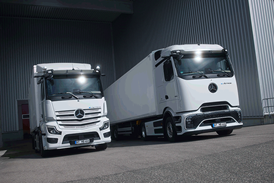
The most popular models will come as no surprise to anyone monitoring the European market: Mercedes-Benz eActros 600, Volvo FH Electric, and Volvo FM Electric dominate the battery-electric fleet. N3 tractor units remain the most common configuration, accounting for 44% of all subsidised vehicles under AanZET.

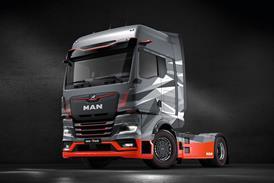
Beyond tractors, the funded fleet includes refrigerated chassis, box-body trucks, tippers, and refuse vehicles. On the hydrogen side, the 355 SWIM vehicles comprise 42 N1 vans, 173 N2 trucks (3.5–12 tonnes), 117 N3 heavy trucks, and 23 M2 passenger buses, supplied by manufacturers including MAN, Mercedes-Benz, Toyota, and E-Lions.

Large enterprises account for 40% of approved AanZET applications, medium-sized firms for 32%, and small operators or non-profits for 28%.

Perhaps the most encouraging data for fleet managers is the rate of technological progress. RVO reports that the average purchase price of an electric tractor has dropped by roughly €30,000 to €335,000 over the past two years, while range has doubled to around 500 kilometres on a single charge.

The maximum AanZET subsidy stands at €115,200 per truck, varying by company size and vehicle class. That’s substantial support, but it’s the predictability that matters most. The schemes run to fixed annual calendars with clear eligibility criteria, allowing operators to plan investment cycles years in advance.

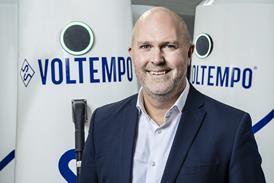
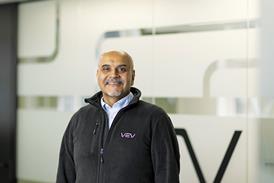
Commenting on the results, Dave Rose, CEO of Voltloader, a UK operator specialising in electric HGV transport and depot charging infrastructure, said the key challenge now is maintaining that consistency across markets:

“The Dutch and UK subsidy schemes are proving highly effective at jump-starting the zero-emission truck market. Yet the real challenge lies ahead: turning short-term support into long-term stability. Regulators must now lock in clear, durable frameworks so that investment in zero-emission haulage remains commercially and operationally viable.”

One standout feature of the Dutch approach is that infrastructure funding is built in from the start. Under SWIM, each consortium must build or expand at least one hydrogen station and ensure that at least half of the subsidised vehicles are heavy-duty trucks. This prevents the chicken-and-egg problem that has stalled hydrogen progress elsewhere.

RVO notes that grid congestion continues to make hydrogen an attractive option where full electrification isn’t yet feasible, a situation many UK operators will recognise.

The next SWIM application window opens in Q2 2026, and the programme will continue annually until 2029. AanZET operates on a similar rhythm. For Dutch hauliers, this isn’t a scramble for one-off grants. It’s a reliable planning to