






Relay stations modelled on the historic pony express are helping cut freight transit times and emissions on French motorways.
The European Clean Transport Network (ECTN) Alliance — formed by CEVA Logistics, ENGIE and Sanef — has opened its first motorway relay station at Sommesous in northern France, launching a new model for long-distance electric road freight. Early results show that the system, based on short truck hops between relay points, cuts greenhouse gas emissions by a factor of four and reduces delivery times by up to 25%.
The ECTN concept reimagines freight operations by dividing journeys into 300-kilometre motorway segments. Drivers swap trailers at relay stations, allowing trucks to be recharged during the trailer handover. This approach addresses both the range limitations of electric heavy goods vehicles and driver working time constraints.
The first pilot corridor, running 900 kilometres between Avignon and Lille, has been operational since November 2023. It includes five relay points located at Avignon, Lyon, Dijon, Sommesous and Lille. According to the ECTN Alliance, the model enables electric trucks to achieve nearly double the annual mileage of conventional diesel vehicles, owing to optimised route scheduling and minimal downtime for charging.
“The positive results from the ECTN testing phase prove its relevance and provide a concrete response, deployable on a larger scale, to quickly and significantly decarbonise long-distance road freight transport,” said Olivier Storch, deputy managing director at CEVA Logistics.
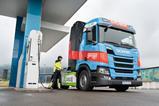
The relay stations are equipped with CCS-standard fast chargers supplied by ENGIE Vianeo, with equipment from Alpitronic and EVBox. Trucks are charged at up to 400kW, with plans underway to integrate Megawatt Charging System (MCS) technology as it becomes available. Electricity used at the relay stations is certified as renewable under guarantees of origin schemes.
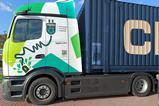
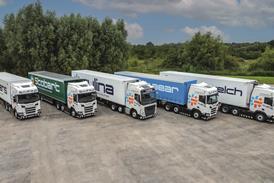
The fleet operating on the pilot corridor initially included Renault Trucks battery-electric models. Daimler Trucks vehicles are set to join from June 2025, and Volvo Trucks has also been involved. The relay station model is designed to be compatible with all makes of electric trucks.
The ECTN Alliance said that, beyond emissions reductions, the model offers significant operational benefits. Standard transit times between Avignon and Lille have been cut from 23 to 17 hours, while the shift to regular, shorter daily routes is expected to improve driver working conditions.
A second relay corridor between Lyon and Paris is also under development. Longer-term plans aim to expand the network across strategic corridors in Europe, building on the existing motorway infrastructure without the need for new land acquisition.
The ECTN concept has received backing under France’s national decarbonisation programmes, including ADEME’s ‘Ecosystems of electric heavy vehicles’ initiative and the Transport Innovation Agency’s Propulse programme.