





Regulations imposed on trailers to limit their carbon emissions are impractical and will penalise manufacturers during particularly tough economic conditions, Germany’s leading lobby group has warned.
The German Association of the Automotive Industry (VDA) was responding to legal action being taken by trailer builders against the European Union (EU) imposing climate regulations on them, despite most trailers not emitting any carbon.
Regulation 2024/1610 mandates CO₂ reductions for trailers based on the EU’s simulation tool VECTO-Trailer.
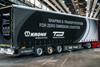
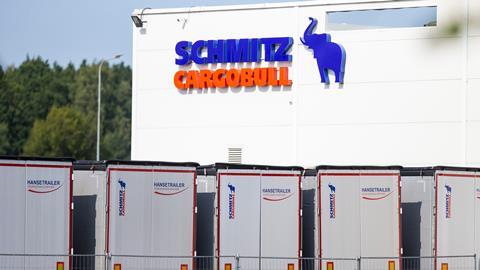
The group of eight manufacturers, which includes Schmitz Cargobull and Krone, said the rules were detached from practical realities and could result in higher overall emissions.
They warned that failure to meet the targets could result in substantial annual penalties from 2030 onwards and also push trailer prices up to 40%.
The VDA, which represents more than 620 companies in the automotive industry, told Motor Transport that the industry was committed to climate protection goals, but the potential fines were untenable:
“Regarding the requirements for trailers, it is undisputed that although a trailer itself does not emit CO₂, it can contribute to reducing the emissions of the overall vehicle combination,” said a VDA spokeswoman.
“However, the current legislation, which stipulates a CO₂ reduction rate of 10% for semi-trailers and 7.5% for other trailers, is simply not feasible for the trailer fleet as a whole – and the potential penalties for non-compliance are untenable, especially in already economically challenging times.”
The spokeswoman said it was crucial that the technical possibilities with trailers were aligned with the CO₂ savings calculated with simulation tools.
“Unfortunately, the simplified CO₂ calculation method based on VECTO-Trailer, which underlies the current regulation, does not adequately reflect the full diversity of the trailer market,” she said.
“The Commission must use the complete monitoring data now available for trailers to re-evaluate the currently defined fleet targets for trailers and semi-trailers.
“Therefore, the VDA advocates bringing forward the review scheduled for 2027 to the current year.”
The association added that the European trailer market was characterised by a high degree of diversity and the burden would therefore not only affect major trailer manufacturers but also many small and medium-sized builders too: “It should be noted in particular that trailers are primarily dedicated to their transport function and are produced and equipped according to customer requirements,” it said.
Last week, Schmitz Cargobull said it was critical of the VECTO-Trailer tool because it did not represent the actual CO₂ emissions of trailers.
“The requirements for short distance transport differ from those for long distances and it is important to avoid unnecessary measures to prevent an unnecessary increase in costs for all parties involved,” the company said.