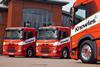





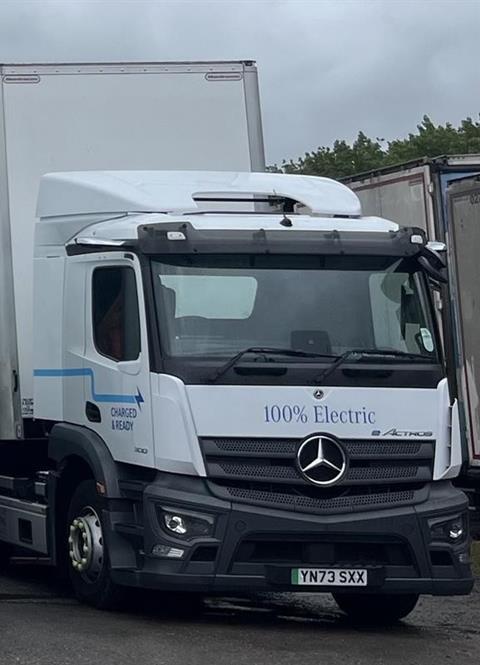
DP World has joined the pioneering Joint Operators Logistics Trial (JOLT), deploying two fully electric HGVs from its Swindon base.
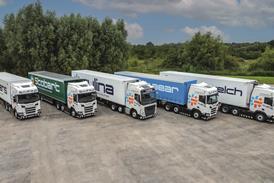
A private self-funded consortium, Project Jolt brings together 14 fleets, three major OEMs - Volvo, Scania, and DAF, two leading universities - the University of Cambridge (Engineering) and Heriot-Watt University (Logistics) - as well as other specialists including software manufacturers, network charging operators and electric fleet service providers. The project is funded by its participants.
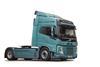
The eHGVs are a Mercedes eActros 300 - which will shortly be replaced with an eActros 600 - and a Scania G240 BEV.
The consortium is intended to “establish whether electric road freight transport can become commercially viable” and is led by Prof David Cebon, head of the Centre for Sustainable Road Freight and a leading advocate of battery electric over hydrogen power for road freight.
Fleet operators, many of which already run eHGVs, include John Lewis Partnership, Nestlé, William Jackson Food Group, Welch Group, Howard Tenens and Knowles Logistics. The net zero forum of the RHA is also a member of the project.
JOLT aligns with DP World’s recently launched Our World, Our Future European Sustainability Plan, which builds on the success of its Modal Shift and Carbon Inset Programme trials. These initiatives have already delivered significant environmental benefits, including:
- Over 150,000 TEUs of cargo registered in the Carbon Inset Programme, rewarding importers with 50kg CO₂e carbon credits per container.
- More than 100,000 container journeys shifted from road to rail, eliminating over eight million HGV miles and saving 25,000 tonnes of CO₂e.

Each participant in the JOLT trial will test the supplied trucks and chargers for three months assessing a variety of logistics operations, journey types and load profiles.
Extensive data will be collected to evaluate operational performance of battery electric HGVs, charging infrastructure requirements, battery degradation and range limitations, business case viability for SMEs and large fleets and future fleet modelling and transition strategies.
DP World currently operates 215 HGVs in the UK. If the trial is successful, the company plans to place an order for 45 electric HGVs this year from an unnamed manufacturer to be used in automotive logistics operations. Looking ahead, DP World proposes to transition 70% of its 802-strong European fleet to EVs by 2030.
Nicholas Mazzei, vice president, sustainability Europe, at DP World, said: “We are committed to leading the transition to a sustainable logistics sector. Our participation in JOLT is another step toward building the cleanest, most sustainable fleet across the supply chain.
“These electric trucks are not only zero-emission at the tailpipe but also offer a quieter, more comfortable experience for drivers. While charging infrastructure remains a challenge, we expect rapid progress in the next two years and we believe the future of road freight will be electric.
“Trials like JOLT are critical to understanding how fleets can transition to electric alternatives. DP World is determined to lead the way in sustainable logistics and intends to be the leading operator of EV HGV in Europe.”
DP World will also be testing Mercedes-Benz hydrogen fuel cell trucks powered by liquid hydrogen in Germersheim, Germany, as another alternative in its commitment to decarbonising freight transport in the UK and Europe.