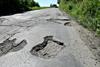









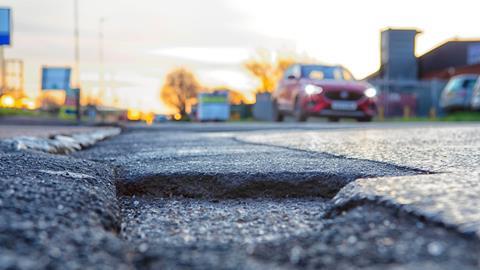

The backlog of repairs for disintegrating roads in England and Wales has reached new heights, with carriageways resurfaced on average once every 93 years.
An annual survey into the state of the roads found almost £17bn is now required as a one-off for local authorities to bring the network up to ideal conditions.
Around 106,000 miles of the local road network (52%) is reported to have less than 15 years’ structural life left and a third – around 34,600 miles – has just five years life left.
David Giles, chair of the Asphalt Industry Alliance, which commissioned its ALARM survey, said: “Over £20 billion has been spent on carriageway maintenance in England and Wales over the last decade, including spending to fill the equivalent of one pothole every 18 seconds, every day, for 10 years.
“However, due partly to the short-term nature of the allocation of funding, it has resulted in no quantifiable uplift in the condition and resilience of the network.
“In fact almost all (94%) local authority highway teams reported that, in their opinion, there has been no improvement to their local network over the last year: a view no doubt shared by the majority of road users.”
AA president Edmund King said the findings revealed “a dismal ‘two steps forward, three steps back’ picture” of the country’s pothole crisis.
He said: “The UK is nowhere close to getting out of this rut.
“However, pothole-related breakdowns recorded by the AA, the UK’s biggest motoring organisation, showed a very slight year-on-year dip in incidents.
“While that doesn’t guarantee that the UK has turned a corner, it offers some hope that increased funding will eventually make a difference.”
Local Government Association transport spokesperson, Councillor Adam Hug, said the findings came as no surprise, given inflation and the pressures placed on local government statutory services.
Hug added: “The funding increase in the last Budget was positive and must now be followed by a commitment in the spending review to a long-term financial package to tackle this backlog and put it into reverse.
“Investing in local roads now makes them more resilient and last longer, with direct benefits to road users, business, wider society and the environment.”
Added IAM RoadSmart director of policy and standards Nicholas Lyes said: “The AIA’s report lays bare the inadequate repairs happening on our local roads, where despite spending billions on filling potholes, the backlog costs are increasing. Potholes are an expensive headache for drivers but for those on two wheels they pose a serious road safety hazard. Moreover, if drivers are swerving to avoid them, they are risking a collision.
“While filling a pothole provides temporary respite and a brief improvement in the safety of the road surface, it is essentially a sticking plaster because the section will crumble away under the weight of traffic and from the effects of a cold winter. We need to start properly resurfacing our roads to ensure we’re not throwing good money at bad roads, but most importantly to ensure smooth and safe journeys.”