
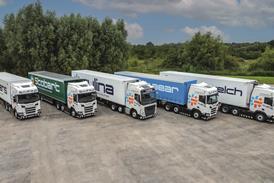










The commercial transport sector is undergoing significant transformation. As fleet operators look to the future, they must choose from a diverse range of powertrains and alternative fuel options. So, what role do lubricants play in this transition, and how can they support both new and existing technologies to help ensure operational continuity and profitability?
The shift towards a lower-carbon future requires many operators to increasingly adopt alternative fuel strategies such as electric vehicles, hydrogen-powered trucks and internal combustion engines running on advanced biofuels. Each of these technologies presents unique challenges and requires a specialised approach to lubrication. For electric vehicles, Texaco Lubricants provides a range of e-fluids designed to meet the specific demands of electric powertrains. These advanced fluids, including E-Axle and E-Thermal fluids, are engineered to help optimise cooling, protect against electrical conductivity, and ensure the durability of components in e-axles and transmissions—all critical for maximising the longevity and performance of electric trucks.
![Delo-400-XSP-FA-SAE-5W-30_20L+5L_[NO-Shad]](https://d2cohhpa0jt4tw.cloudfront.net/Pictures/480xAny/9/6/4/22964_delo400xspfasae5w30_20l5l_noshad_902366.png)
While the future of fleets may be a lower-carbon one, the transition won’t happen overnight. The vast majority of today’s commercial fleets still rely on diesel engines, and the demand for alternative fuels such as hydrogen and biofuels continues to grow. Texaco, part of the Chevron family of brands, is committed to supporting this evolving energy mix. Texaco’s range of engine oils includes products such as Delo® 400 XSP-FA SAE 5W-30 and Delo 400 XSP-SD SAE 5W-30, which are not only compatible with many biofuels, but also continue to help provide equipment protection and performance for fleets that are shifting to alternative fuel sources. For fleets looking closer at hydrogen as an option, Texaco is already exploring how lubricants can provide support in this field, including managing the different combustion characteristics and by-products to ensure engine health and longevity.
For fleets using modern diesel engines, the ongoing challenge of emissions control remains a priority. Texaco Delo 600 ADF, for example, is a product engineered to directly address a major pain point for operators, that of diesel particulate filter (DPF) maintenance. The DPF is essential for capturing soot, but it can become clogged with ash, potentially leading to costly downtime and DPF cleaning or replacement. Delo 600 ADF’s ultra-low ash formulation helps to significantly reduce the build-up of ash in the DPF. This allows for extended DPF service life and fewer regeneration cycles, which in turn reduces back pressure and contributes to improved fuel economy over the DPF’s operational lifecycle. These benefits aim to make life easier for fleet operators by helping to reduce maintenance costs and maximise vehicle uptime—a crucial factor for any business.
Ultimately, as the industry navigates this complex period of technological change, the role of lubrication is becoming more strategic than ever. It’s no longer just about protecting the engine; it’s about enabling new technologies, optimising efficiency across a mixed technology fleet, and providing robust solutions that help businesses thrive in a rapidly changing world.
To find out more about how Texaco Delo products can help your business, visit the Texaco Lubricants website.