









Family-owned haulage and logistics firm Miniclipper Logistics saw profits tumble in the 12 months to 31 May 2025, hit by soaring fuel, maintenance, and staffing costs, according to newly filed accounts.
The Leighton Buzzard-based operator reported a 3% fall in turnover to £25.97m, down from £26.83m the previous year, while pre-tax profit plunged to £471,342, down from £1.65m in 2024.
After taxation, the company reported £380,070 in profit, demonstrating that it remained profitable despite a challenging economic backdrop.
Miniclipper’s strategic report cited a range of pressures hitting margins, including fuel price volatility, sharply higher repair and maintenance costs, and increases in national insurance contributions in the final months of the year. The company also faced the full-year financial impact of heavy 2024 investment in trucks, trailers, and material handling equipment, which drove higher depreciation and interest costs.
The report said these factors, alongside wider uncertainty and reduced customer confidence, combined to reduce turnover and profit before tax compared with previous years.
Gross profit margin eased slightly to 43% in 2025, down from 44% in 2024, while net assets strengthened to £11.30m, up from £10.96m the previous year.
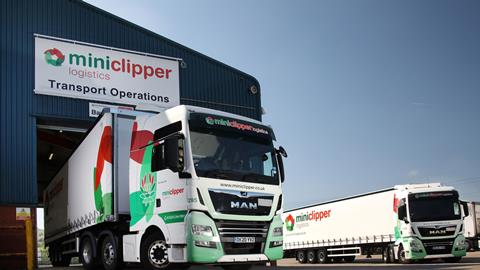
In spring 2025, the company carried out a comprehensive review of its transport operations, resulting in a rationalisation of fleet size and a reduction in the geographical area covered for Palletline network deliveries. The move initially reduced the number of vehicles based at the Burton upon Trent site, but new business wins since the year end have already reversed that decision, positioning the company for higher profitability in the months ahead.
The Burton site also secured a five-year warehouse and fulfilment contract in spring 2025, leaving the facility fully occupied by two anchor customers and generating sustained levels of revenue. From October 2025, Miniclipper will take over operational management of two adjoining 13,000sq ft warehouses at Cherrycourt Way, Leighton Buzzard, after an existing transport customer outsourced its operations under a 10-year contract.
The company’s strategic investment programme, launched in 2021, continued during the year. By the end of 2025, all but three vehicles in the fleet were owned rather than leased, reducing operating costs and strengthening asset control. Miniclipper also replaced its warehouse management system, launching the new platform at Burton for the new customer, with rollout across other sites planned over the next 18 months, including the Cherrycourt Way facility, to improve operational efficiency and control.
Recognising the industry-wide shortage of commercial vehicle drivers, Miniclipper continued its Warehouse to Wheels’ programme, designed to develop staff from warehouse roles into driving positions. Six employees completed the programme, with a further two enrolled, while three drivers completed HGV Class 1 training. The company also continued ADR and IOSH training for warehouse staff and strengthened its health and safety systems through Riskex, monitoring hazards, incidents, and training across sites, with internal auditing reviewed at board level to ensure compliance and track progress on its Safety Culture Maturity Table.
Cash flow remained a key focus, with the finance team preparing rolling monthly forecasts and monitoring liquidity daily. Debtor days stood at 43.9 at year end, slightly higher than 42.3 the previous year but still below levels in 2023 and earlier periods, reflecting strong credit control in a difficult trading environment.
The company also maintained a flexible approach to loans and hire purchase arrangements, moving away from fixed rates to variable or tracker loans to manage the impact of high interest rates, while fuel procurement continued to be closely monitored to obtain competitive pricing.
Summing up the year, Miniclipper said that while cost pressures and wider economic uncertainty significantly hit profits, the company was cautiously optimism that new contracts, fleet adjustments, and operational efficiencies would support improvements in gross margins and overall profitability in the year ahead.