











Hauliers moving into electric trucks risk underestimating the cost and complexity of preparing their depots, with grid capacity, charging schedules and site design all critical to making the technology work commercially.

That was the warning from Warren Engall (pictured right), senior marketing manager at fleet electrification specialist VEV, speaking at the WTW Transport Conference last week.
Battery-electric HGVs remain a rare sight on UK roads, with just 1,313 recorded in September 2025, according to the latest DfT figures. But Engall warned that buying the vehicles is only the first step for operators considering the switch.
“To build a depot correctly, it’s about way more than just the truck,” he told delegates.
He identified three areas that operators needed to address: vehicle readiness, site readiness and business readiness.
The starting point is understanding how the fleet operates. Route lengths, duty cycles, shift patterns and the time vehicles spend back at base will all influence the charging infrastructure required.
Unlike buses, which often return to depots together at the end of the day, trucks arrive and depart throughout the day and may operate across two or even three shifts.
“The trucks are going to be operating on a dual, if not a treble shift basis,” Engall said.
That makes it essential to match charging speeds to vehicle use. Trucks spending several hours at base may be able to use slower chargers, while those returning for only a short period between jobs could need a faster top-up.
Engall said operators should work backwards from the energy their fleets require, rather than simply installing a bank of chargers and trying to fit their operation around it.
Plan the power
Charging also brings a new level of forward planning. Operators need to know which vehicle is assigned to each route, how much energy it will require and when it can be charged ahead of its next departure.
Charging may take place overnight, during loading periods or at lunchtime, depending on the fleet’s operating pattern.
Once those requirements are established, businesses need to assess whether their electricity supply can support the additional demand.

For some operators, securing sufficient grid capacity could be one of the biggest costs of electrification. The calculation must include not only vehicle charging but also existing site consumption.
That is a particular consideration for cold-chain businesses, where refrigeration and warehouse operations can already place heavy demands on the electricity supply.
Operators also face a choice between paying for a larger grid connection to accommodate future fleet growth or installing capacity for an initial, smaller deployment and upgrading later.
Engall described it as a balance between buying for today’s requirements and investing ahead of future demand. On-site batteries and solar generation could help reduce reliance on grid power.
Sharing charging infrastructure with other operators may also improve the economics. Some businesses have more electricity capacity than they need, while others face constraints on their ability to charge vehicles. Making better use of spare capacity could help spread the cost of connections.
Beware the false economy
Engall warned operators against focusing too heavily on minimising the initial cost of vehicles, chargers and grid connections.
“You’re going to end up with the lowest-performance system,” he said, describing the likely outcome of choosing the cheapest options.
The cost of electricity also needs to be considered. Greater charging capacity could allow operators to move more consumption into cheaper periods, reducing the overall cost of running an electric fleet.
Energy management software can help by monitoring electricity prices and vehicle requirements, then allocating available power to ensure trucks are charged in time for their next departure.
Rather than charging every vehicle as soon as it returns to the depot, operators can schedule demand around both operational needs and electricity prices.
Depot layout is another potential source of unexpected expense. Chargers, substations and electrical cabinets introduce physical obstacles into yards that may previously have been designed around unrestricted vehicle movements.
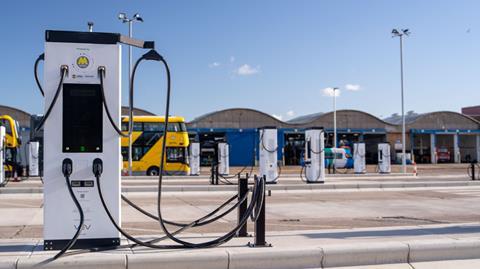
Engall pointed out that chargers effectively become bollards, with the risk of damage increasing if they are poorly positioned in busy operating areas.
Businesses need to consider vehicle manoeuvring, parking arrangements, whether trucks will charge with trailers attached and the cost of running cables across the site. Getting the layout wrong could result in expensive additional groundworks.
There are also growing cyber security risks as charging systems become connected to fleet scheduling, routing and energy procurement platforms.
Engall said energy management software should be treated as mission-critical IT infrastructure, with security built into the procurement process.
Operators also need contingency plans for charger failures and interruptions to the electricity supply, particularly as more of their fleet becomes dependent on depot charging.
Engall’s message was that there is no single charging solution for every operator. Businesses need to understand their own operating requirements, model the energy their fleets will consume and design their vehicles, infrastructure and working practices as one connected system.
Getting the investment wrong could leave operators with an expensive and underperforming charging network. Getting it right will be essential to making electric trucks work commercially.